Huxelrebe

Crossing
Elbling x Muscat précoce de Saumur
Origin
Huxelrebe was bred in 1927 by Georg Scheu at the State Institute for Grapevine Breeding (Landesanstalt für Rebenzüchtung) in Alzey and was initially recorded under the breeding number AZ 3962. It was named after the winegrower Fritz Huxel from Westhofen, who played a key role in propagating the new crossing in the 1950s. Plant variety protection was granted in 1968. Originally, Huxelrebe was recorded as a cross between Weißer Gutedel and Muscat précoce de Saumur (Courtiller Musqué). However, genetic analyses showed that it actually originated from Weißer Elbling and Muscat précoce de Saumur.
Characteristics
- early budburst
- early ripening
- vigorous growth
- susceptible to late spring frost
- susceptible to coulure
- tendency of berries to split following autumn rainfall
Site requirements
Favours good, frost-protected sites with a sufficient water supply. Owing to its sensitivity to drought, winter frost, and high lime content, Huxelrebe places high demands on vineyard site selection.
Aromas
Huxelrebe is characterised by a pronounced fruity bouquet with aromas of passion fruit and mango. Depending on ripeness level and vinification, notes of honeydew melon, ripe apple, orange, and floral nuances complement the aromatic spectrum. Its fresh acidity provides a harmonious counterbalance to the fruit and, particularly at high levels of ripeness, enables the production of expressive noble sweet wines.
Bunch
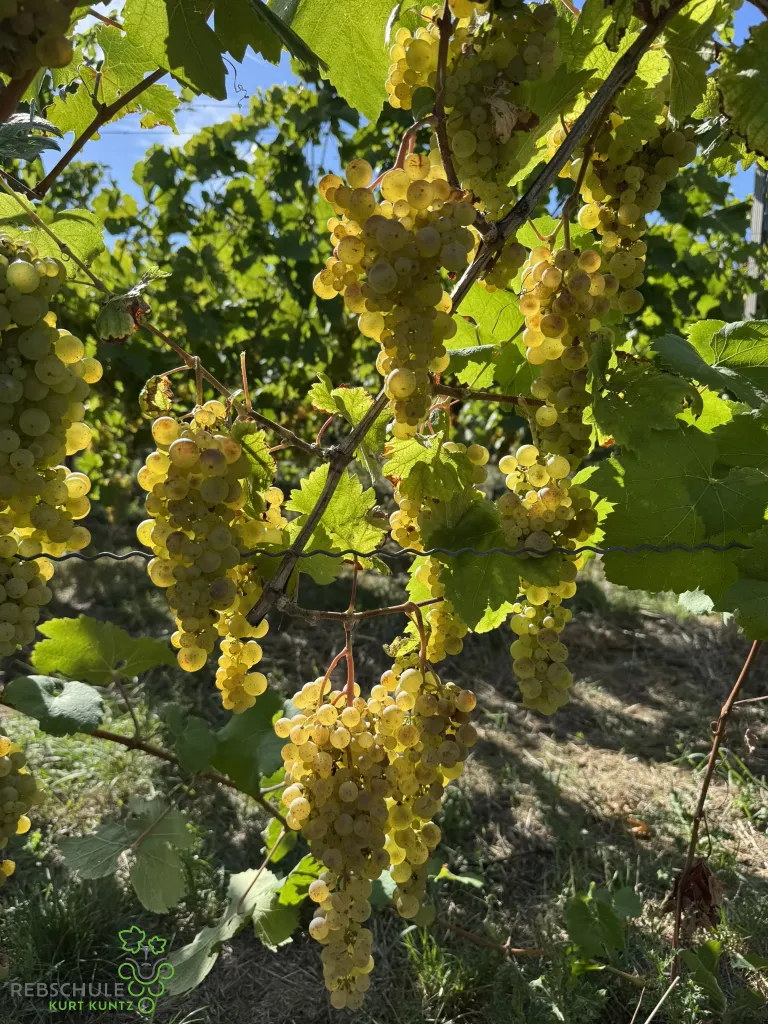
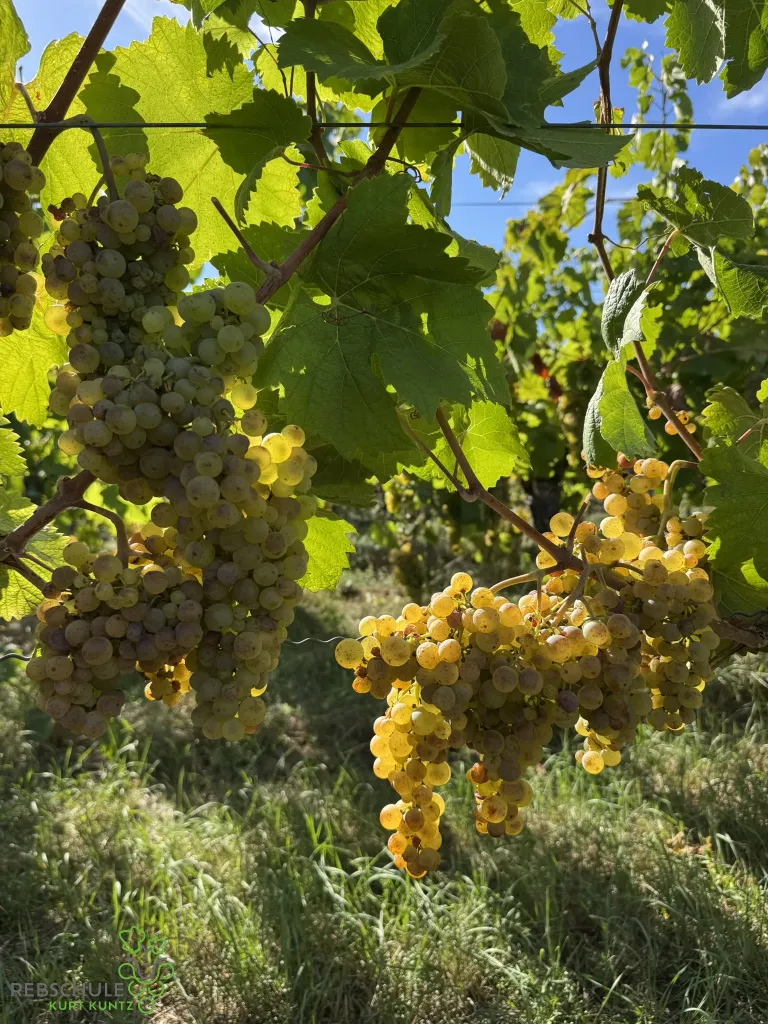
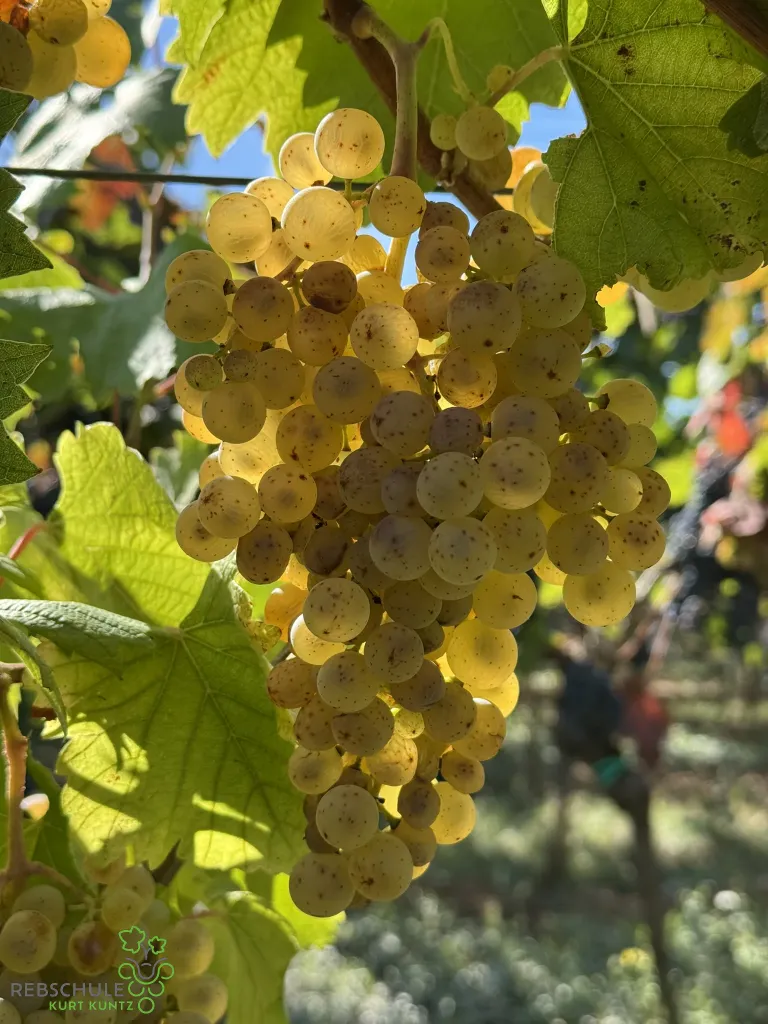
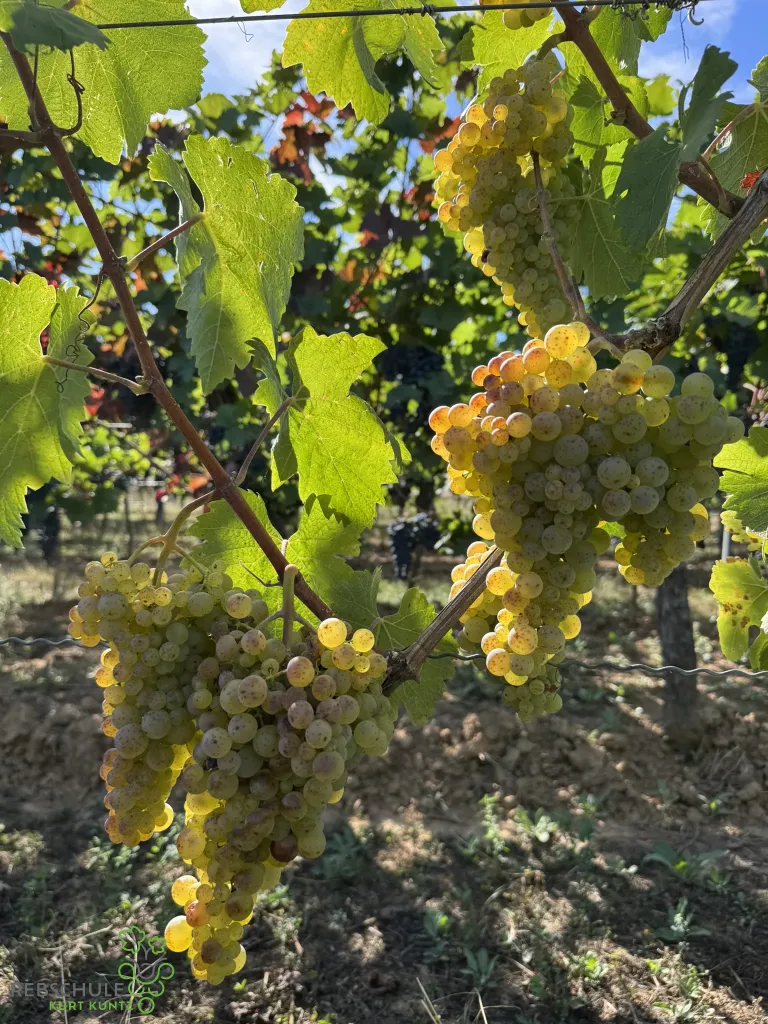
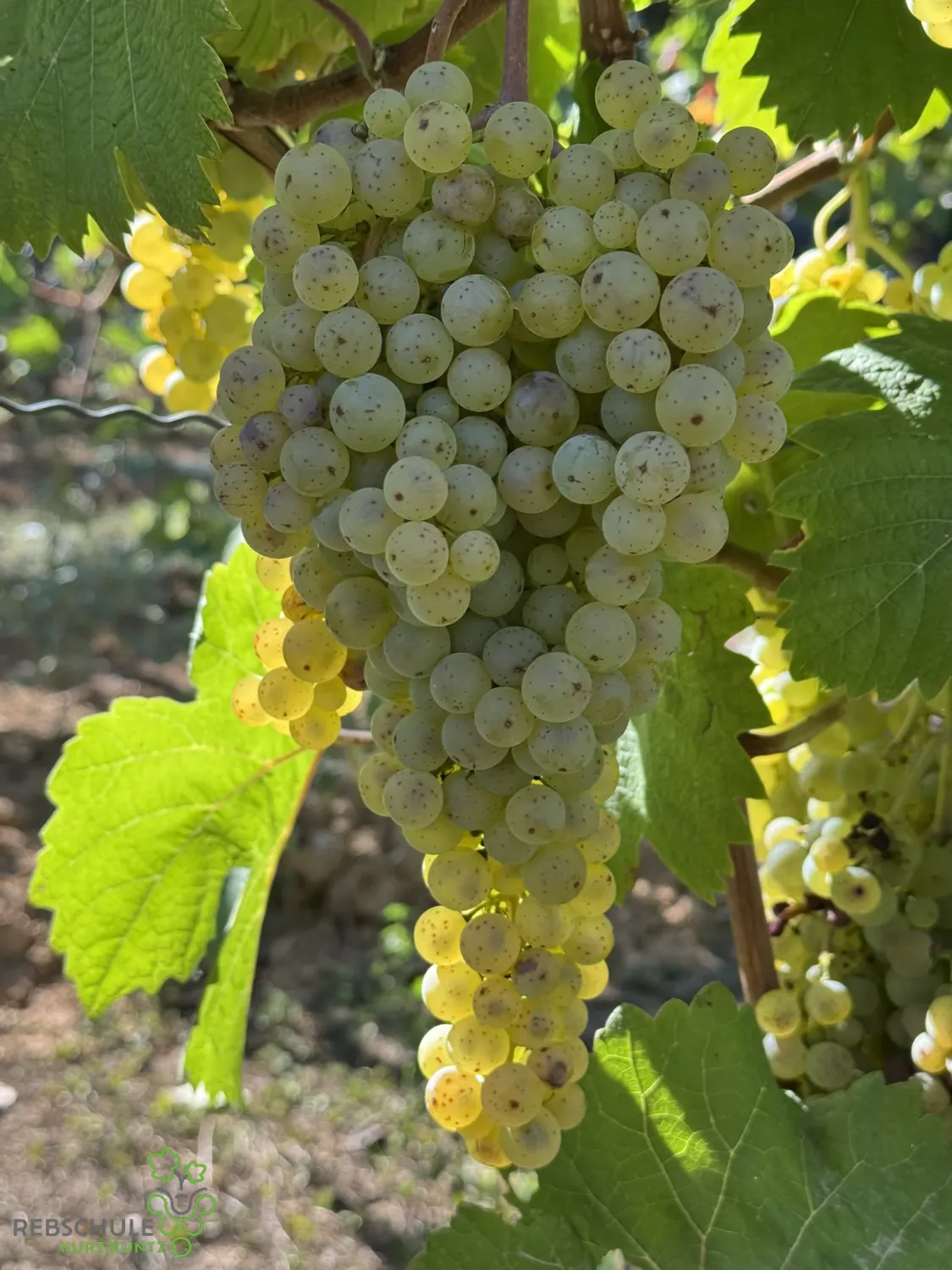
Large, elongated to slightly conical, often shouldered bunches that range from compact to loose-berried depending on the extent of coulure. The slightly roundish berries vary markedly in size: normally developed berries are large and seeded, whereas severe coulure can result in very small, often seedless berries. At ripeness, the berries turn golden-yellow, and their juice is aromatic and spicy.
Huxelrebe clones
DLR-Oppenheim

Huxelrebe AZ 100
Yield highBunches medium-compactBotrytis susceptibility medium