Cabernet Cubin

Crossing
Lemberger x Cabernet Sauvignon (clone Levadoux)
Origin
Cabernet Cubin was bred in 1970 at the State Education and Research Institute for Viticulture and Pomology in Weinsberg, Württemberg. This red wine variety originated from a cross between Blauer Limberger (Lemberger/Blaufränkisch) and Cabernet Sauvignon. The aim was to combine the characteristic fruit and tannin structure of Cabernet Sauvignon with the traits of Lemberger, creating a red cultivar well-suited to Central European viticulture. Originally registered under the breeding code We 70-281-35, the variety later became known as Cabernet Cubin.
Characteristics
- medium budburst
- late to very late ripening
- high-yielding
- Vigorous
- moderate to high acidity
- good basal bud fertility
Site requirements
Very demanding in terms of vineyard site, favouring warm, sunny and sheltered locations with a long growing season. Due to its very late ripening, cooler sites and those prone to early autumn frost are unsuitable. In temperate climates, heat-retaining, well-drained soils are ideal, whereas in warmer, drier regions, deeper soils with sufficient water-holding capacity are advantageous. While the variety exhibits high drought tolerance, it requires an adequate nutrient and water supply at the site to ensure reliable physiological and phenolic ripeness. Its site requirements are comparable to those of other late-ripening red grape varieties such as Pinot Noir.
Aromas
Pronounced Cabernet aromatics with notes of blackcurrant, blackberry and dark cherry. Depending on ripeness and maturation, spicy nuances of pepper and herbs complement the aromatic profile.
Bunch
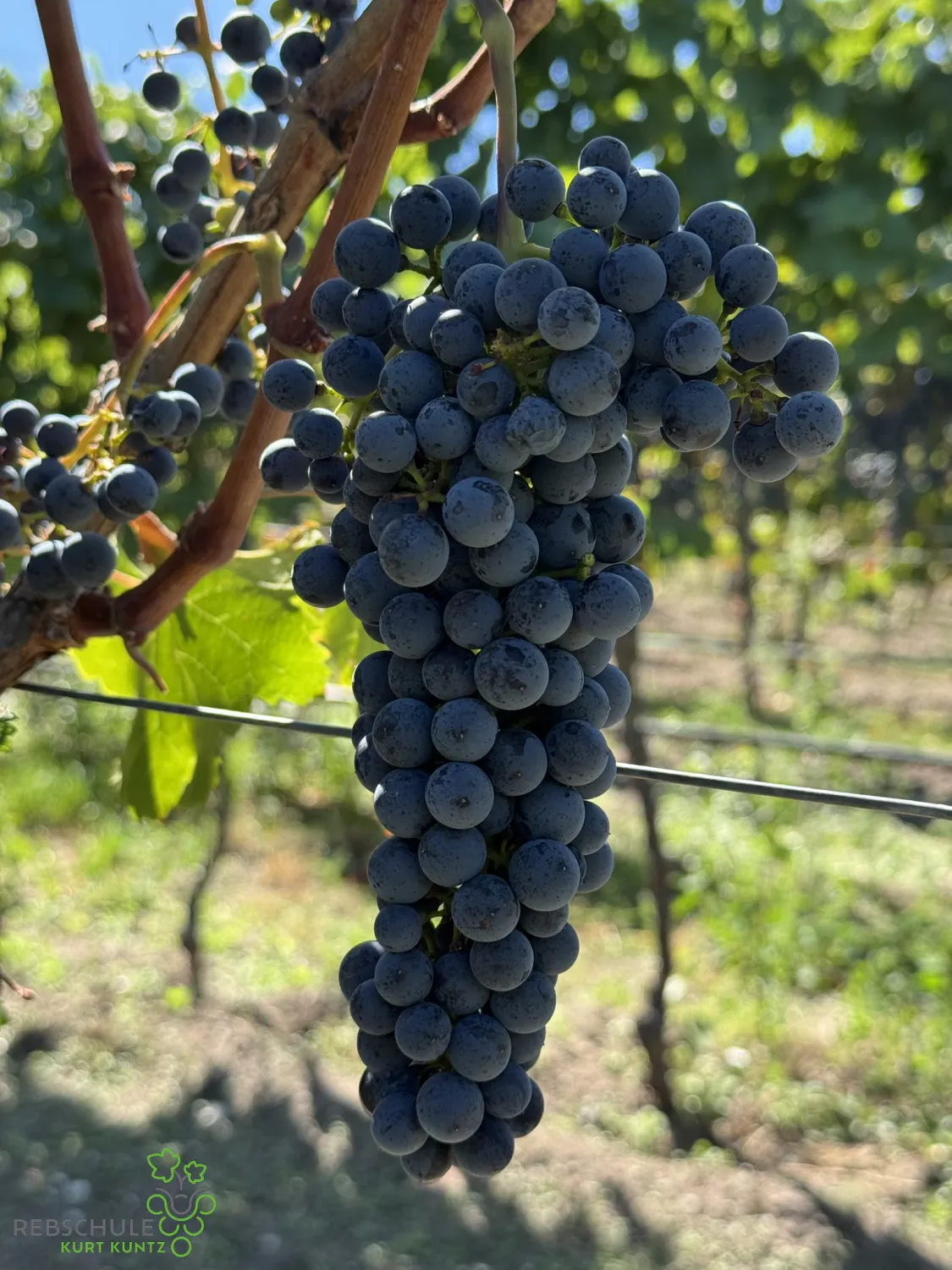
The bunches are medium to large, shouldered and loose to moderately compact. The berries are round, small to medium-sized and blue-black in colour.
Links/Downloads
Cabernet Cubin clones
Weinsberg

Cabernet Cubin We 675
Yield above averageBunches Loose to medium-denseBotrytis susceptibility low
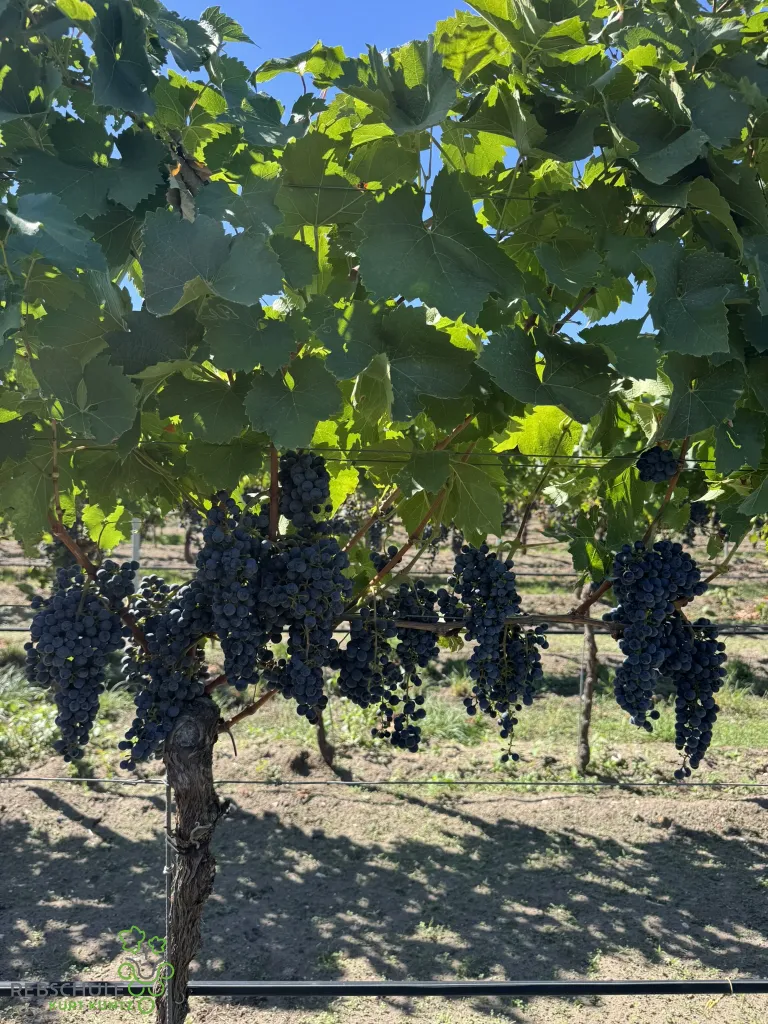
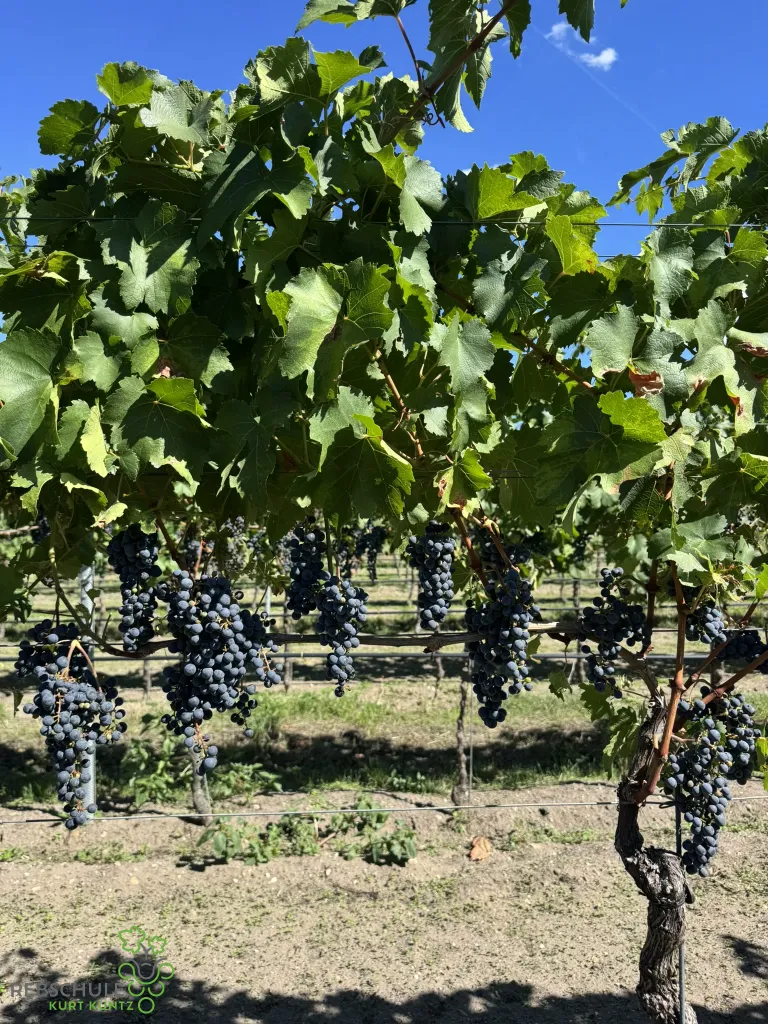
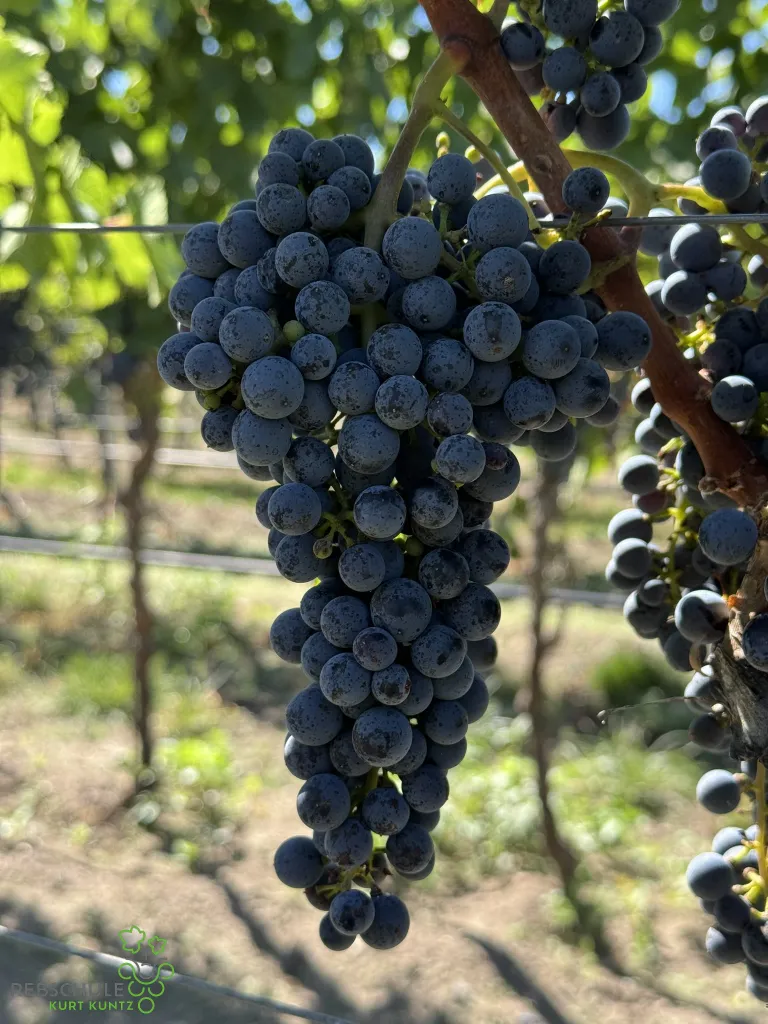
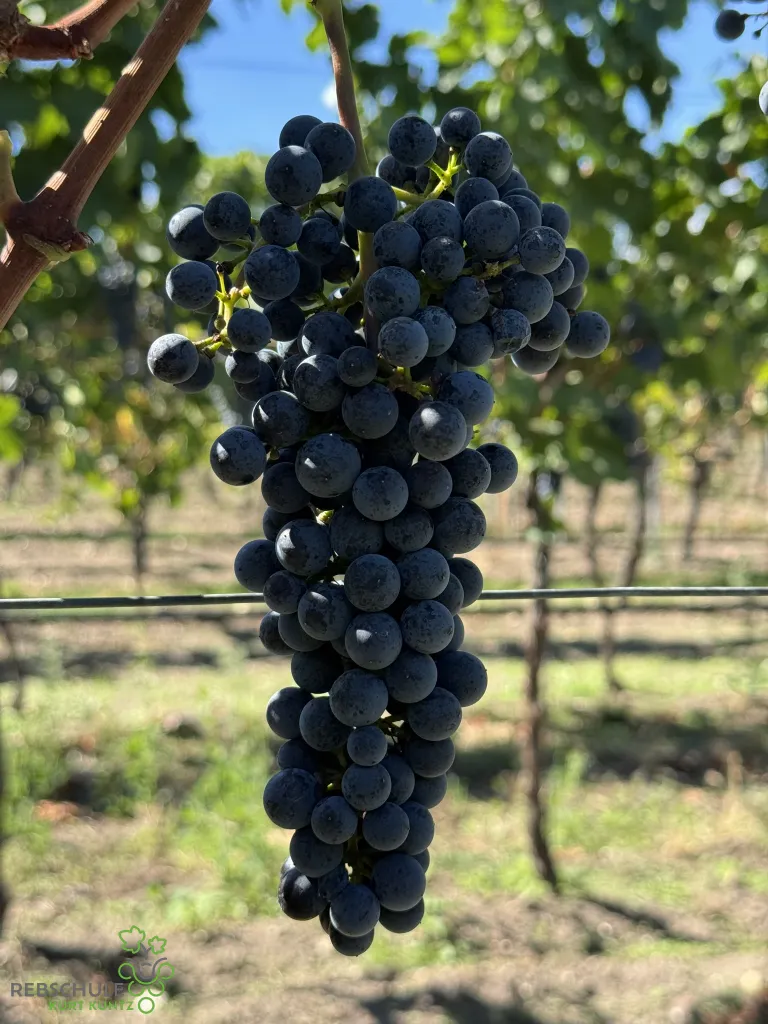
- The sole clone