Regent PIWI

Crossing
Diana (Silvaner x Müller-Thurgau) x Chambourcin
Origin
Regent was bred in 1967 by Prof. Dr Gerhardt Alleweldt at the Institute for Grapevine Breeding Geilweilerhof near Siebeldingen in the Southern Palatinate. Registered under the breeding number Gf. 67-198-3, this red wine variety resulted from a cross between Diana (Silvaner × Müller-Thurgau) and Chambourcin. While Diana contributes classic European Vitis vinifera genetics, the genetic basis for its enhanced resistance to fungal diseases is derived in part via Chambourcin from interspecific crosses involving American wild vine species. Following several years of evaluation and selection, the individual vine later known as Regent was selected in 1972, with initial trial plantings following from 1985 onwards. In the 1990s, the variety was granted plant variety protection and approved for quality wine production, going on to become one of the first fungus-resistant red varieties to achieve widespread cultivation in Germany.
Characteristics
- medium budburst
- medium-early ripening
- moderate vigour
- good sugar accumulation
- prone to coulure in poor flowering weather
- analytically detectable in blends via malvidin-3,5-diglucoside
Site requirements
Regent makes comparatively modest demands on heat summation and, thanks to its earlier ripening and high winter hardiness, is also well-suited to cooler wine regions and mid-tier sites. Sunny, sufficiently warm and sheltered locations are preferred. Overly cold, wind-exposed sites are unfavourable due to its tendency towards coulure during flowering, while very heavy, waterlogged soils should be avoided.
Aromas
Regent produces deeply coloured red wines with a pronounced fruit-driven profile. Typical notes include cherry and cassis, complemented by aromas of blackberry and plum. The wines are characterised by a full body, a distinct tannin structure and generally moderate acidity. Given sufficiently ripe fruit, Regent is also well-suited to barrique maturation, which can impart additional toasted and vanilla notes.
Regent exhibits an exceptionally high content of malvidin-3,5-diglucoside, an anthocyanin compound that contributes significantly to the deep dark colour of its wines. Since it is either absent or present only in trace amounts in many classic European Vitis vinifera varieties, its detection during laboratory analysis can indicate blending with Regent.
Bunch
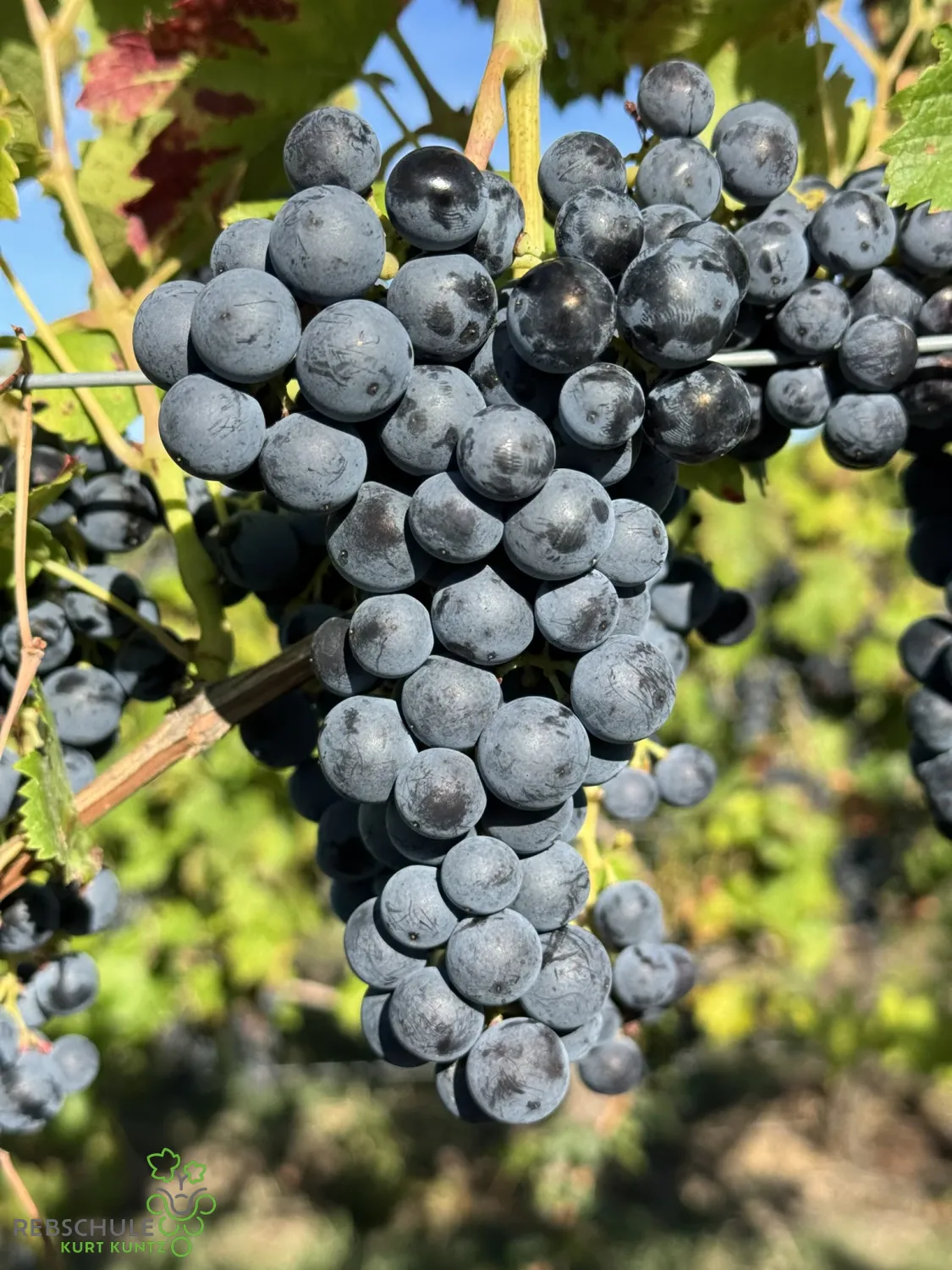
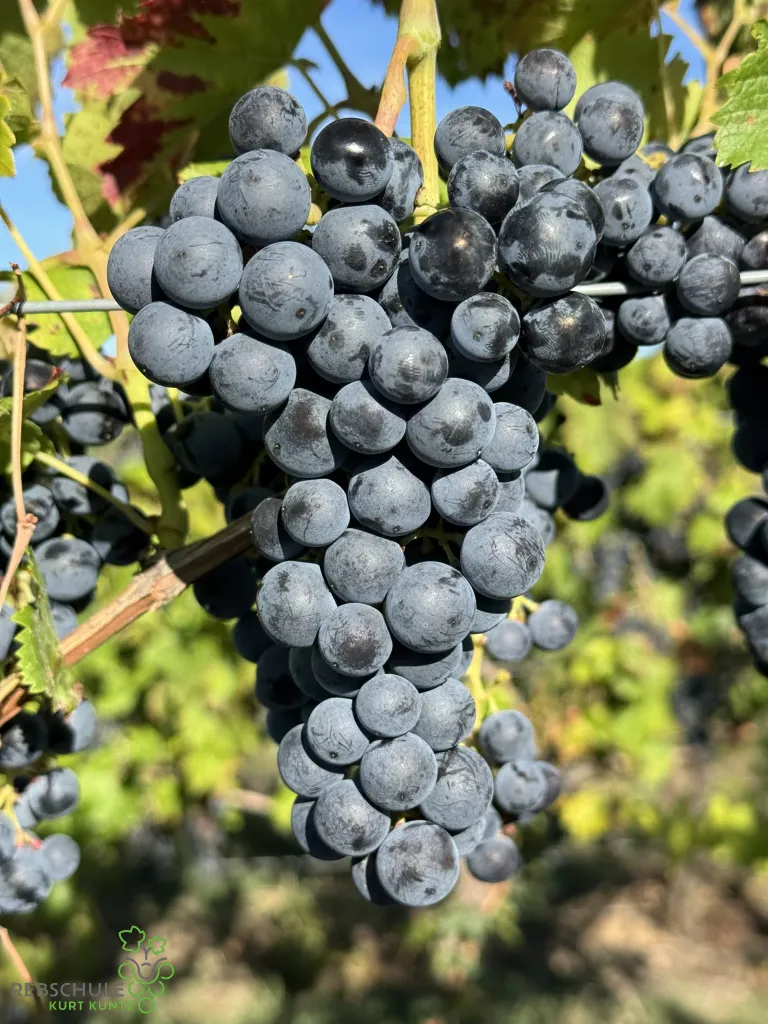
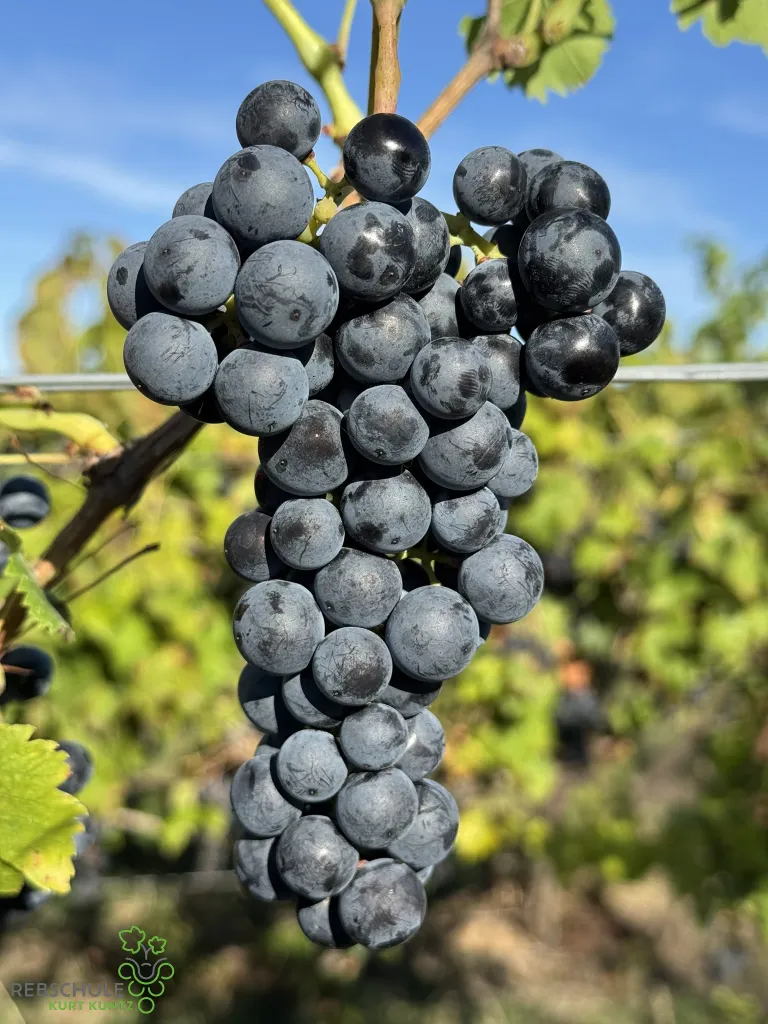
The bunches are medium-sized, cylindrical and rarely winged, with a loose structure. The berries are small to medium-sized, roundish to oval and dark blue to bluish-violet in colour.
Disease resistance
- Downy mildew (Plasmopara viticola)2/4Resistance loci: Rpv3.1
- Powdery mildew (Oidium)2/4Resistance loci: Ren3, Ren9
- Botrytis2/4
To counteract the development of resistant fungal strains and safeguard the cultivar's resistance over the long term, three targeted plant protection treatments are recommended. Optimal treatment windows occur primarily around flowering, adjusted according to weather conditions and prevailing disease pressure.
Links/Downloads
Regent PIWI clones
Geilweilerhof

Regent PIWI Gf 1
Yield medium - highBunches loose-clusteredBotrytis susceptibility low
- The sole clone