Pinot Noir
Crossing
Savagnin Blanc x ?
In Pinot Noir, only one parent has so far been conclusively identified through genetic analysis: Savagnin Blanc. The second parent remains unknown.
Origin
Pinot Noir is believed to originate from Burgundy in France and ranks among Europe’s oldest cultivated grape varieties. According to tradition, Emperor Charles III introduced the variety to Lake Constance in 884 under the name ‘Clävner’. A key role in spreading viticulture across Europe was played by the Cistercians, whose monastic order was founded in 1098 at Cîteaux in Burgundy. Through their network of monasteries, they shared viticultural expertise and promoted grape growing across numerous European regions. With the founding of Eberbach Abbey in the Rheingau in 1136, a major centre of medieval viticulture also emerged in Germany.
An early record of the variety at Lake Constance dates back to 1318, when Pinot Noir was cultivated at Salem Abbey. In the Rheingau, the variety is first documented in 1470 under the historic name ‘Klebrot’. From there, it spread into further German wine-growing regions over the following centuries. Over time, Pinot Noir also became well-established in Switzerland, Austria and Italy, where it is known under names such as Blauburgunder, Blauer Burgunder and Pinot Nero. Its spread across these regions occurred gradually through the exchange of planting material and the ongoing development of viticulture.
In the 19th century, Pinot Noir also reached overseas wine regions. It was introduced to Australia as early as 1817 and further disseminated through James Busby’s vine collection in the 1830s. In California, the variety is documented from the 1880s at the latest, while New Zealand’s first Pinot Noir vines were planted in the Wairarapa in 1883. In South Africa, Georg Paul Canitz began cultivating Pinot Noir at the Muratie wine estate from 1927 onwards.
Pinot Noir experienced its major international rise primarily in the second half of the 20th century, gaining particular prominence in the cooler wine-growing regions of the USA, Australia and New Zealand. Today, Pinot Noir is cultivated worldwide and ranks among the most important grape varieties for fine red and sparkling wines.
Characteristics
- medium-early budburst
- mid-season to late ripening
- susceptible to late spring frost, depending on the site
- comparatively low anthocyanin content in the berry skin
- high tannin potential
- comparatively thin berry skin
Site requirements
Pinot Noir makes high demands on the vineyard site and prefers good, warm-favoured locations. Deep soils with good water-holding capacity are particularly suitable. Site requirements vary depending on the clone: more compact clonal types require particularly good to very good sites as well as tailored management practices, whereas loose-bunch and millerandage clones can help reduce the risk of rot.
Aromas
Pinot Noir wines are characterised by a refined, multi-layered aromatic profile. Typical are distinct fruit notes of strawberry, raspberry and cherry, complemented by blackberry and blackcurrant depending on the degree of ripeness. Delicate almond nuances alongside floral and spicy hints round off the bouquet.
Stylistically, two distinct directions can be identified: the classic Pinot Noir style typically appears lighter in colour, smooth and relatively low in tannin, defined by delicate fruit, vibrant acidity and an elegant structure. Modern interpretations, by contrast, present as deeper-coloured, more structured and more tannin-driven.
Maturation in oak barrels adds complexity, developing additional notes of vanilla, cinnamon and toasted aromas. Depending on origin, vintage and vinification, the spectrum ranges from elegant, fruit-driven wines through to powerful, long-lived top-tier wines.
Bunch
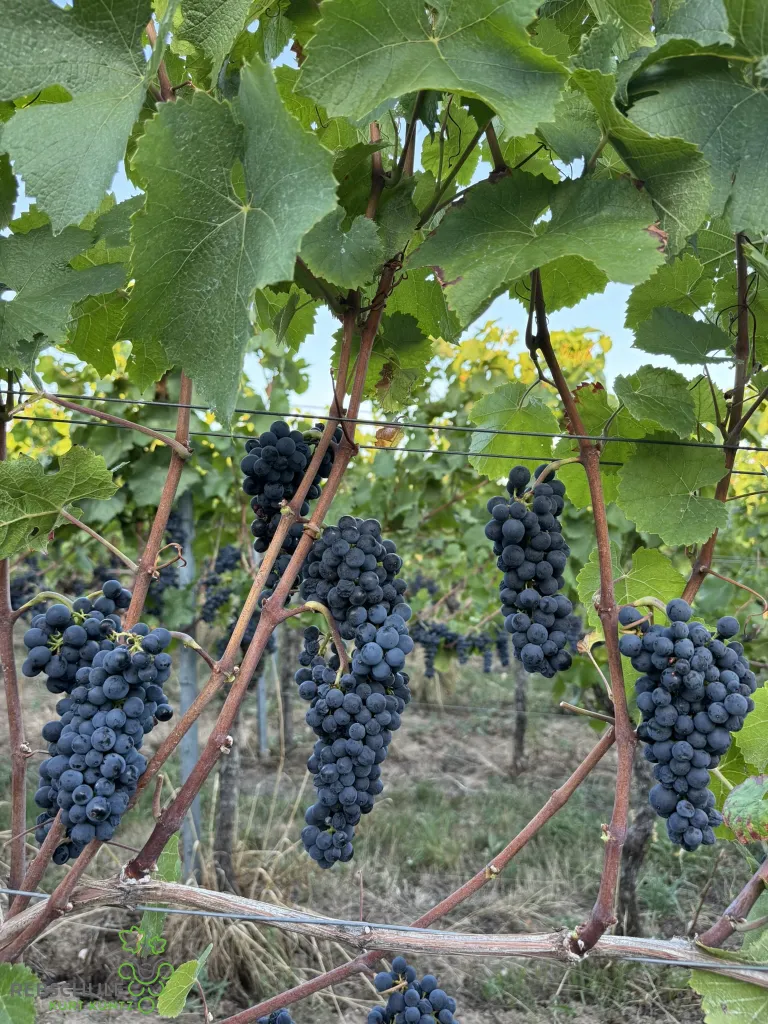
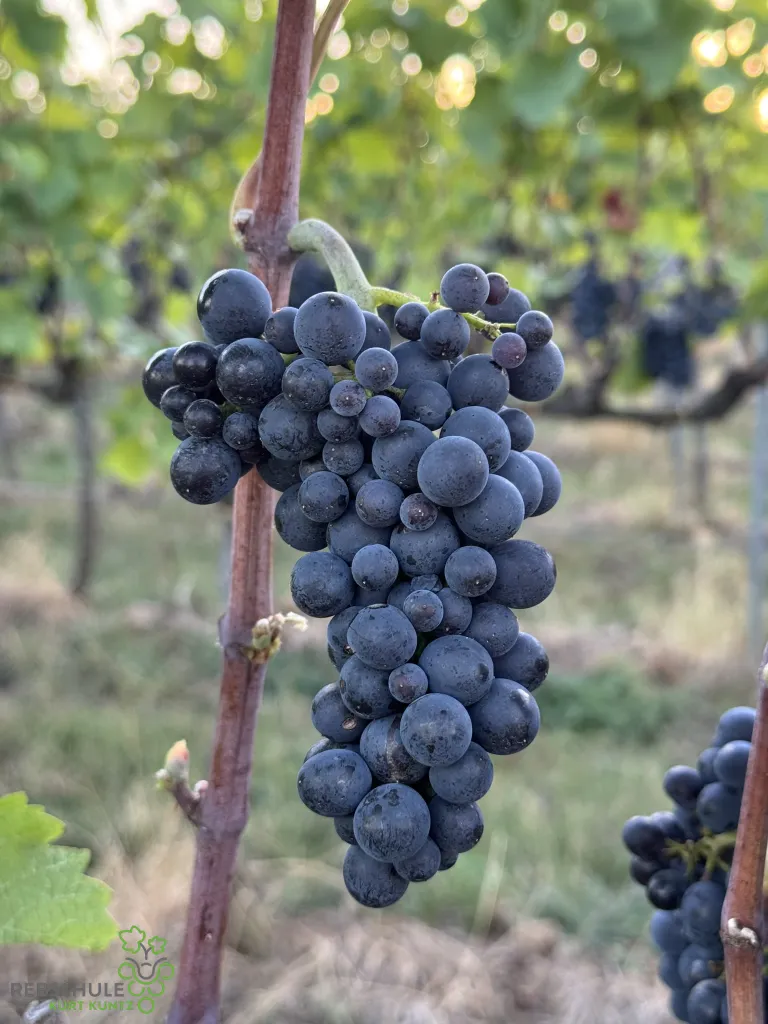
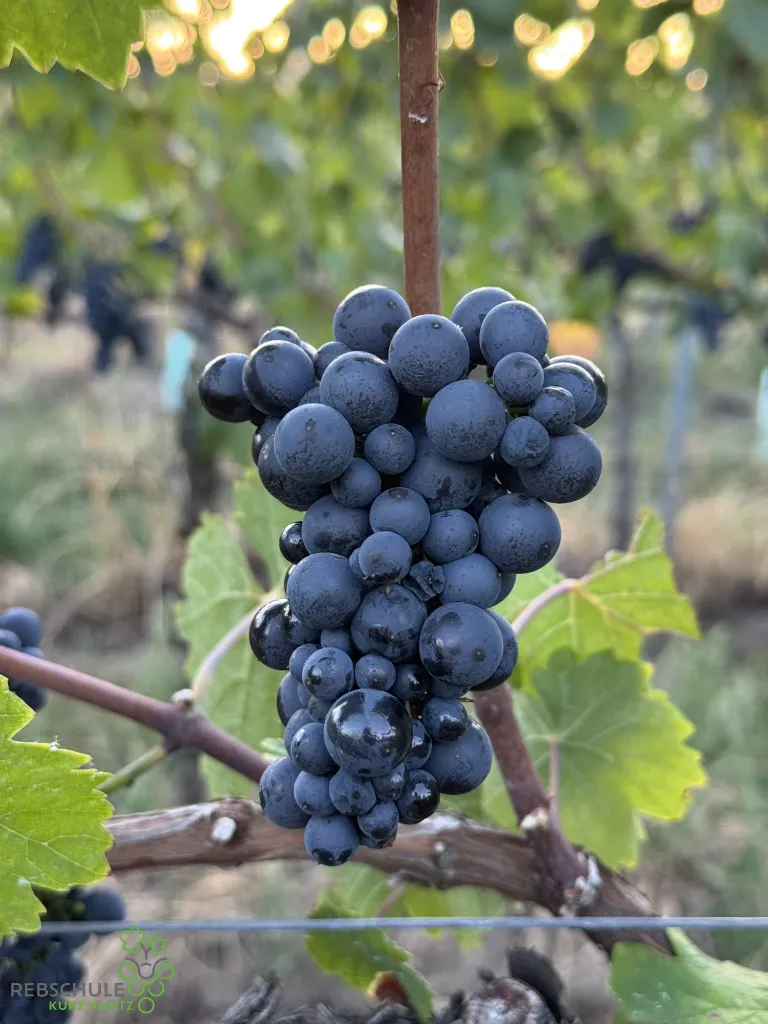
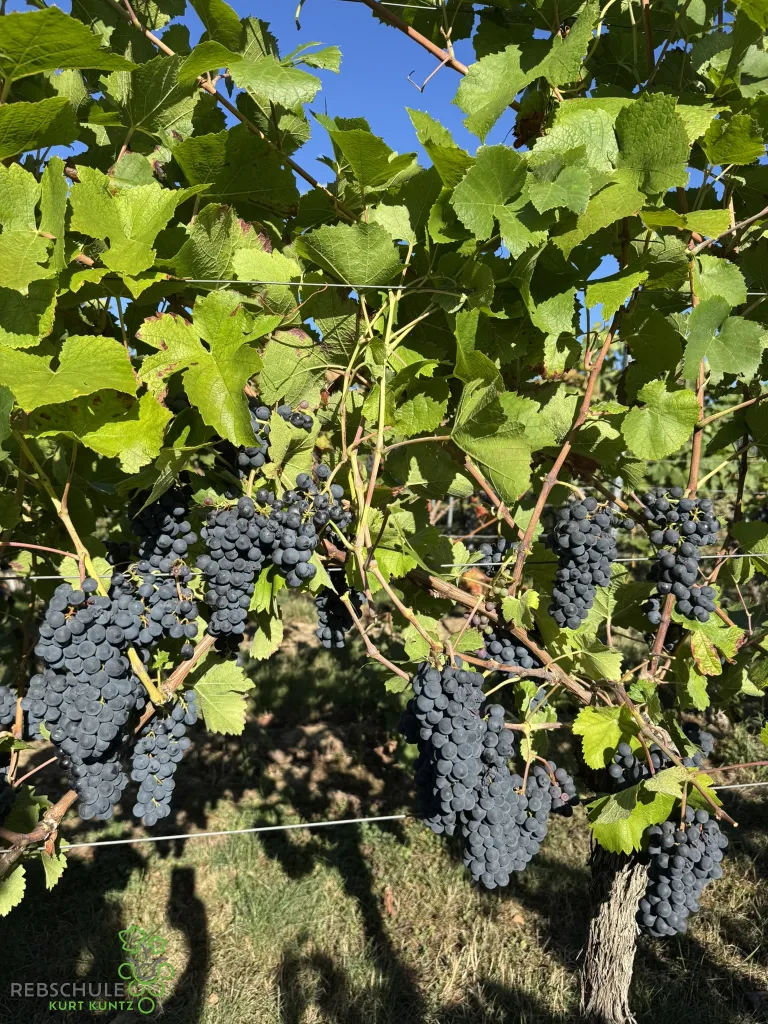
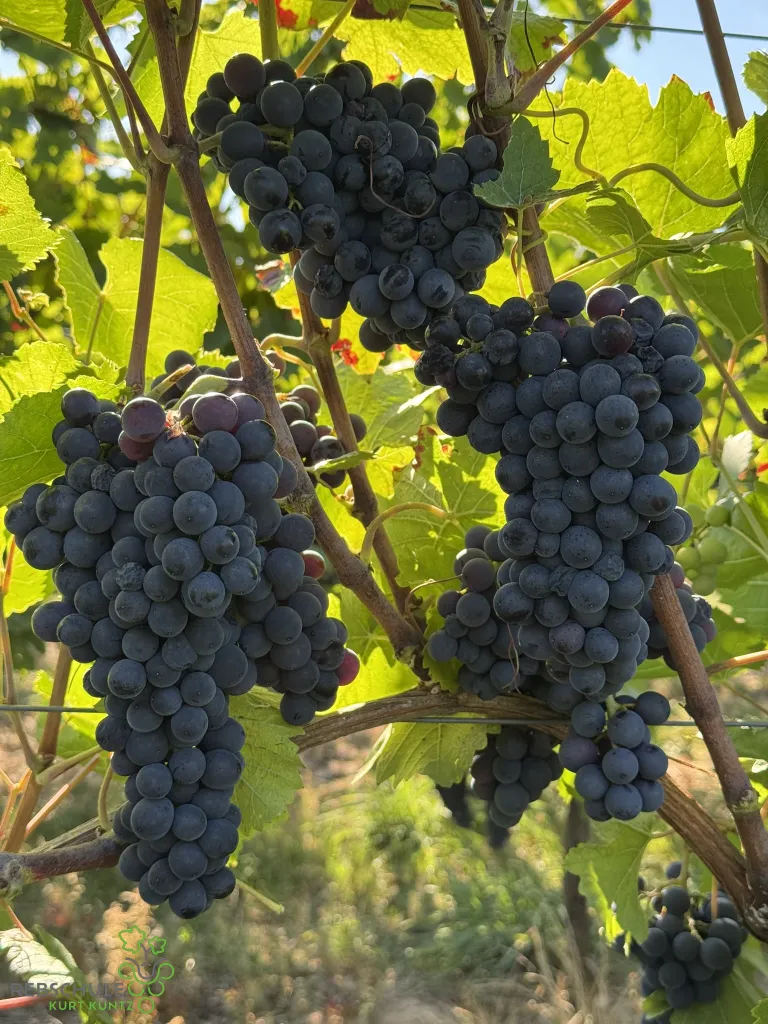
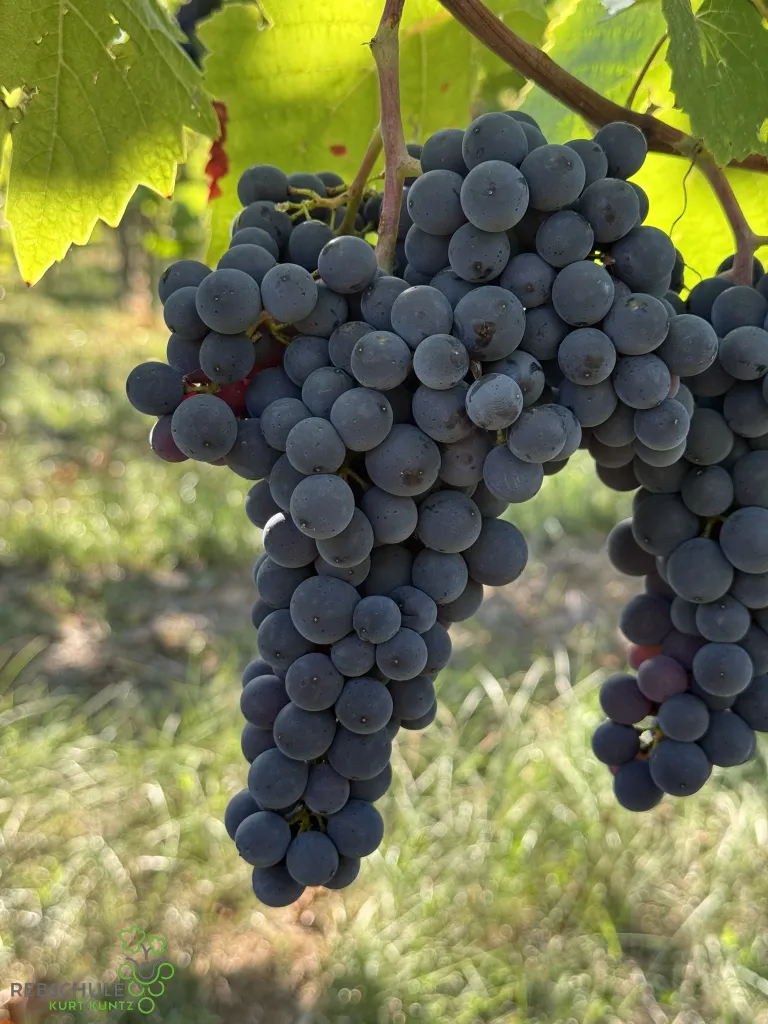
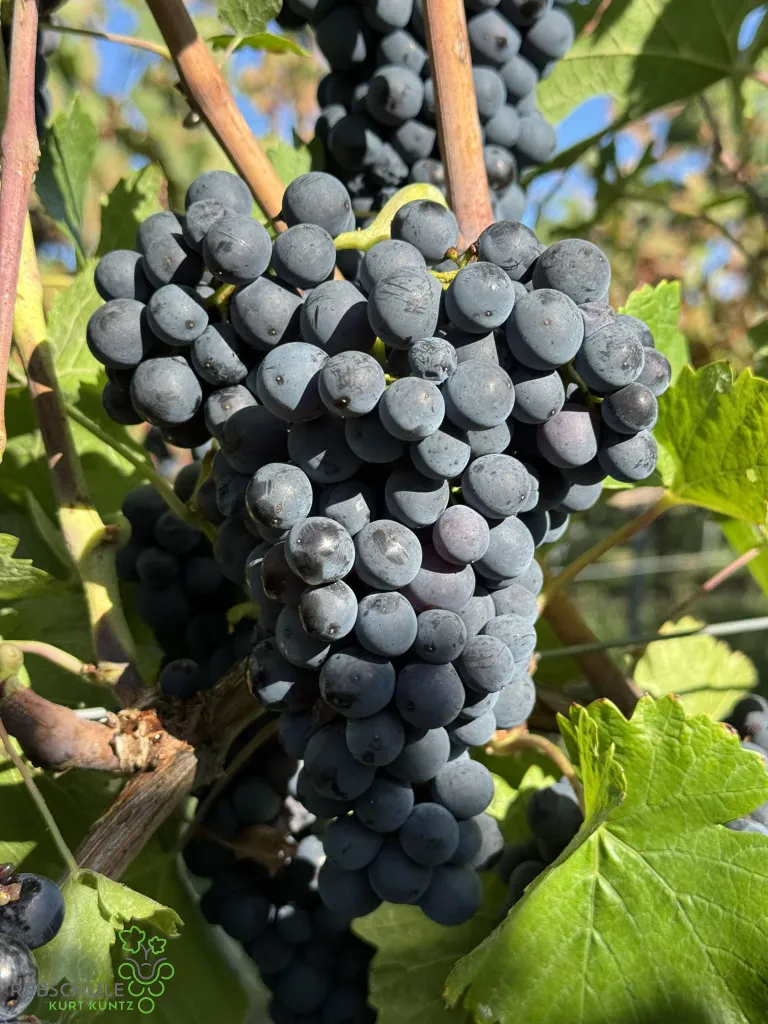
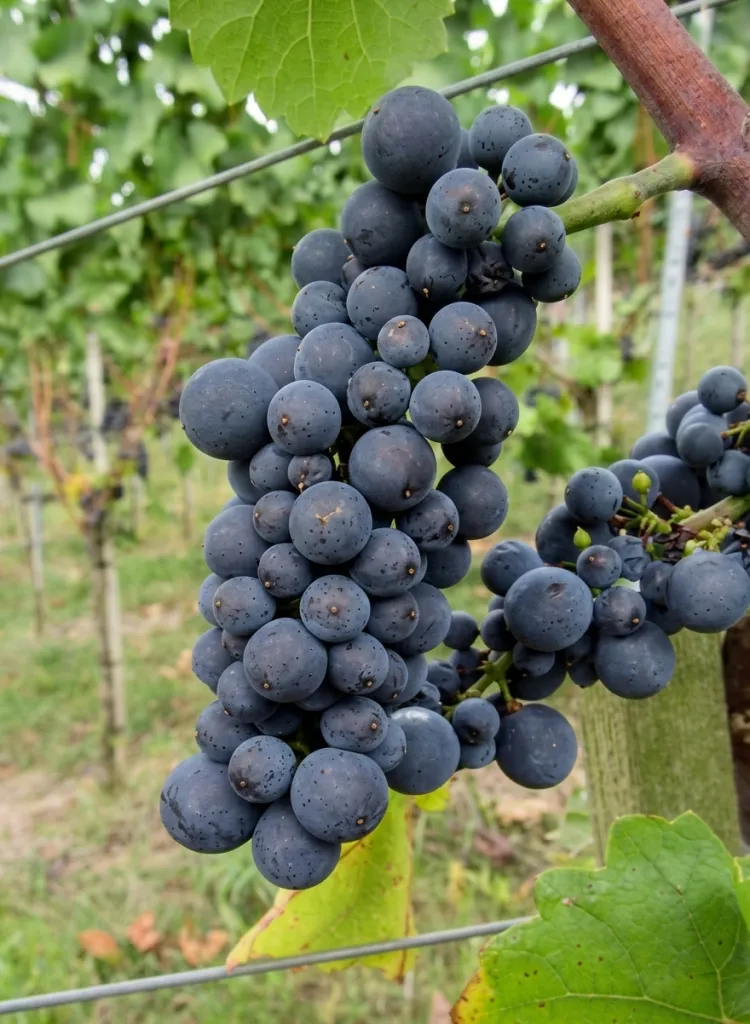
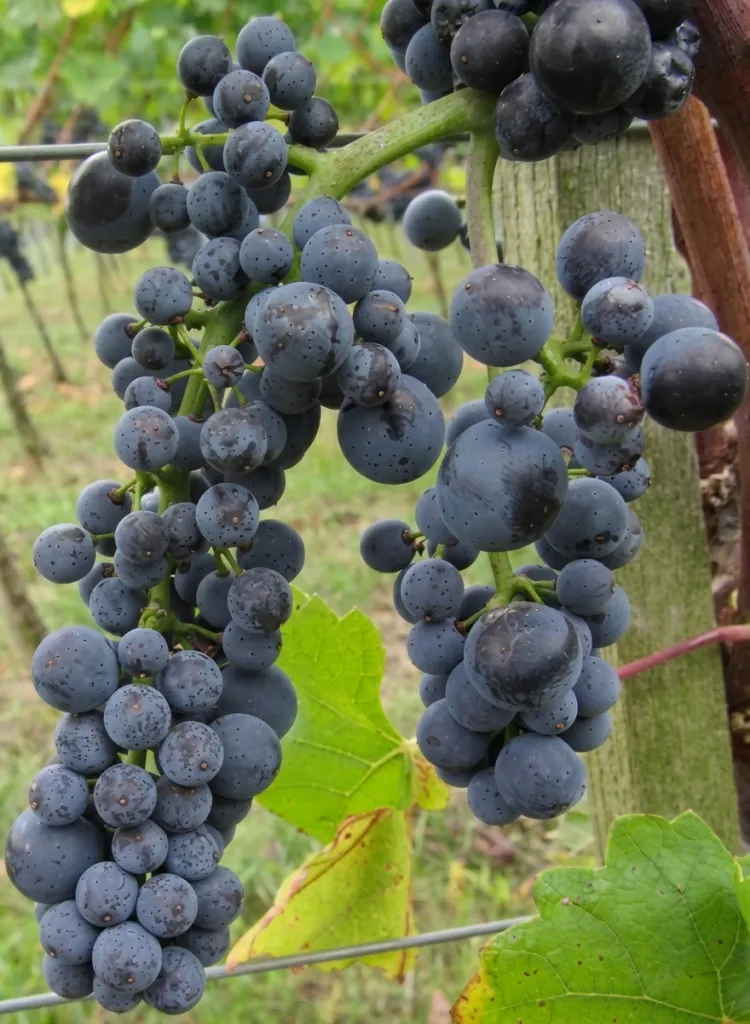
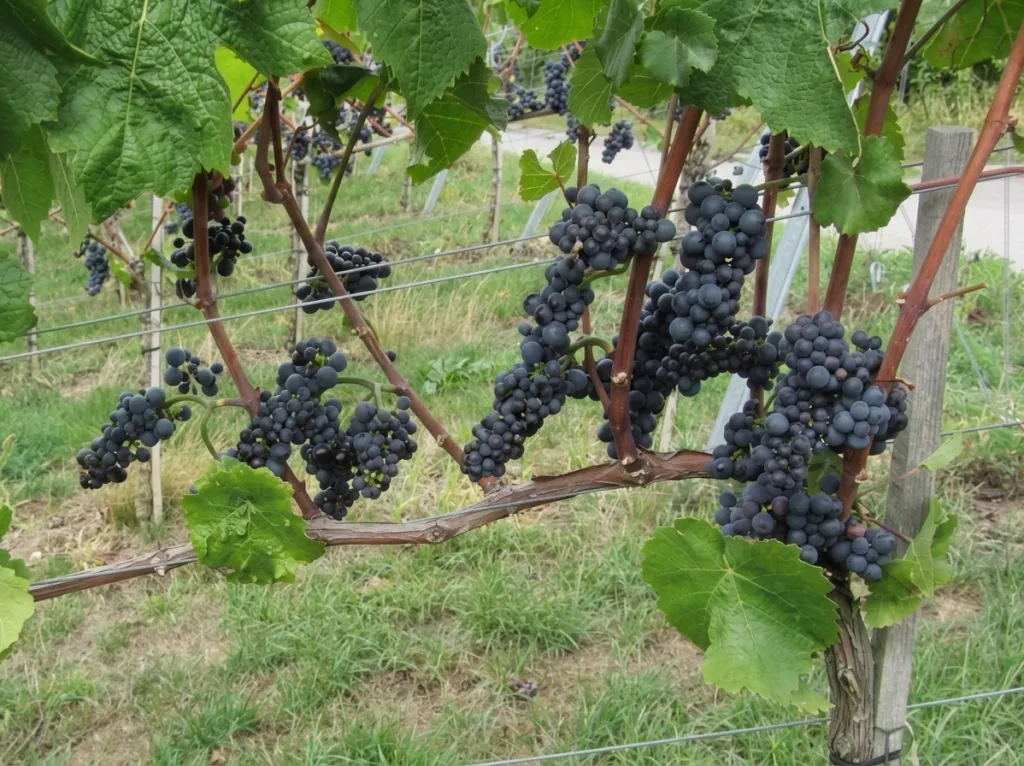
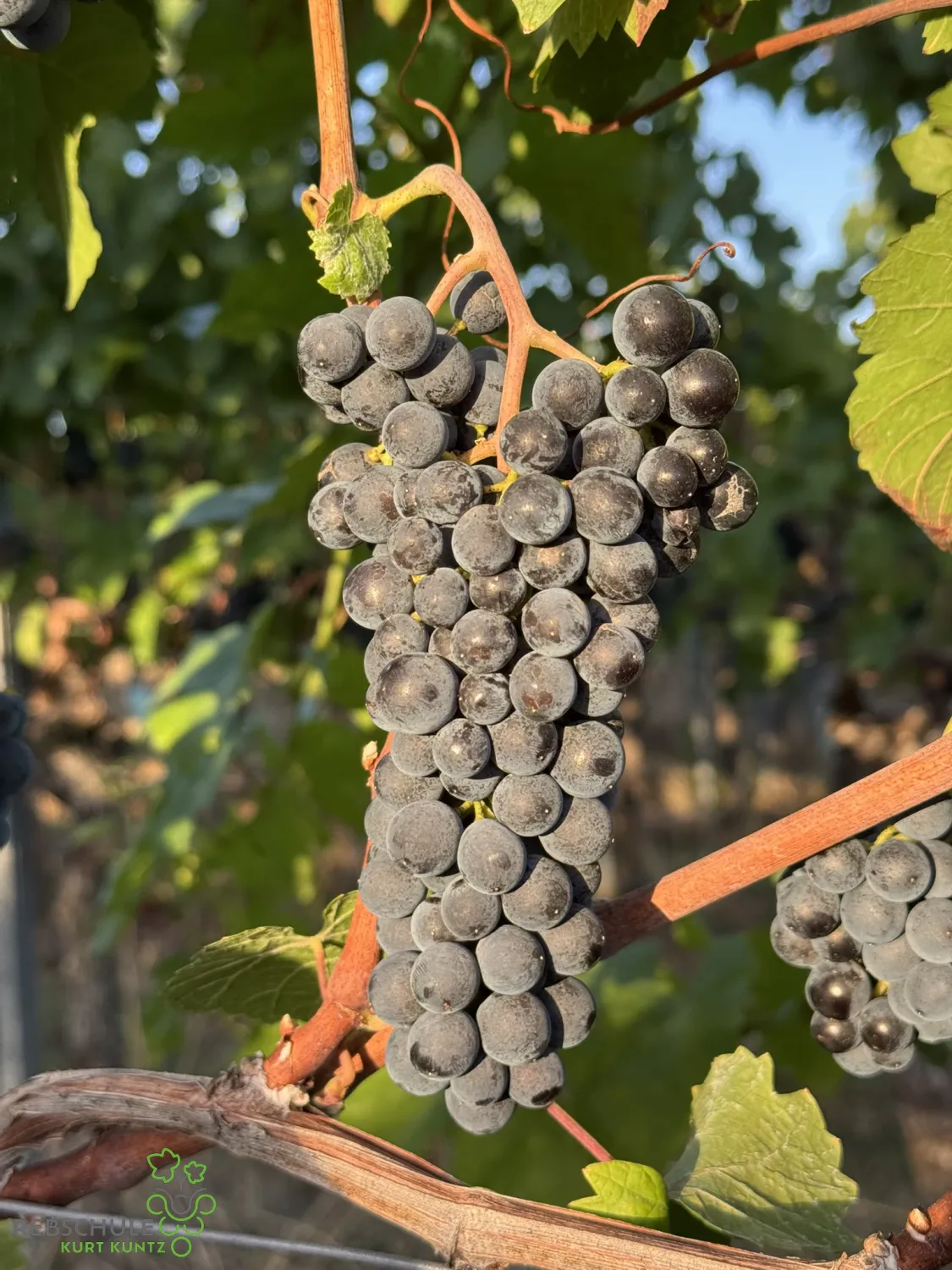
The cylindrical bunches are medium-sized and range from compact to loose depending on the clone, rarely winged. The roundish to oval berries are small to medium-sized, dark blue to bluish-violet in colour, and have a thin skin.“
Pinot Noir clones
Geisenheim
Pinot Noir Gm 20-13
Yield mediumBunches mixed berry sizeBotrytis susceptibility low
Weinsberg

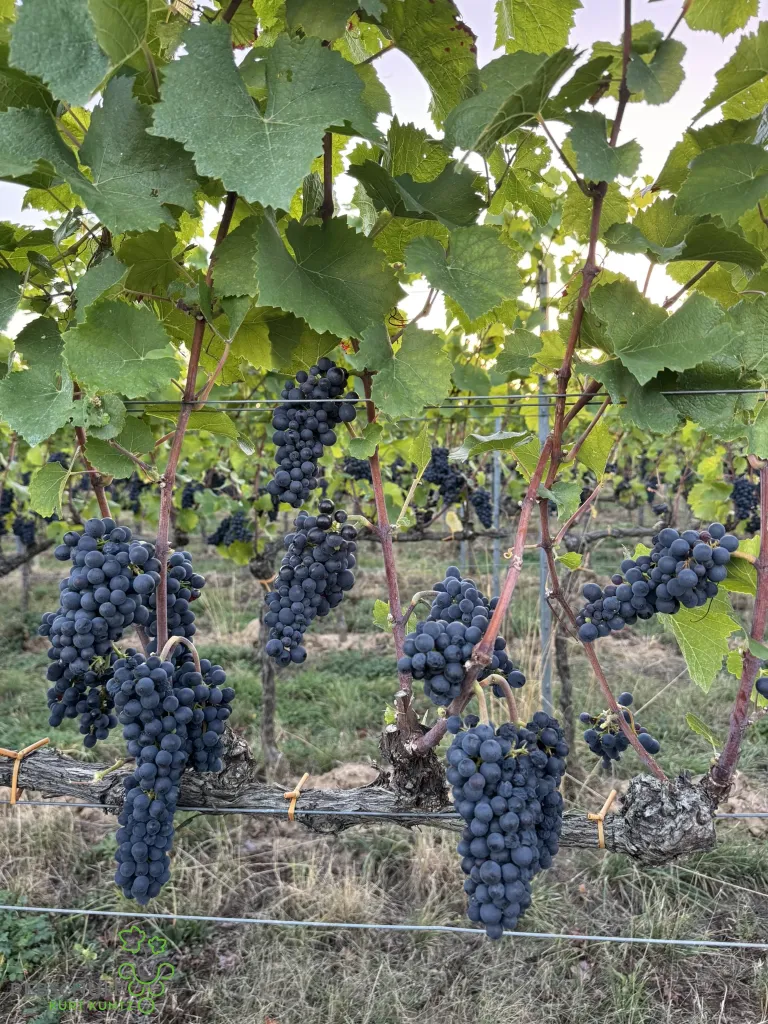
Pinot Noir We M 242
Yield highBunches loose-clusteredBotrytis susceptibility low


- Clone We M 242 was selected from clone We M 1. Compared with We M 1, it ripens slightly earlier on average and exhibits a somewhat more upright growth habit.

Pinot Noir We SLK 1
Yield very low – lowBunches millerandage – looseBotrytis susceptibility low


Origin: selection 2002, very old Pinot Noir vineyard in the Heilbronn area
Bunch structure: very loose
Berry size: approx. 80% small, 20% medium-sized
Yield: approx. 40–80 kg/a (4–8 t/ha), depending on pruning and site
Must weight: approx. 95–100 °Oe / 22.7–23.8 °Brix
Wine style: Dense, concentrated premium wines with rich, ripe aromas of dark cherries and wild berries, full body, soft tannins and deep colour

Pinot Noir We SLK 2
Yield very low – lowBunches millerandage, loose – compactBotrytis susceptibility low


Origin: Selection 2002, old Pinot Noir vineyard in the Palatinate; original vines of French origin
Bunch structure: loose to compact
Berry size: approx. 50% small, 50% medium-sized
Yield: approx. 60–90 kg/a (6–9 t/ha), depending on pruning and site
Must weight: approx. 95–100 °Oe / 22.7–23.8 °Brix
Wine style: Premium wines with concentrated aromas, spicy notes, a slightly lighter ruby colour and a firmer tannin structure than SLK 1
Freiburg
Pinot Noir FR 1801
Yield mediumBunches mixed berry sizeBotrytis susceptibility low
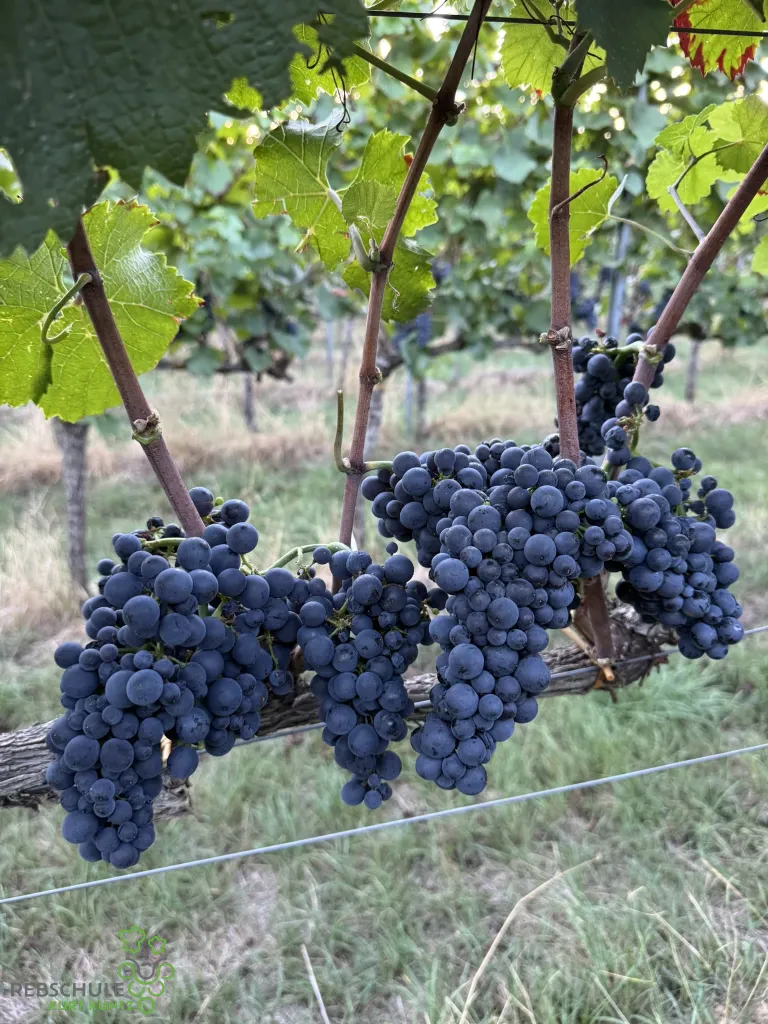
Quality clone
similar characteristics to Gm 20-13
France
Pinot Noir ENTAV-INRA 777
Yield lowBunches tightly clusteredBotrytis susceptibility high
- Dijon clone
- more compact than clones 828 and 943
- under German growing conditions, the clone is highly susceptible to rot, often requiring an unreasonably high level of effort to produce healthy grapes.
Pinot Noir ENTAV-INRA 828
Yield lowBunches tightly clusteredBotrytis susceptibility above average
- Dijon clone
- slightly looser compared to 777
- slightly more compact than 943
Pinot Noir ENTAV-INRA 943
Yield lowBunches millerandage – compactBotrytis susceptibility low to medium
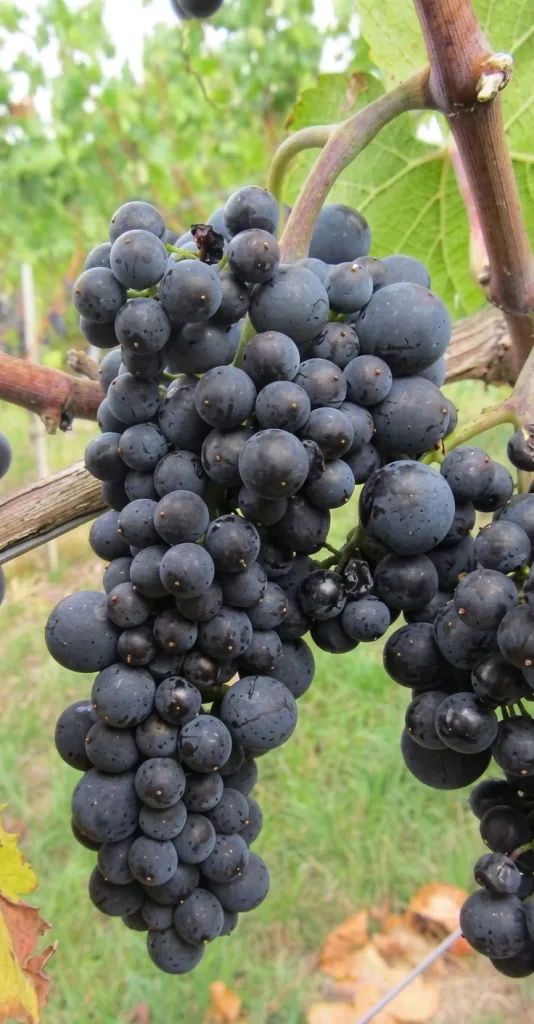
- Dijon clone
- looser compared to 777 and 828
- prone to coulure, resulting in vintage-dependent fluctuations in millerandage and yield
- frequently produces seedless berries, making it susceptible to shrivelling in hot weather
- LVWO Weinsberg, Dr. Jürgen Sturm (Pinot Noir We SLK 1, Pinot Noir We SLK 2)