Müller-Thurgau

Crossing

Riesling x Madeleine Royale

Synonym: Rivaner

Origin

Müller-Thurgau was bred in 1882 by the Swiss plant physiologist, botanist, oenologist and vine breeder Prof. Dr Hermann Müller, from the canton of Thurgau, at what was then the Geisenheim Research Institute. The aim was to develop an early-ripening, high-yielding grape variety that produced good-quality wine. For a long time, Müller-Thurgau was thought to be a cross between Riesling and Silvaner. However, modern DNA analyses have shown that the grape variety actually originated from a cross between Riesling and Madeleine Royale. It owes its name to its breeder and his home canton of Thurgau.

Characteristics

  • mid-early bud burst
  • medium-early ripening
  • high yield potential
  • loose-clustered bunches
  • vigorous
  • high susceptibility to powdery mildew (Oidium), downy mildew (Peronospora), and Phomopsis
  • moderate wood maturity

Site requirements

Müller-Thurgau is relatively undemanding in terms of soil and climate. As a result, it can be successfully cultivated even in less favourable locations, where it delivers reliable yields and basic wine quality. However, deep soils with good water-retention capacity are advantageous for the production of high-quality wines. These site conditions promote even ripening of the grapes and ensure well-balanced, full-bodied wines.

Aromas

Müller-Thurgau is generally characterised by pronounced fruity aromas, the intensity of which, however, is significantly influenced by the yield level and the ripeness of the grapes. High yields often result in wines with delicate fruit notes that are rather uncomplicated, whilst lower yields and good physiological ripeness significantly enhance the variety’s typical aromas. Müller-Thurgau has comparatively high levels of monoterpenes, which lend the wines their typical floral and slightly nutmeg-like aromas. The range of aromas extends from green apple, pear and peach, through elderflower and white blossoms, to a subtle hint of nutmeg. The generally mild acidity emphasises the harmonious and approachable character of the wines. Maturation takes place predominantly in stainless-steel tanks, which helps to preserve the freshness, fruit and varietal aromas particularly well. Müller-Thurgau is generally drunk young, though on good sites and with reduced yields it can also produce fuller-bodied and more complex wines.

Bunch

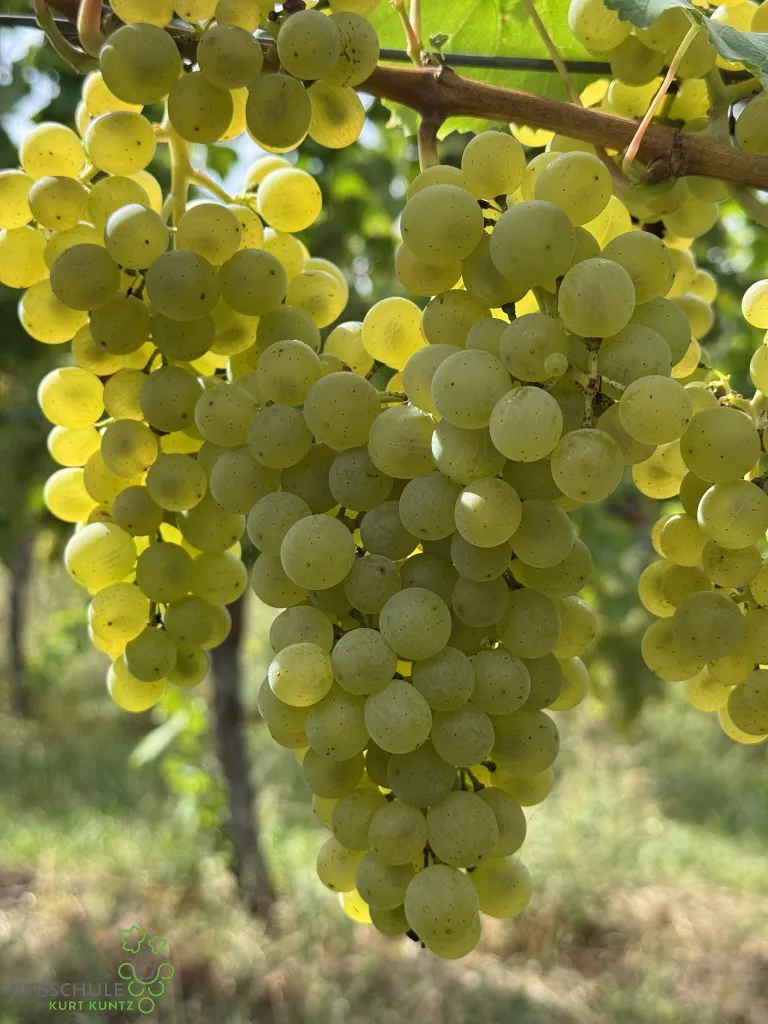
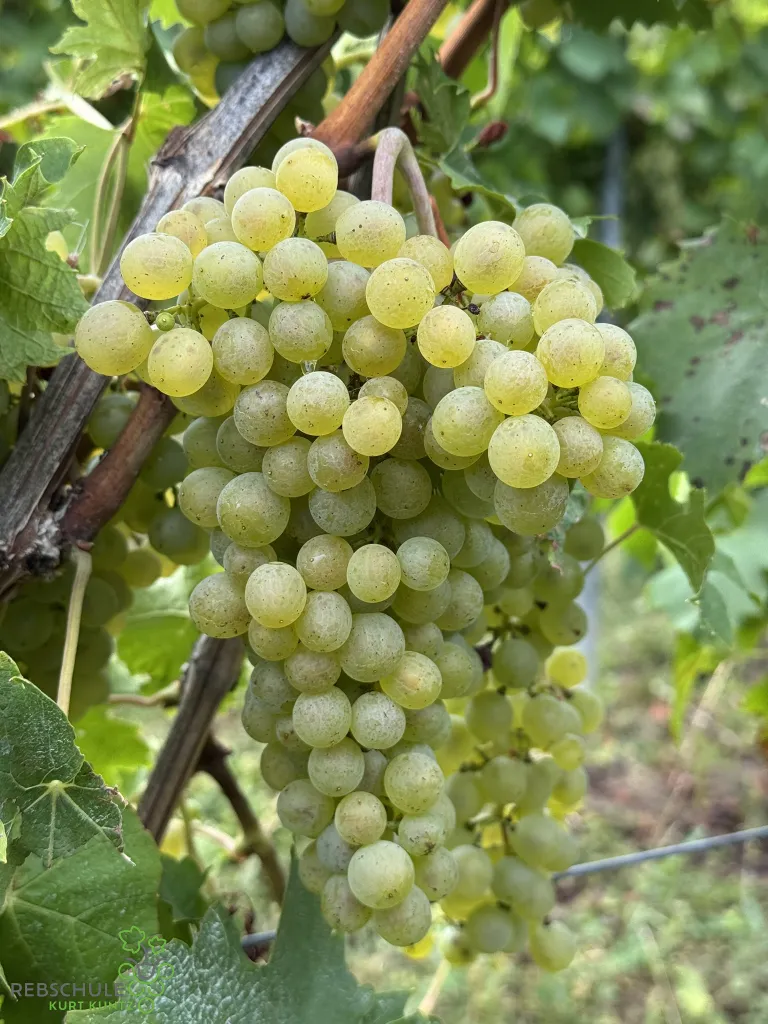
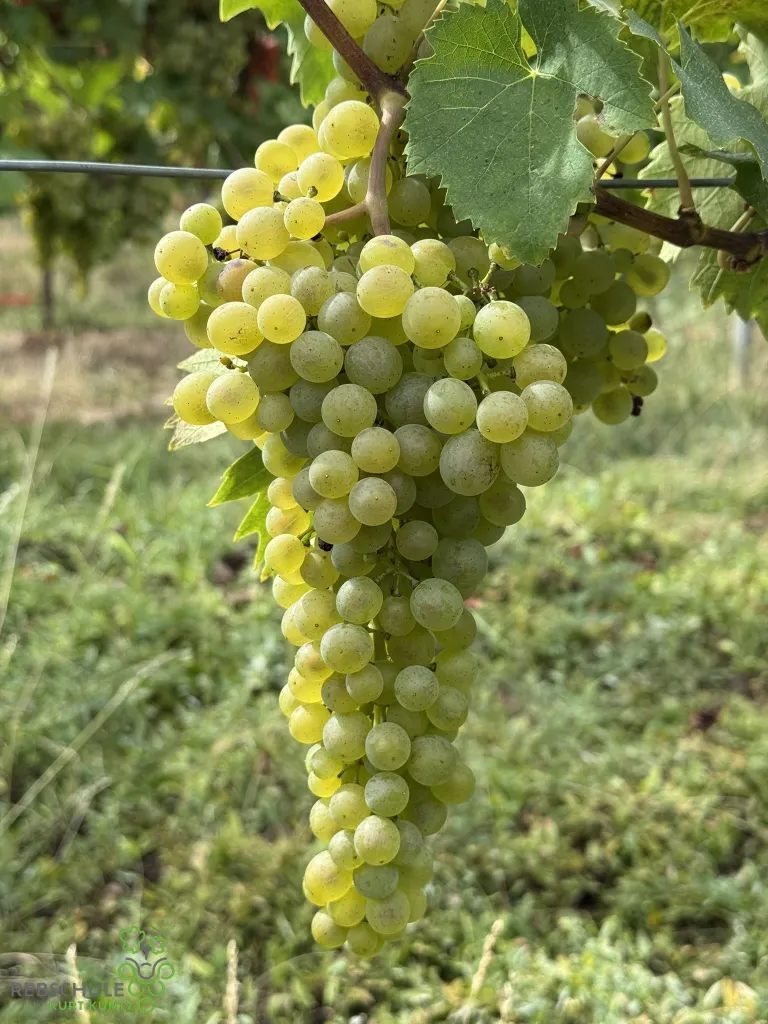
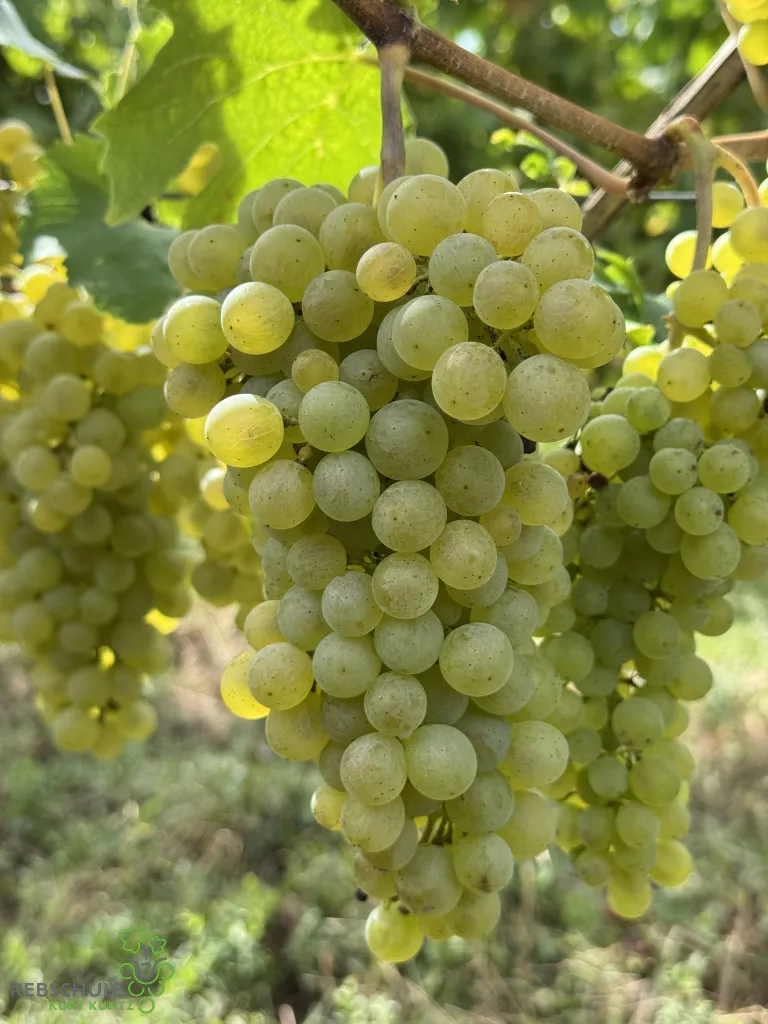
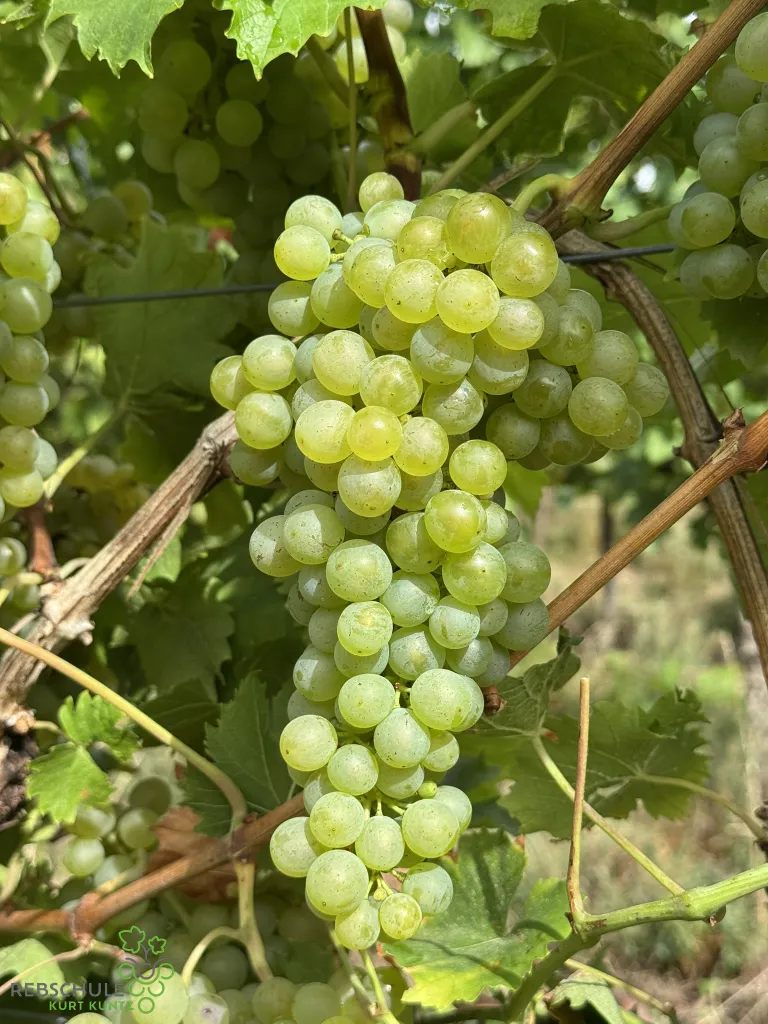
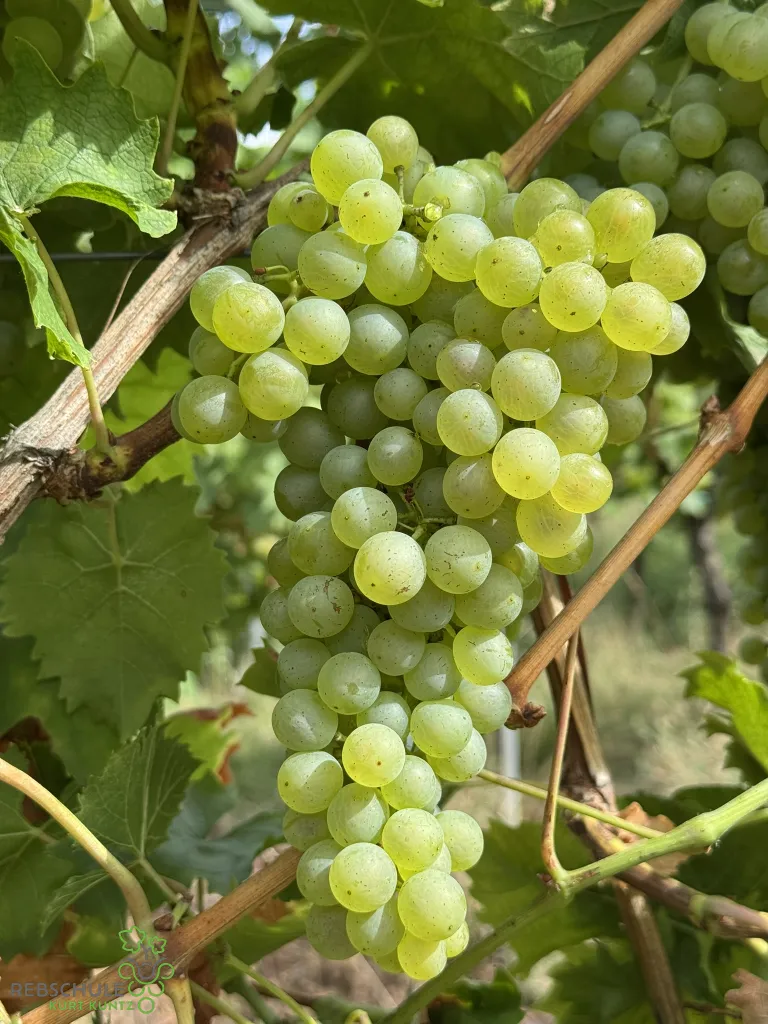
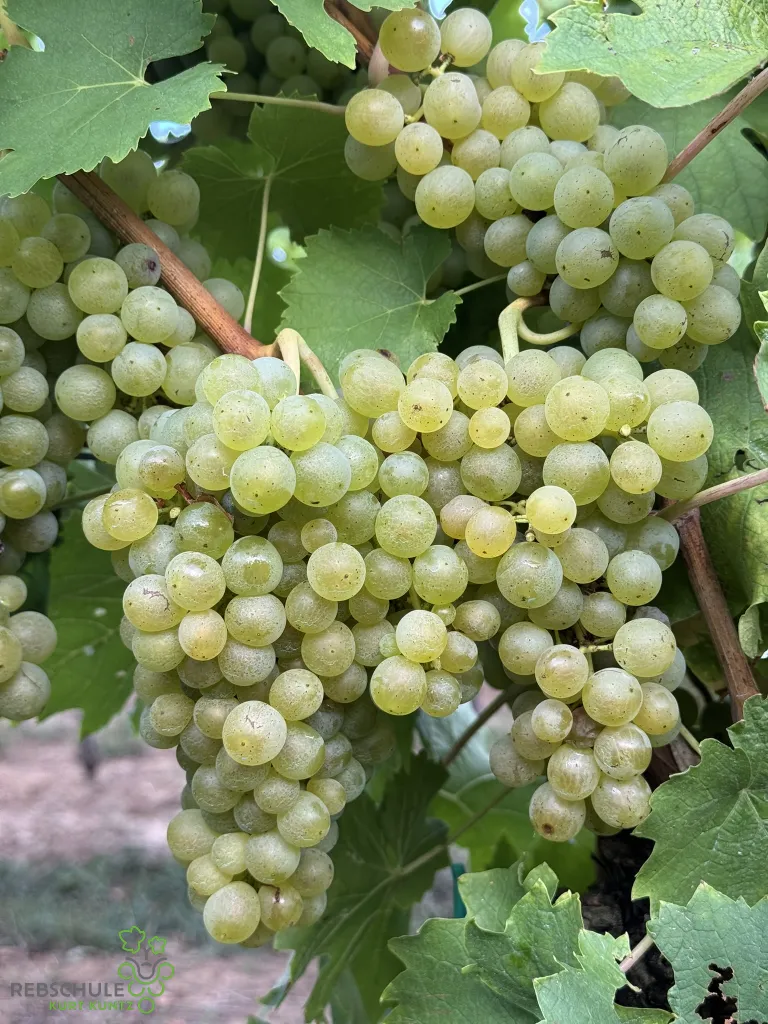
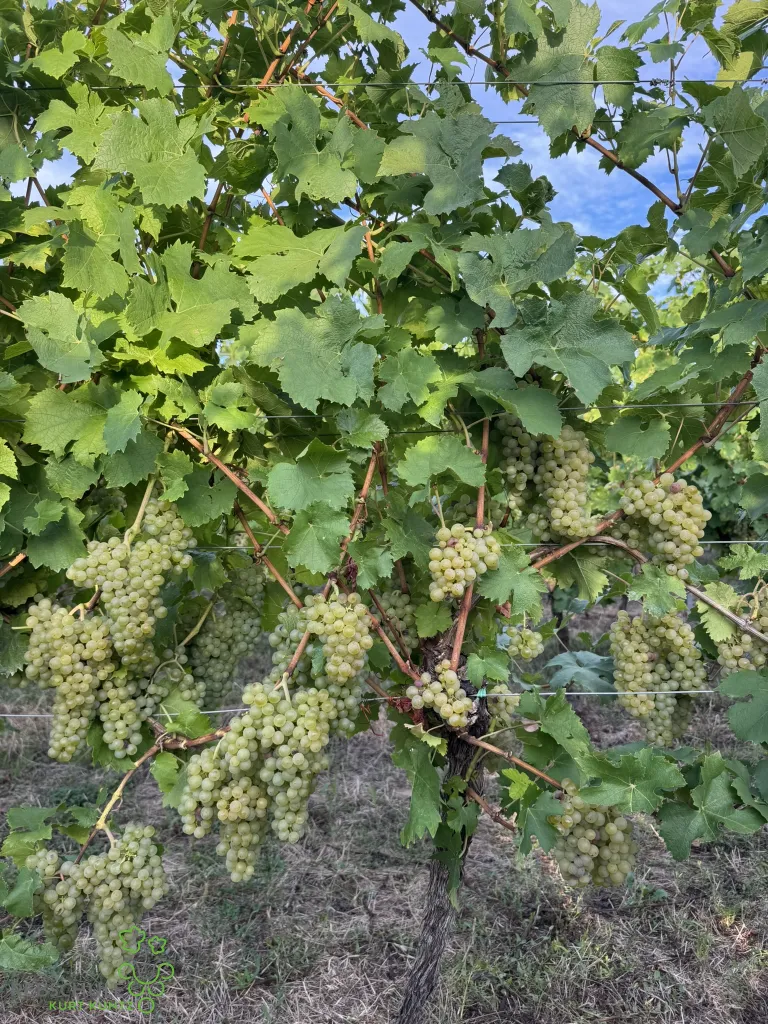
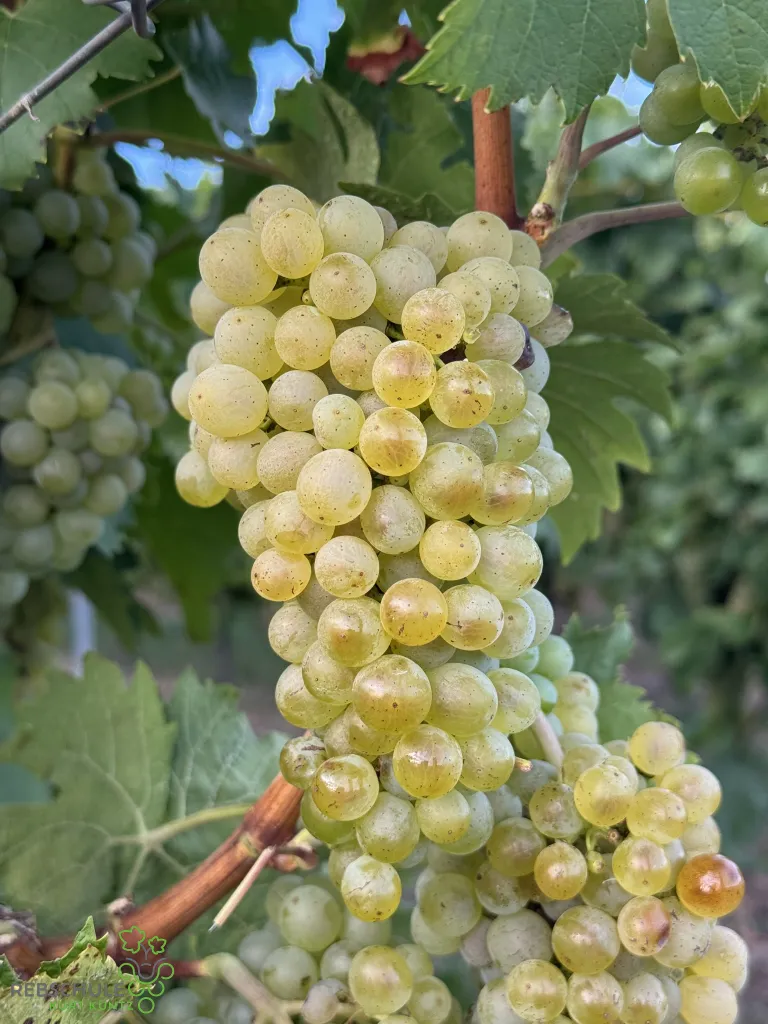
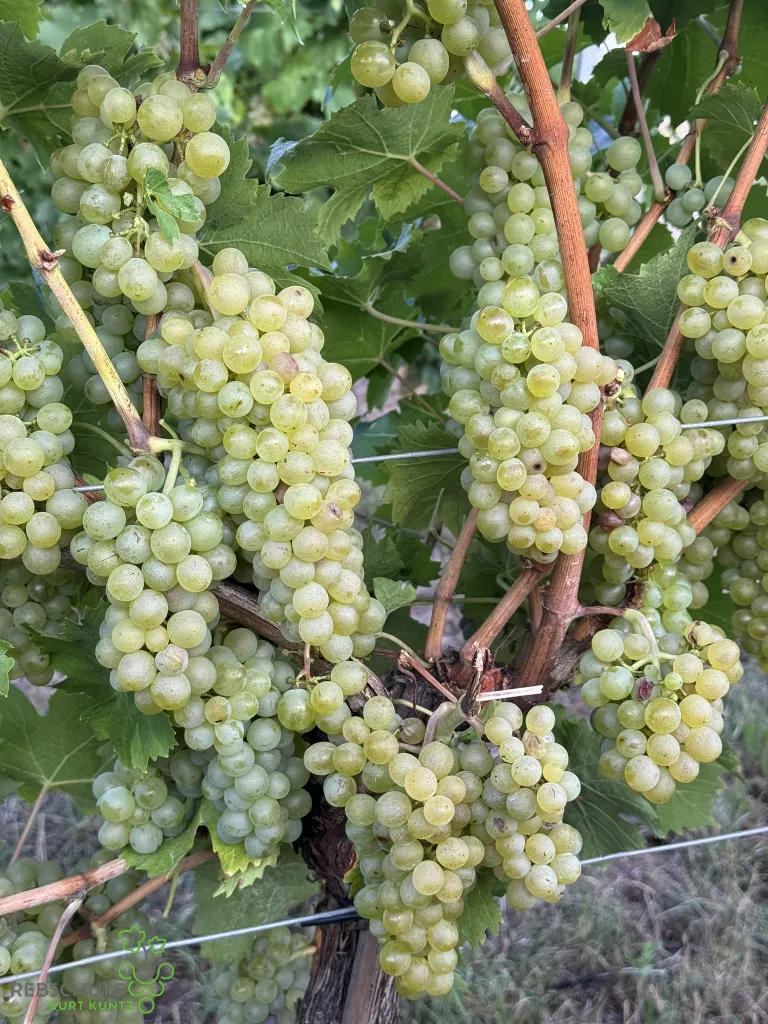
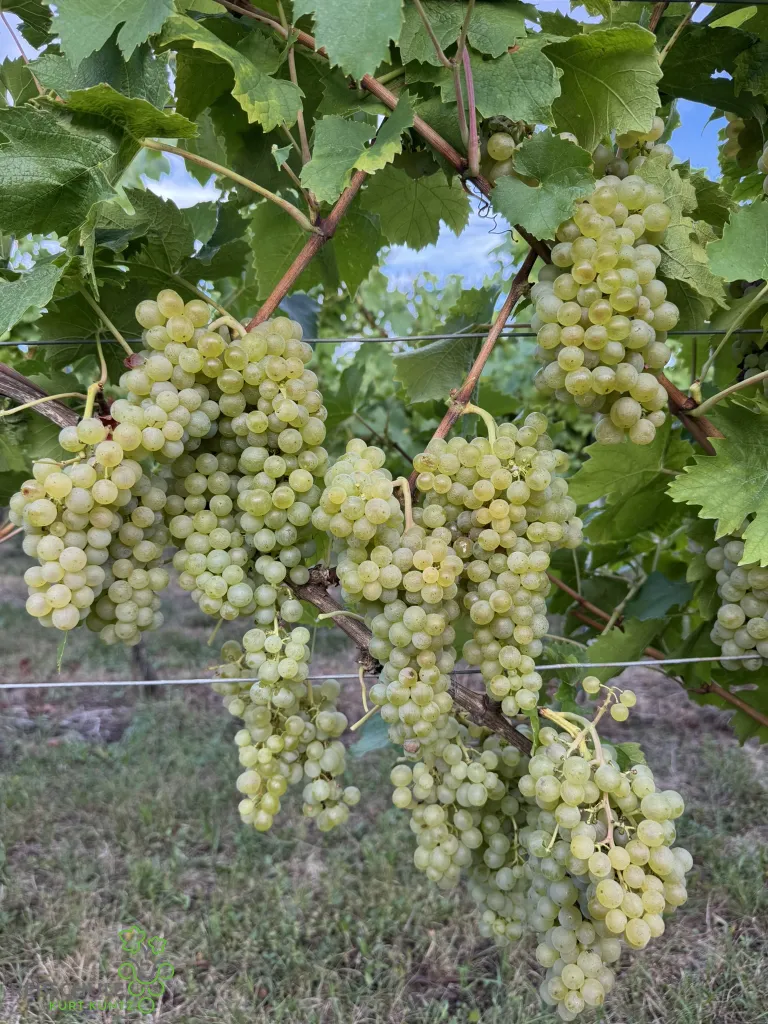
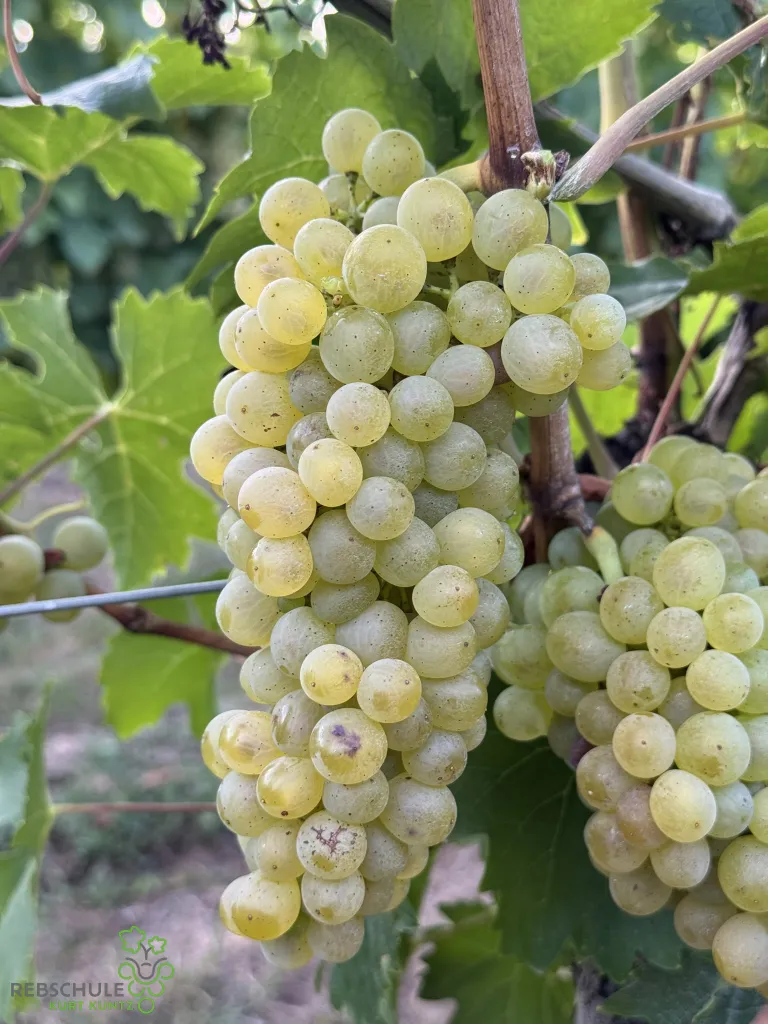
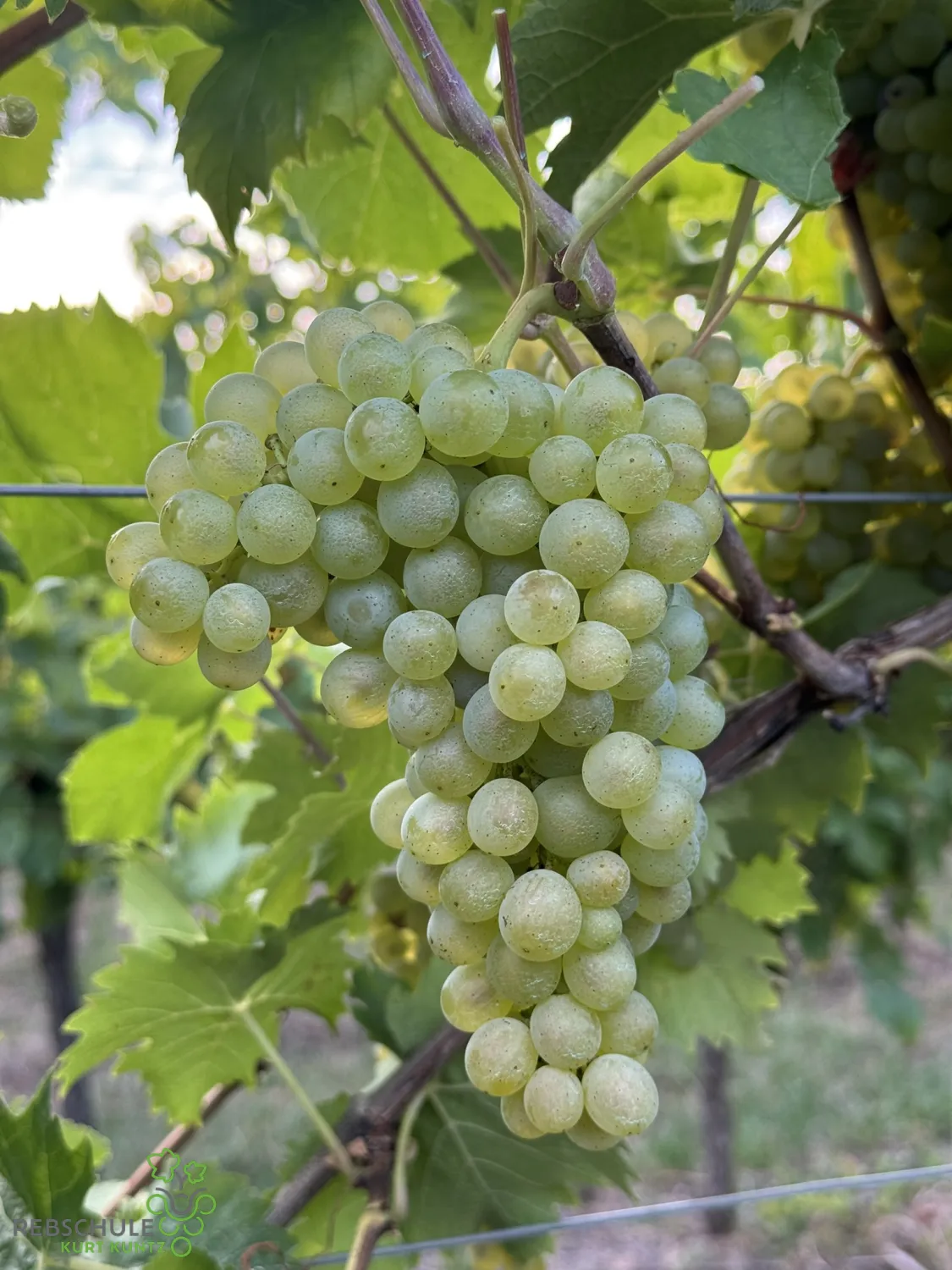
This grape variety produces medium-sized to large bunches, which are usually conical in shape, often shouldered, and range from loose to compact in structure. The oval berries ripen to a yellowish-green colour. They have juicy, uncoloured flesh and are characterised by a subtle nutmeg flavour.

Müller-Thurgau clones

Geisenheim
Müller-Thurgau Gm 68-13

Yield highBunches Loose to medium-denseBotrytis susceptibility low
Müller-Thurgau Gm 68-13 – image 1
Müller-Thurgau Gm 68-13, vine 1
Müller-Thurgau Gm 68-13 – image 2
Müller-Thurgau Gm 68-13, vine 2
Müller-Thurgau Gm 68-13 – image 3
Müller-Thurgau Gm 68-13, vine 3
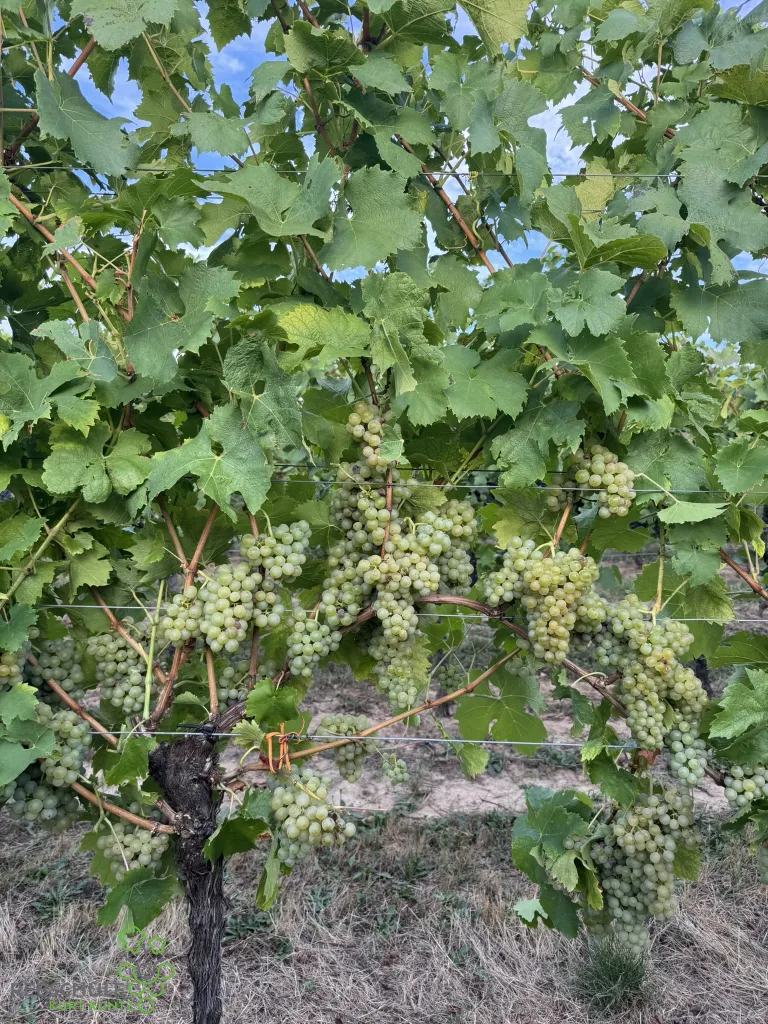
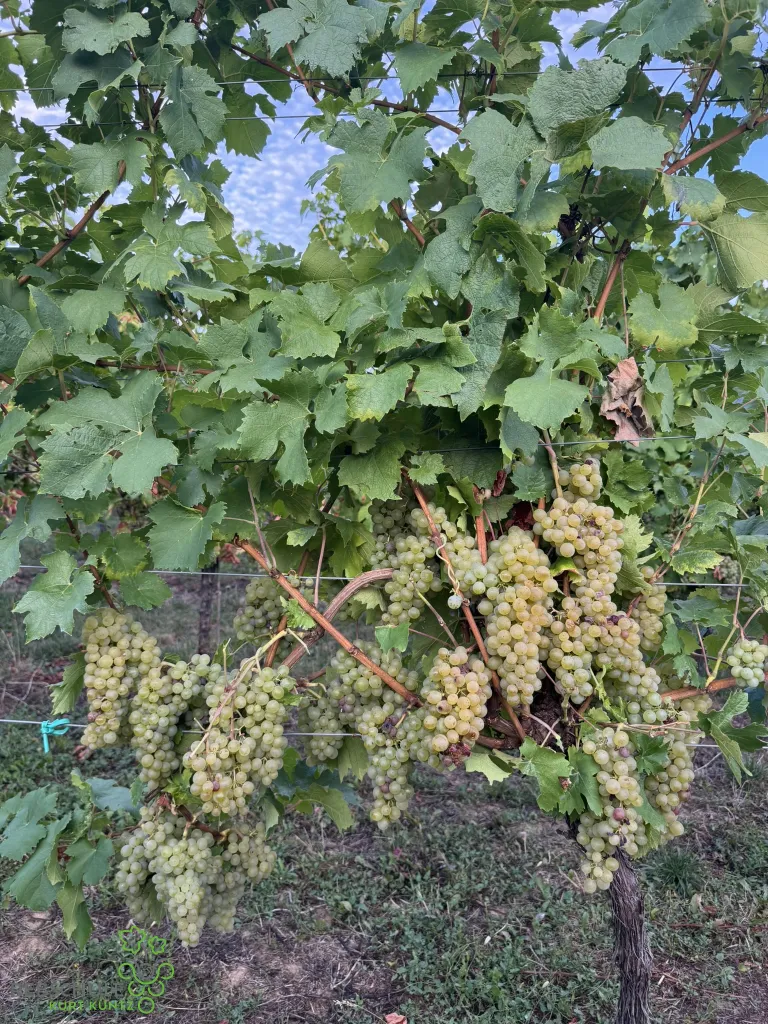
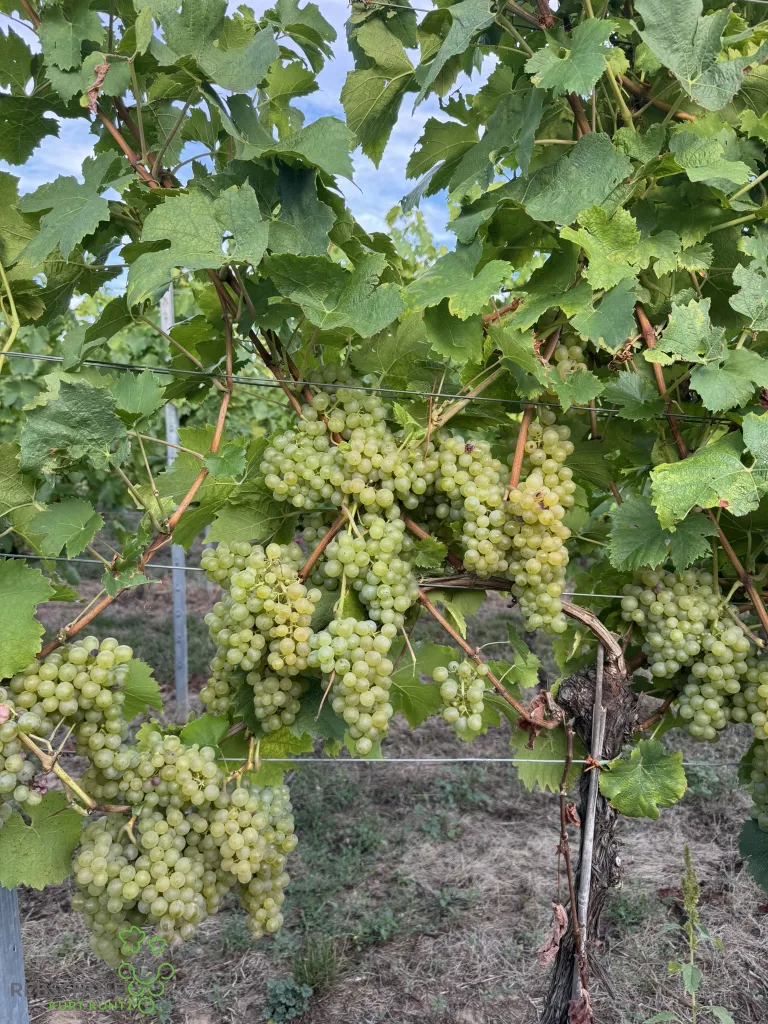
Müller-Thurgau clone Gm 68-13 grapes on the vine
Müller-Thurgau Gm 68-13, vine 4
Müller-Thurgau Gm 68-13 – image 4
Müller-Thurgau Gm 68-13 Grape 1
Müller-Thurgau clone Gm 68-13 – close-up of a grape
Müller-Thurgau Gm 68-13 Grape 2
Müller-Thurgau Gm 68-13 – image 5
Müller-Thurgau Gm 68-13 Grape 3
Müller-Thurgau Gm 68-13 – image 6
Müller-Thurgau Gm 68-13 Grape 4
  • thick-skinned clone

Müller-Thurgau Gm 68-10

Yield highBunches Loose to medium-denseBotrytis susceptibility low
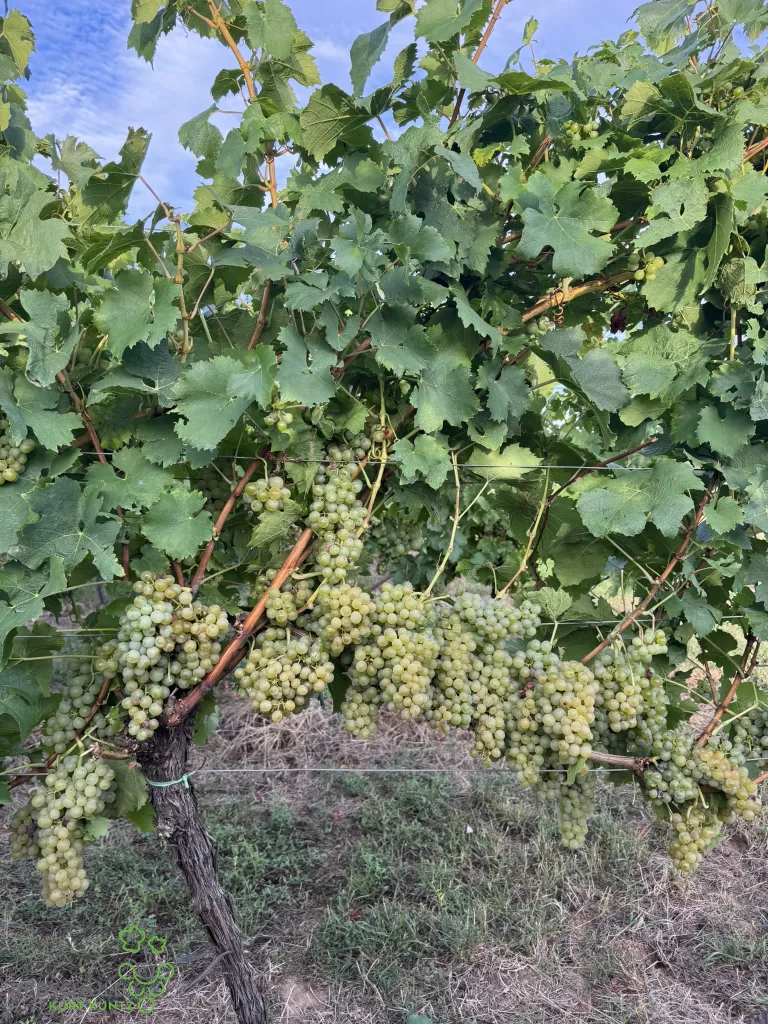
Müller-Thurgau clone Gm 68-10 grapes on the vine
Müller-Thurgau Gm 68-10, vine 1
Müller-Thurgau Gm 68-10 – image 1
Müller-Thurgau Gm 68-10, vine 2
Müller-Thurgau Gm 68-10 – image 2
Müller-Thurgau Gm 68-10 Grape 1
Müller-Thurgau clone Gm 68-10 – close-up of a grape
Müller-Thurgau Gm 68-10 Grape 2
Müller-Thurgau Gm 68-10 – image 3
Müller-Thurgau Gm 68-10 Grape 3
Müller-Thurgau Gm 68-10 – image 4
Müller-Thurgau Gm 68-10 Grape 4
Müller-Thurgau Gm 68-10 – image 5
Müller-Thurgau Gm 68-10 Grape 5
  • thick-skinned clone

Müller-Thurgau Gm 68-16

Yield above averageBunches Loose to medium-denseBotrytis susceptibility medium
Müller-Thurgau clone Gm 68-16 grapes on the vine
Müller-Thurgau Gm 68-16, vine 1
Müller-Thurgau Gm 68-16 – image 1
Müller-Thurgau Gm 68-16, vine 2
Müller-Thurgau Gm 68-16 – image 2
Müller-Thurgau Gm 68-16, vine 3
Müller-Thurgau Gm 68-16 – image 3
Müller-Thurgau Gm 68-16, vine 4
Müller-Thurgau Gm 68-16 – image 4
Müller-Thurgau Gm 68-16 Grape 1
Müller-Thurgau Gm 68-16 – image 5
Müller-Thurgau Gm 68-16 Grape 2
Müller-Thurgau clone Gm 68-16 – close-up of numerous bunches of grapes
Müller-Thurgau Gm 68-16 Grape 3
Müller-Thurgau Gm 68-16 – image 6
Müller-Thurgau Gm 68-16 Grape 4
  • More aromatic due to smaller berries.
  • Yield 10–15% lower than Gm 68-10 and Gm 68-13 due to smaller berries.

LWG Würzburg

Müller-Thurgau Wü 12-4

Yield highBunches Loose to medium-denseBotrytis susceptibility medium