Dornfelder

Crossing
Helfensteiner x Heroldrebe
Origin
Dornfelder was bred in 1955 by August Herold at the State Teaching and Research Institute for Viticulture and Pomology in Weinsberg from a cross between Helfensteiner and Heroldrebe. Named after Immanuel Dornfeld, the initiator and founder of the Weinsberg viticultural school, the variety was originally created to provide an intensely coloured grape for colour enhancement in blends (Deckrotwein). Following the grant of plant variety protection in 1979 and official approval in 1980, Dornfelder rapidly gained importance, establishing itself as one of Germany’s leading red wine varieties, particularly in the Palatinate and Rheinhessen. Today, Dornfelder is valued not only as a blending partner, but is also widely vinified as a single varietal, prized for its deep dark colour, pronounced fruit character and approachable structure.
Characteristics
- medium-early budburst
- medium-late to late ripening, strongly influenced by yield level
- deeply coloured
- high-yielding
- vigorous growth
- very low tendril development
- susceptible to esca
Site requirements
Despite its robustness, the variety is not undemanding and reacts sensitively to overly dry, nutrient-poor sites. Given its vigorous growth and high yield potential, tailored canopy management and consistent yield regulation are advisable to achieve good grape ripeness and sufficient wine quality.
Aromas
Dornfelder is characterised by an intense dark red colour and a pronounced fruity aromatic profile. Typical notes include sour cherry, blackberry, elderberry and damson plum, accompanied by spicy nuances depending on the degree of ripeness. The wines typically present as full-bodied and supple, with a well-integrated tannin structure.
Bunch
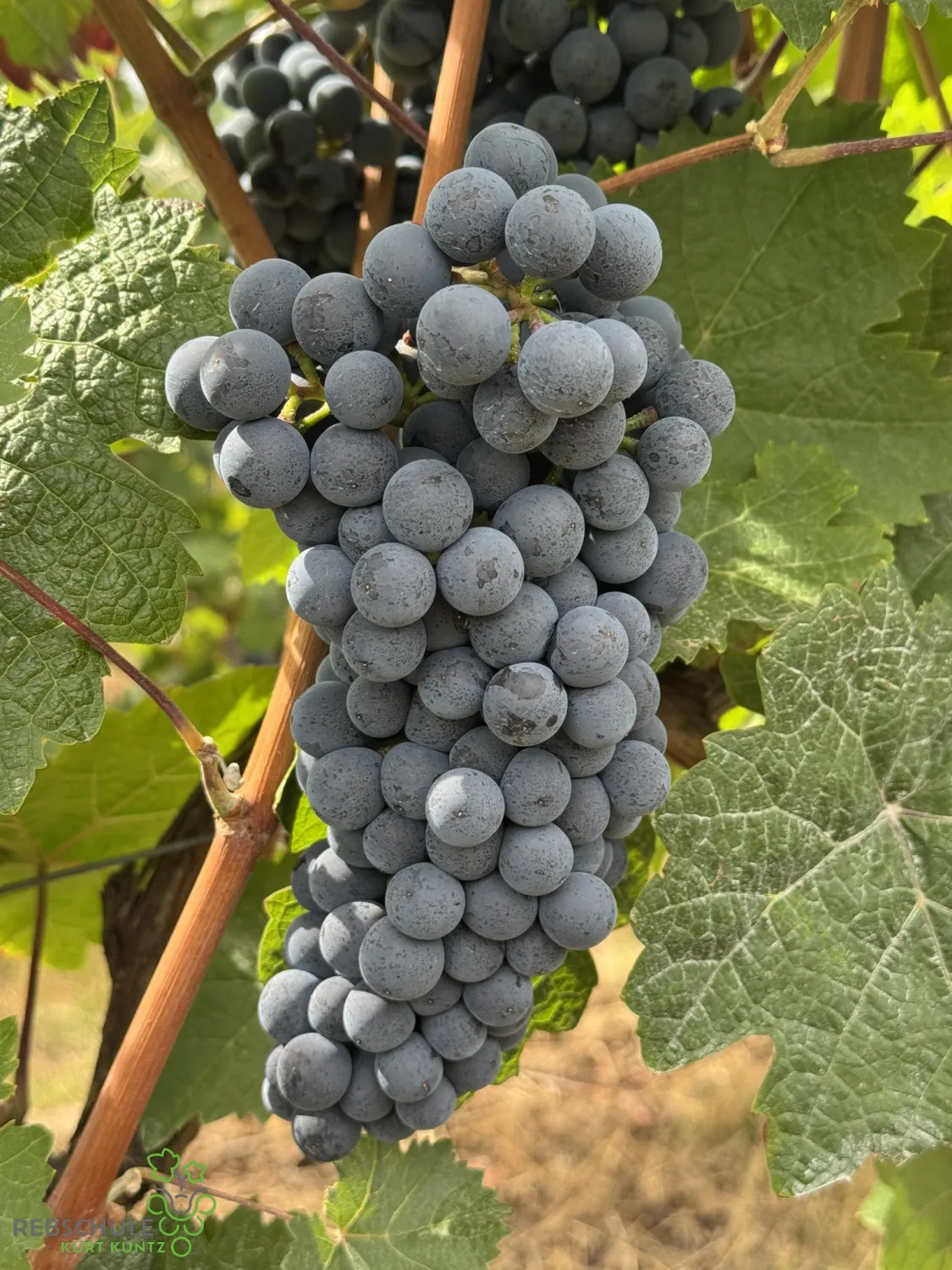
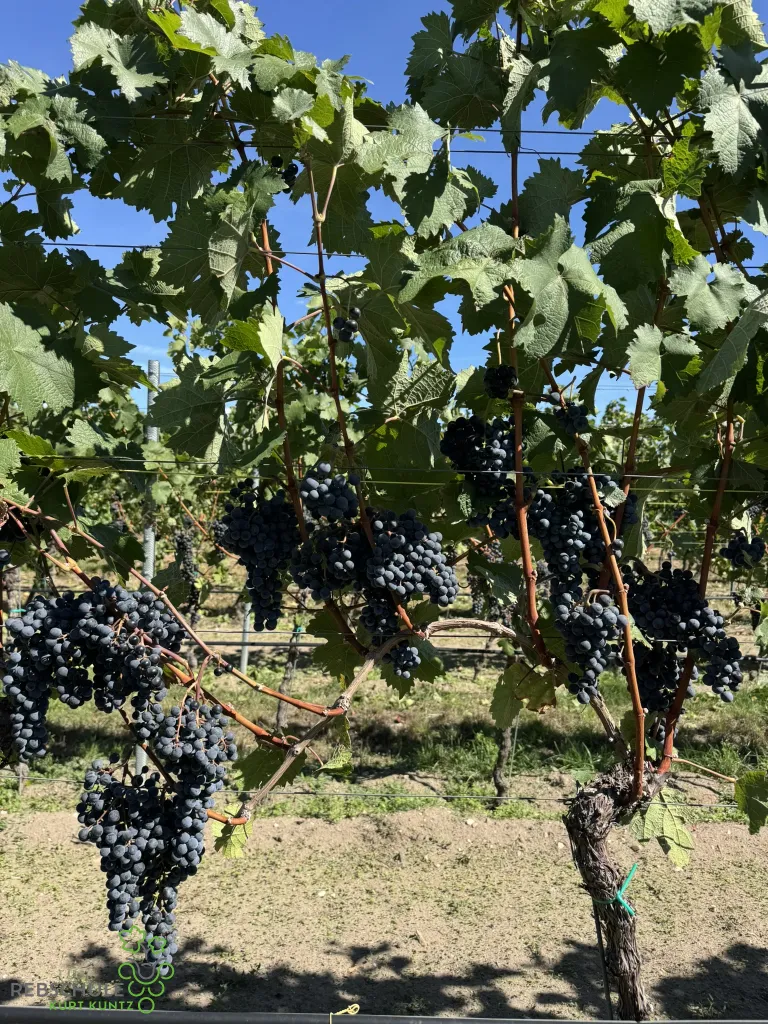
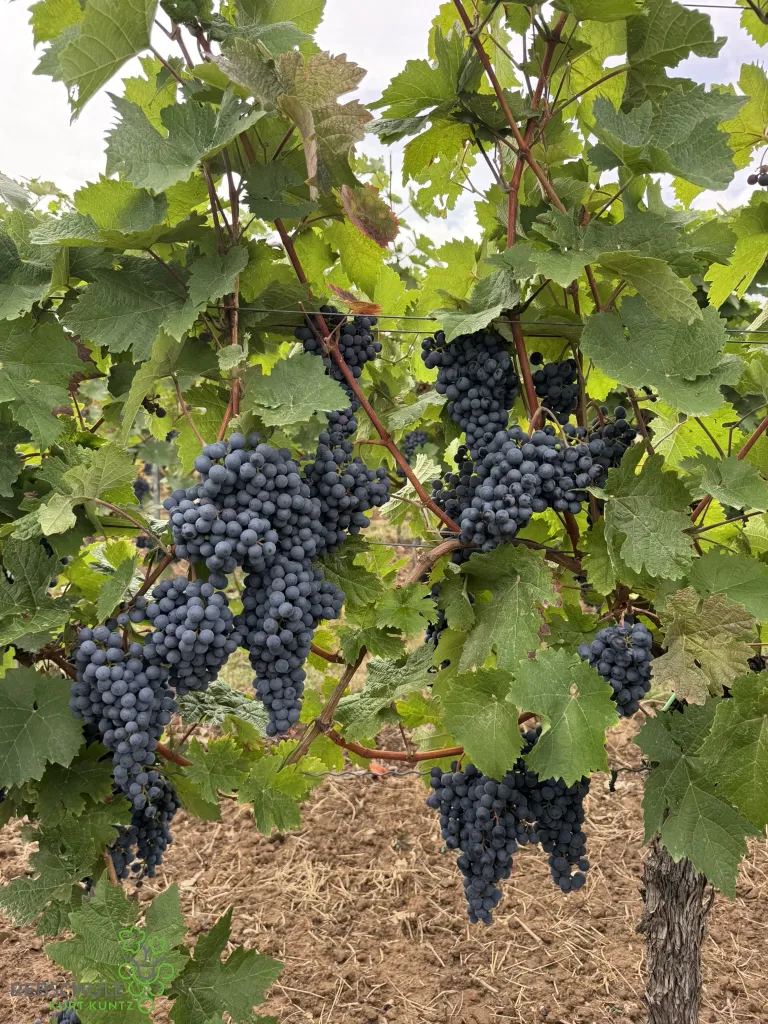
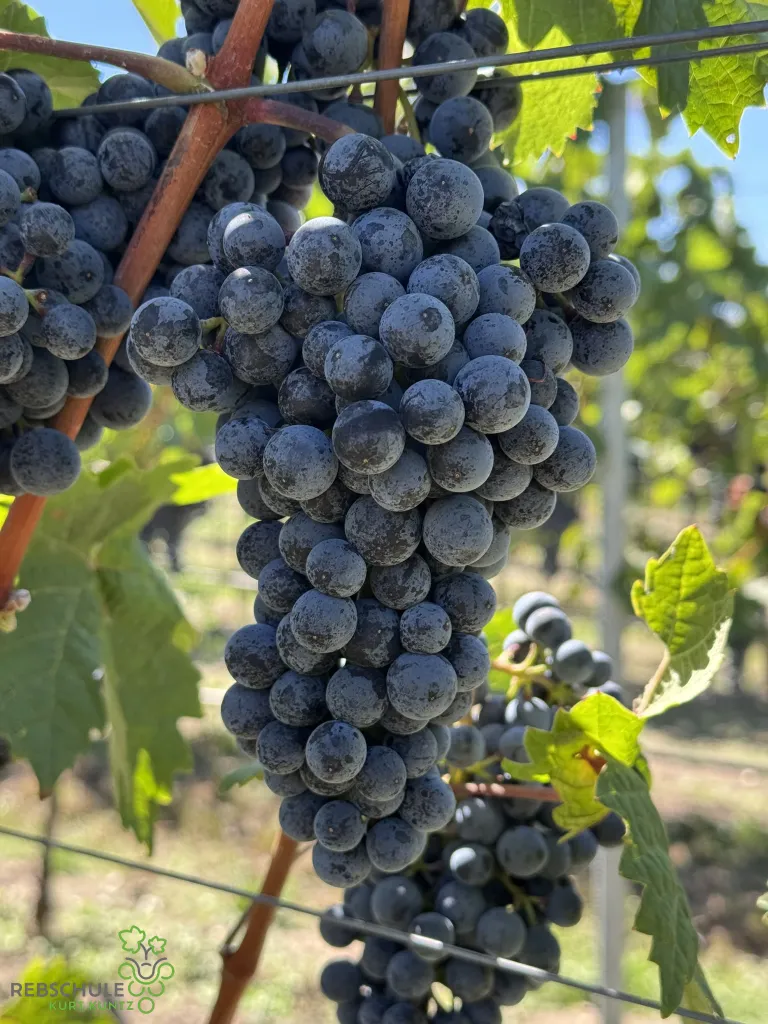
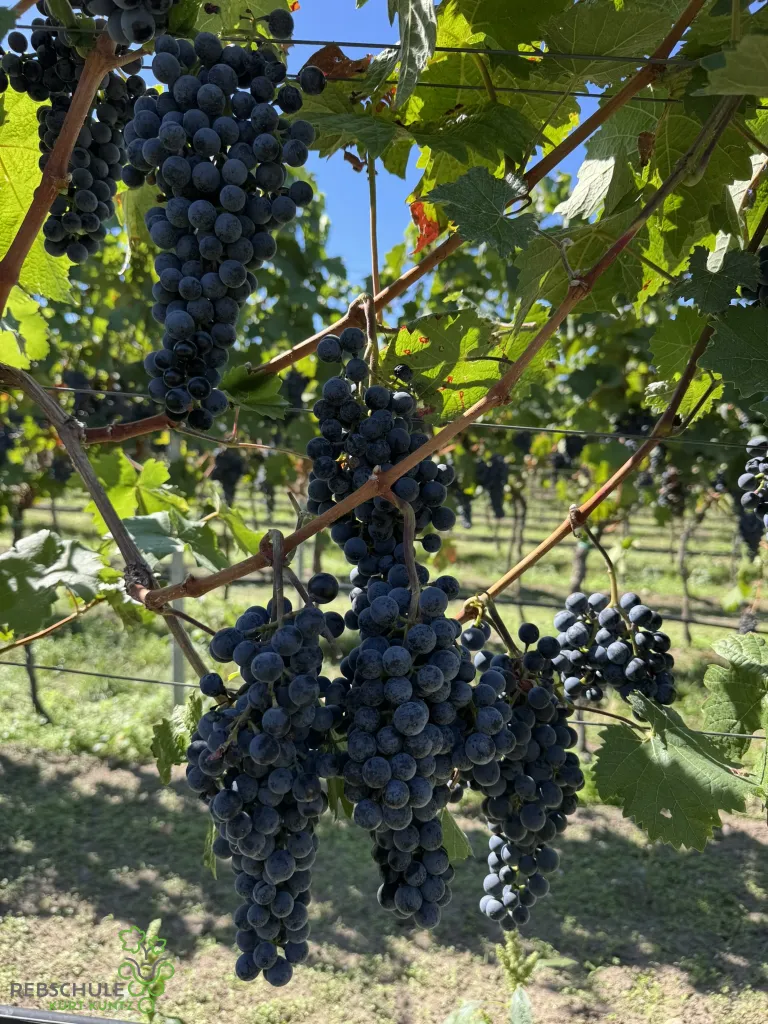
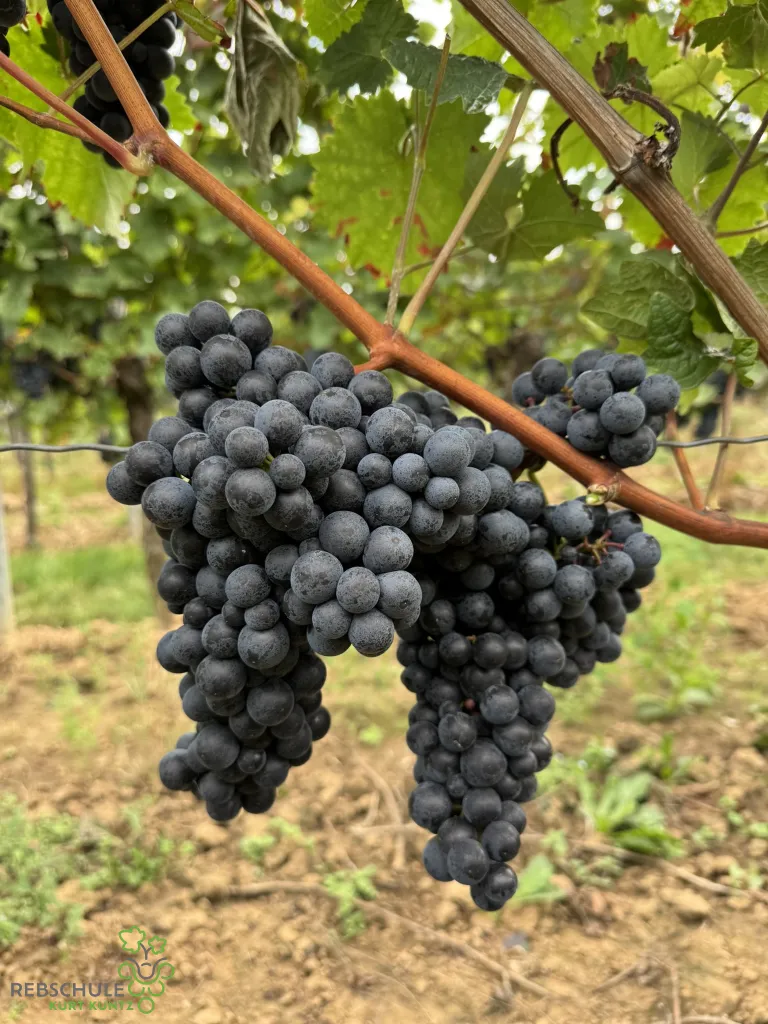
The bunches are large to very large and often winged, with a predominantly loose structure. The round to slightly oval berries are medium to large, blue-grey to blue-black in colour, and have a thick skin.
Dornfelder clones
Weinsberg


Dornfelder We 700
Yield high – very highBunches loose-clusteredBotrytis susceptibility low
- The sole clone