Calardis Blanc PIWI

Crossing
Calardis Musqué × Seyve Villard 39-639
Calardis Musqué (Bacchus × Seyval Blanc)
Seyve Villard 39-639 (origin unknown)
Origin
Calardis Blanc was bred in 1993 at the Institute for Grapevine Breeding Geilweilerhof in Siebeldingen, Palatinate. This fungus-resistant (PIWI) white wine cultivar resulted from a cross between Calardis Musqué (Bacchus × Seyval Blanc) and Seyve Villard 39-639, the precise parentage of which remains unknown. The cultivar was originally trialled under the breeding code Gf. 1993-22-6. The name Calardis Blanc derives from ‘Calardiswilre’, a historical name for Geilweilerhof first documented in 1184. Plant variety rights were granted in 2018, followed by official commercial registration in 2020.
Characteristics
- late budburst
- medium-late ripening, slightly ahead of Riesling
- upright shoot growth
- low lateral shoot development
- high yield potential
- low susceptibility to sunburn
Site requirements
Based on in-house vineyard observations, Calardis Blanc thrives particularly well on medium-weight soils with a consistent water supply. Due to its high yield potential, excessively dry sites should be avoided, as adequate water availability is critical for both shoot growth and grape ripening. Very heavy soils prone to waterlogging are unsuitable.
Aromas
Calardis Blanc yields fruity, expressive wines with ripe, well-integrated acidity. Typical aromas feature passion fruit, blood orange, and apple. Depending on vinification style and ripeness levels, the aromatic spectrum is further complemented by notes of pear, mirabelle plum, and citrus fruit. Owing to its crisp acidity and vibrant aromatics, the cultivar is exceptionally versatile—equally suited to still wine production as well as semi-sparkling (Secco) and traditional sparkling wine (Sekt) base wines.
Bunch
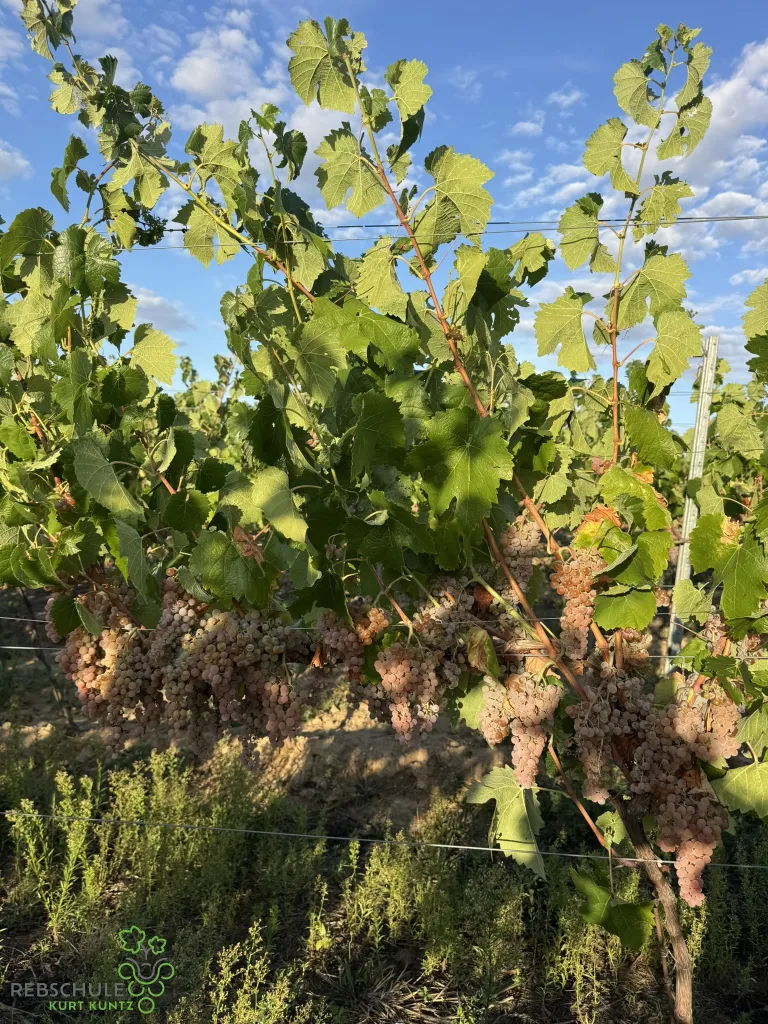
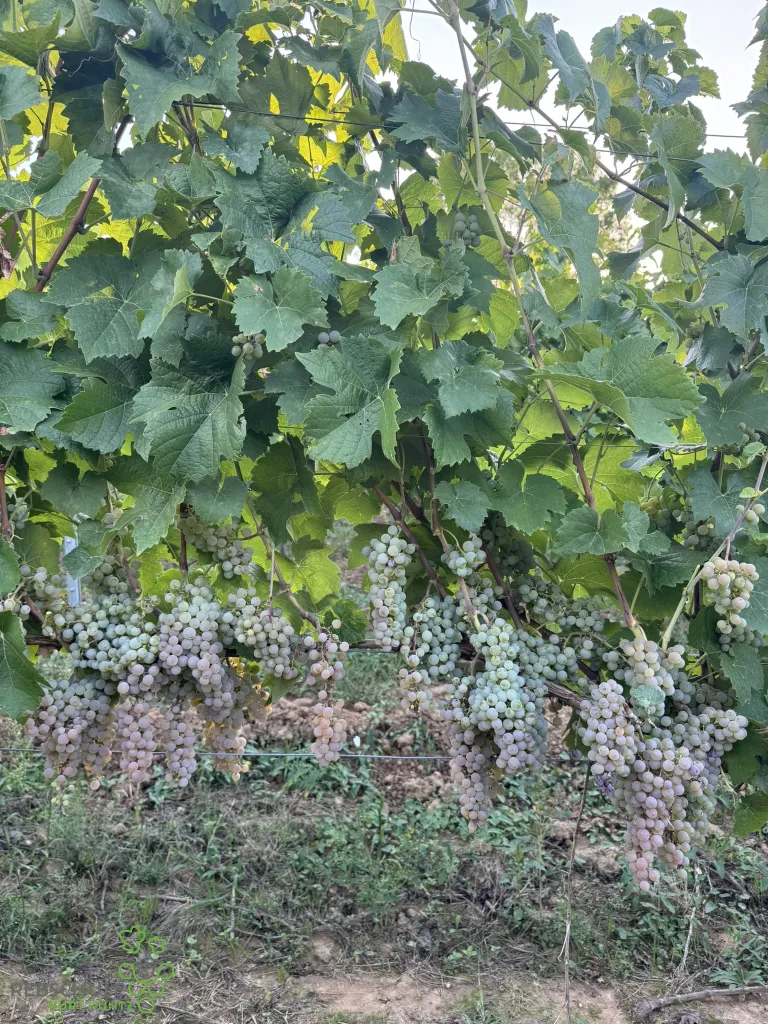
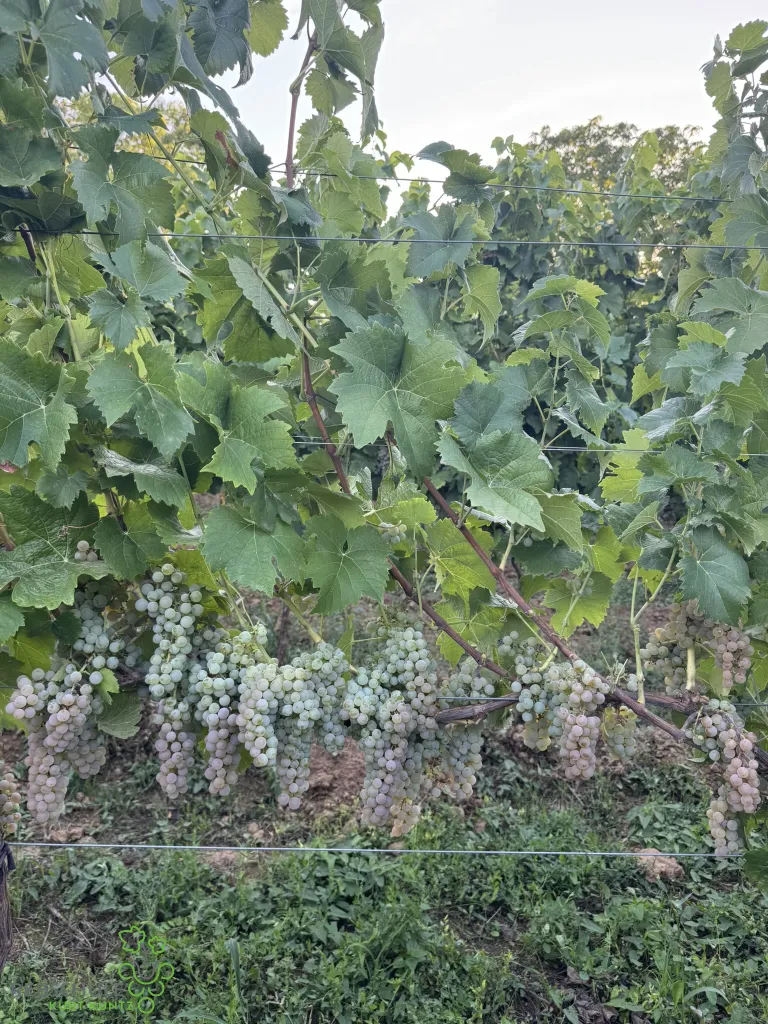
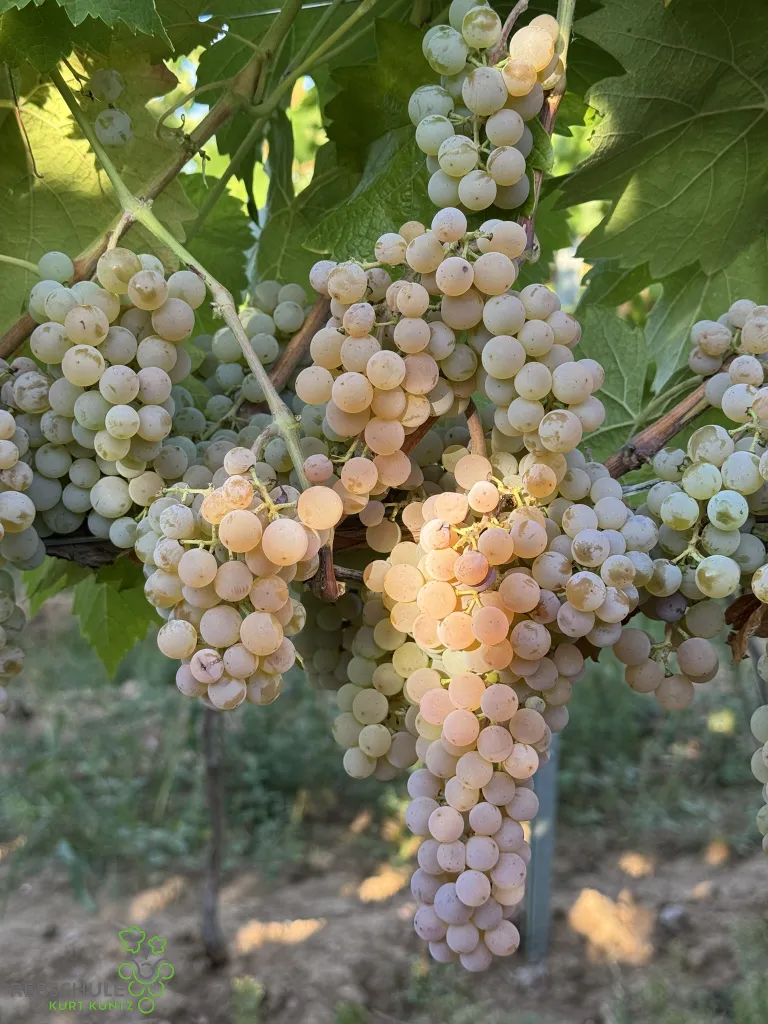
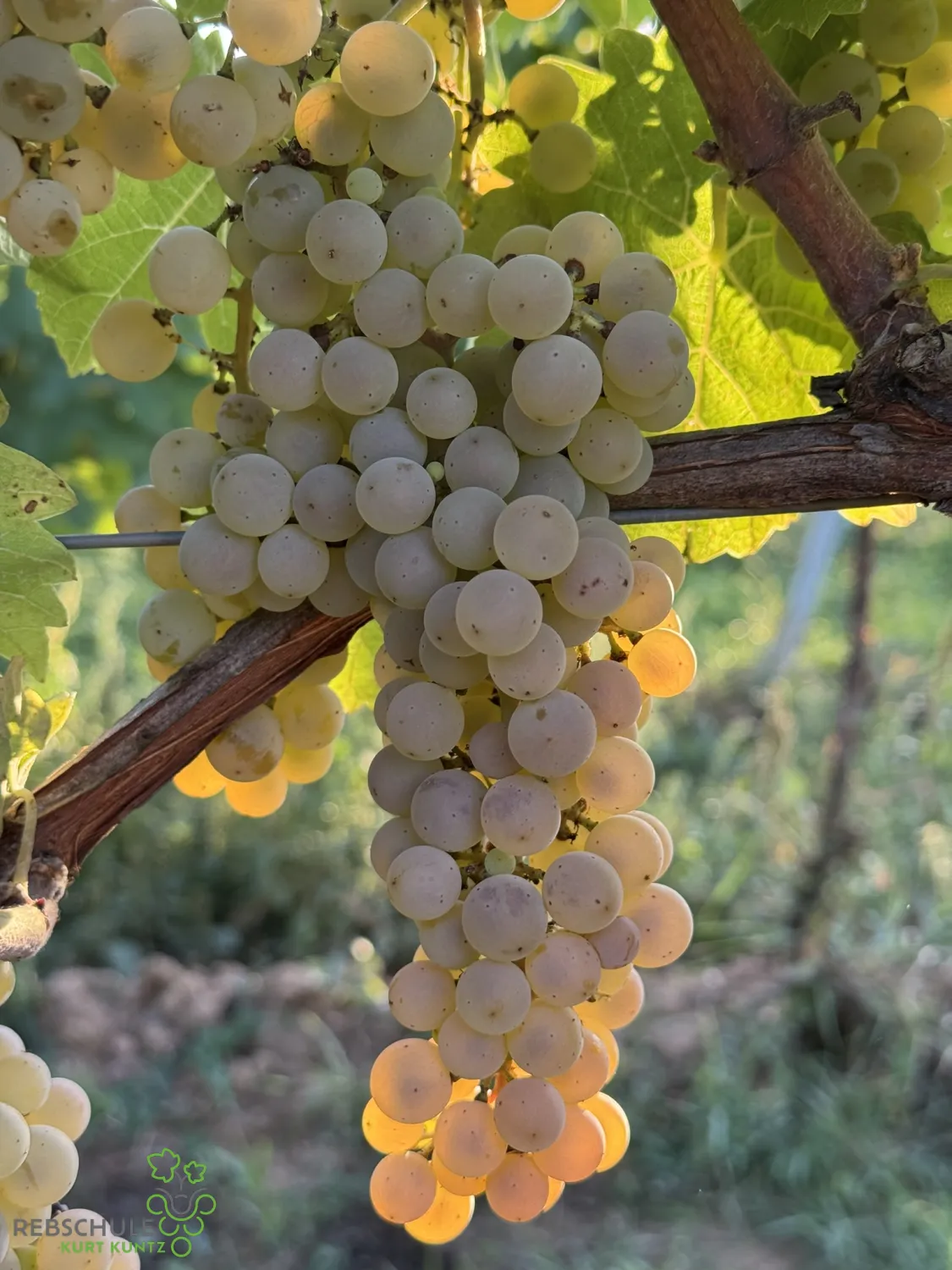
Calardis Blanc clusters are medium-sized, shouldered, and loose-structured. The medium-sized berries frequently exhibit a Muscat-like reddish-bronze blush on the sun-exposed side, while remaining yellow-green in shaded areas even at full maturity. Even during hot and dry vintages, the cultivar demonstrates a remarkably low susceptibility to sunburn.
Disease resistance
- Downy mildew (Plasmopara viticola)3/4Resistance loci: Rpv3.1, Rpv3.2
- Powdery mildew (Oidium)2.5/4Resistance loci: Ren3, Ren9
- Botrytis2.5/4
- Black rot (Guignardia bidwellii3/4Resistance loci: Rgb1, Rgb3
To counteract the development of resistant fungal strains and safeguard the cultivar's resistance over the long term, three targeted plant protection treatments are recommended. Optimal treatment windows occur primarily around flowering, adjusted according to weather conditions and prevailing disease pressure.
Calardis Blanc PIWI clones
JKI Geilweilerhof


Calardis Blanc PIWI Gf 1
Yield above averageBunches loose-clusteredBotrytis susceptibility low