Kerner

Crossing
Trollinger x Riesling
Origin
Kerner was bred in 1929 by August Herold at the Lauffen am Neckar branch of the State Teaching and Research Institute for Viticulture and Horticulture Weinsberg (Staatliche Lehr- und Versuchsanstalt für Wein- und Obstbau Weinsberg) from Trollinger and Riesling. The new crossing was initially referred to as Weißer Herold. Later, it received its current name in honour of the Swabian poet and physician Justinus Kerner, who lived in Weinsberg. In 1969, Kerner was granted plant variety protection and entered into the German variety list. The variety subsequently spread across many German wine-growing regions. The area planted to Kerner has been in marked decline since the 1990s. After reaching its peak of 7,826 hectares in 1992, the area under vine declined to 1,764 hectares by 2025.
Characteristics
- mid-to-late budburst
- mid-to-late ripening
- strong lateral shoot development
- dense canopy
- high susceptibility to powdery mildew
- high vigour
- chlorosis-tolerant
- good wood maturation
- good winter hardiness
Site requirements
Kerner places moderate to high demands on the vineyard site. It requires a relatively long ripening period and benefits from sufficiently warm sites, particularly given its high vigour and dense canopy. On overly dry soils, the risk of water stress increases, especially under high yields.
Aromas
Kerner produces fruity, floral, and spicy wines with a pronounced bouquet. Lighter styles have fresh, lively acidity and are reminiscent of Riesling in character. At full ripeness, nutty and muscat-like aromas also develop.
Bunch
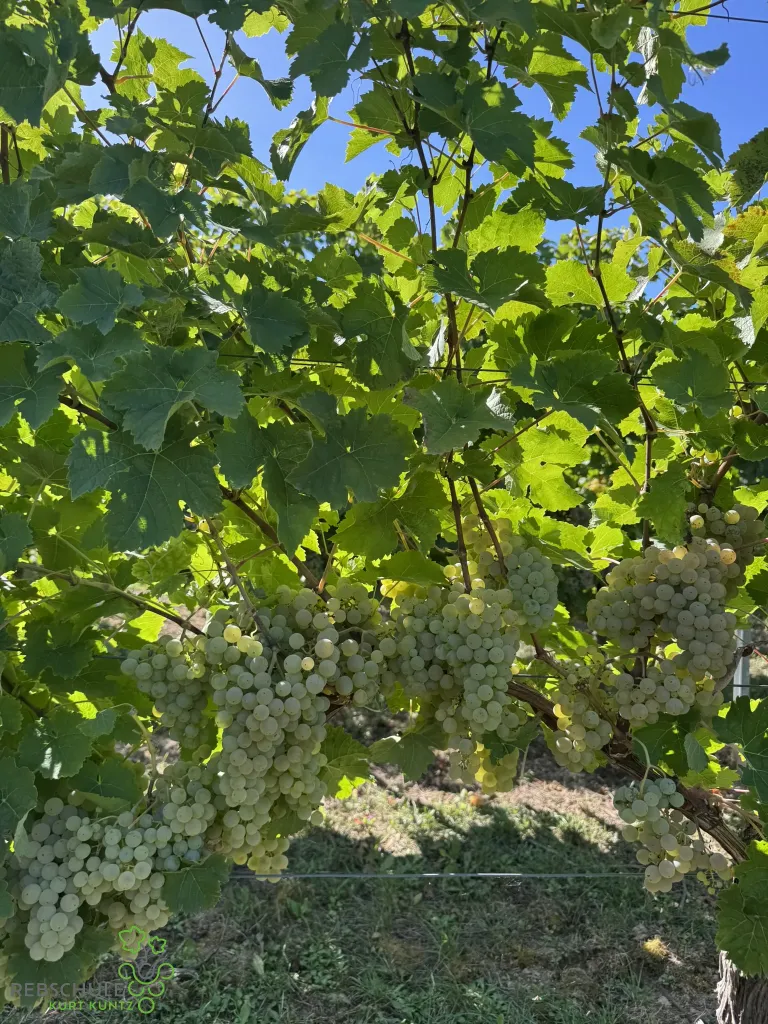
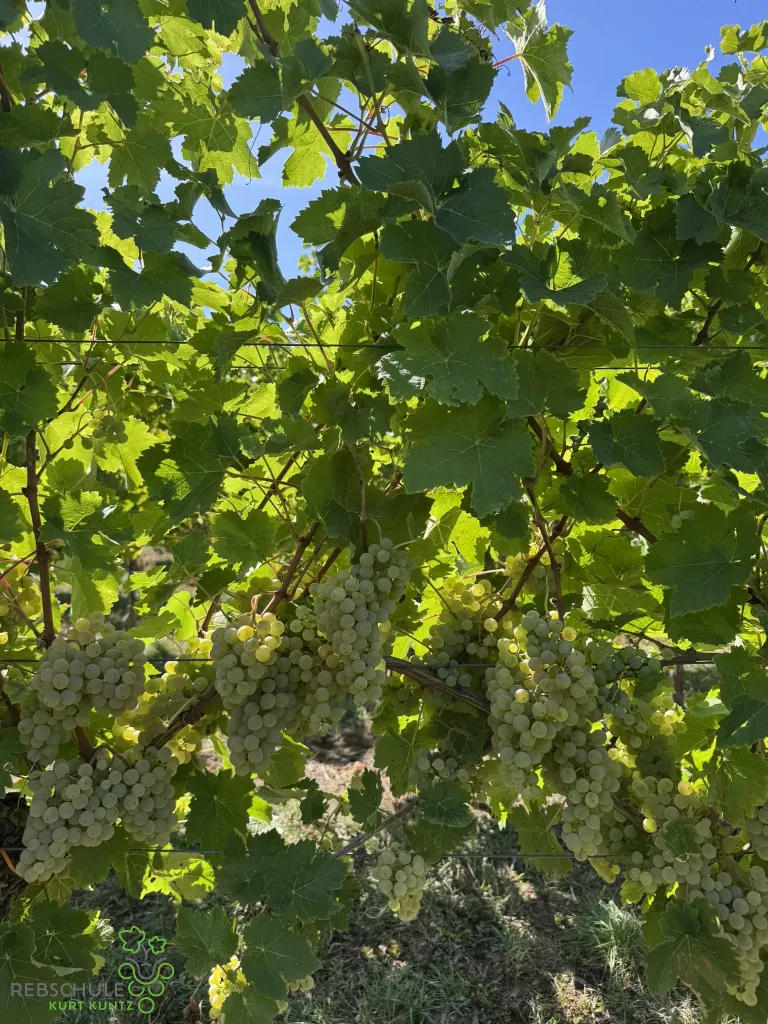
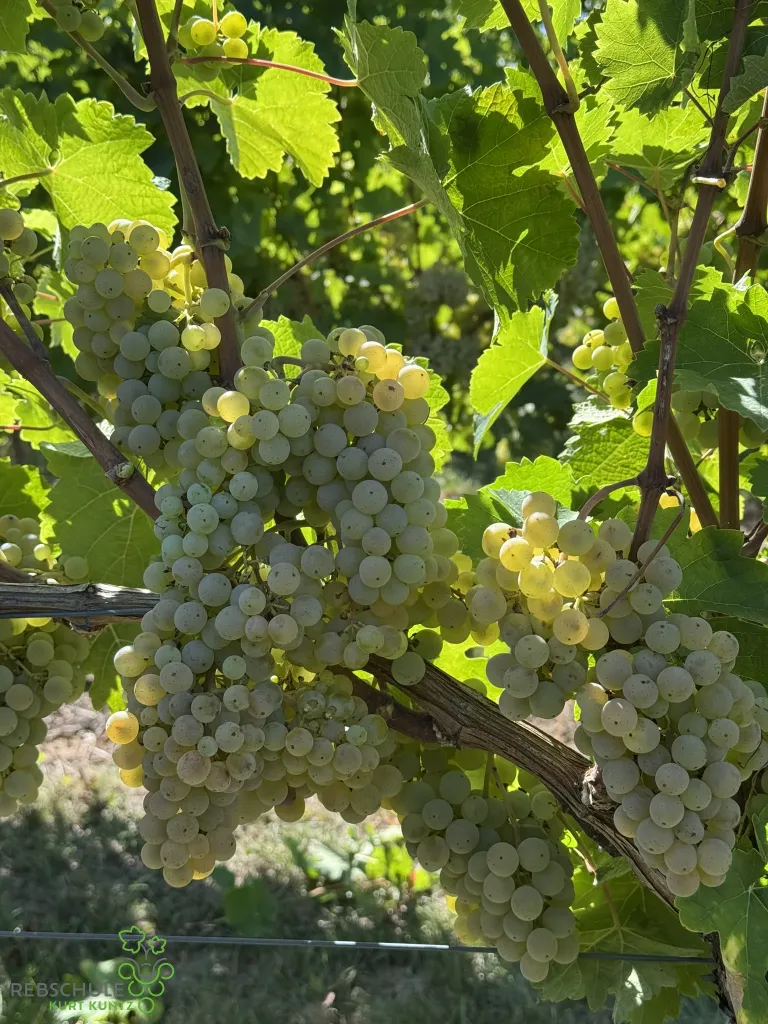
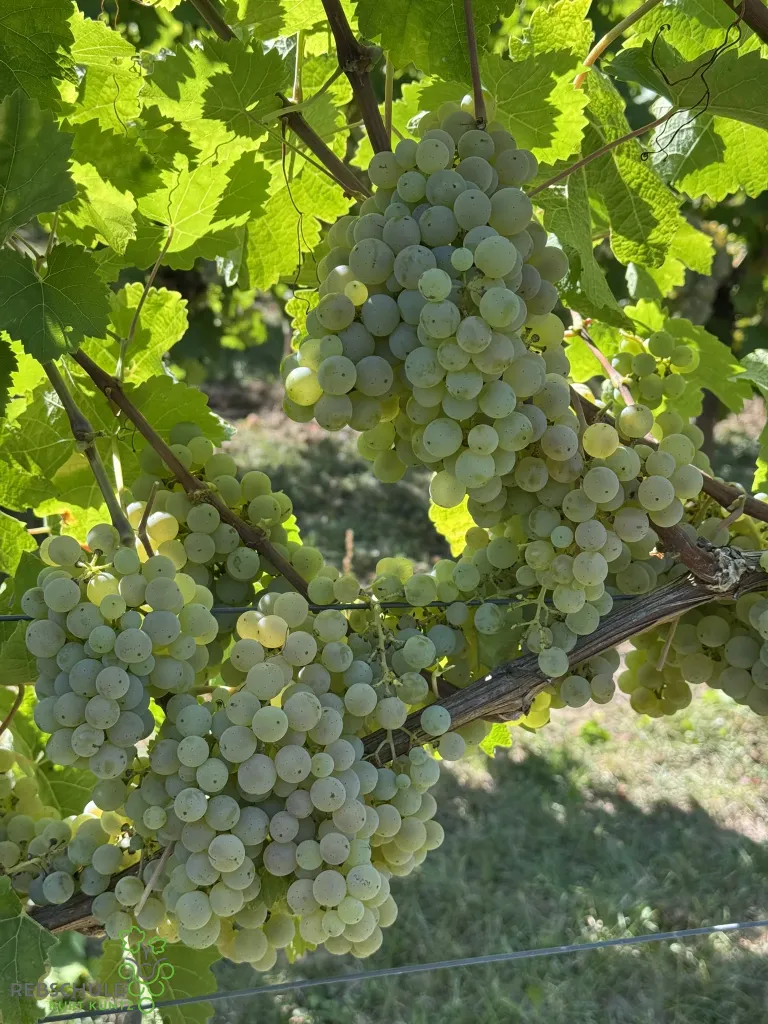
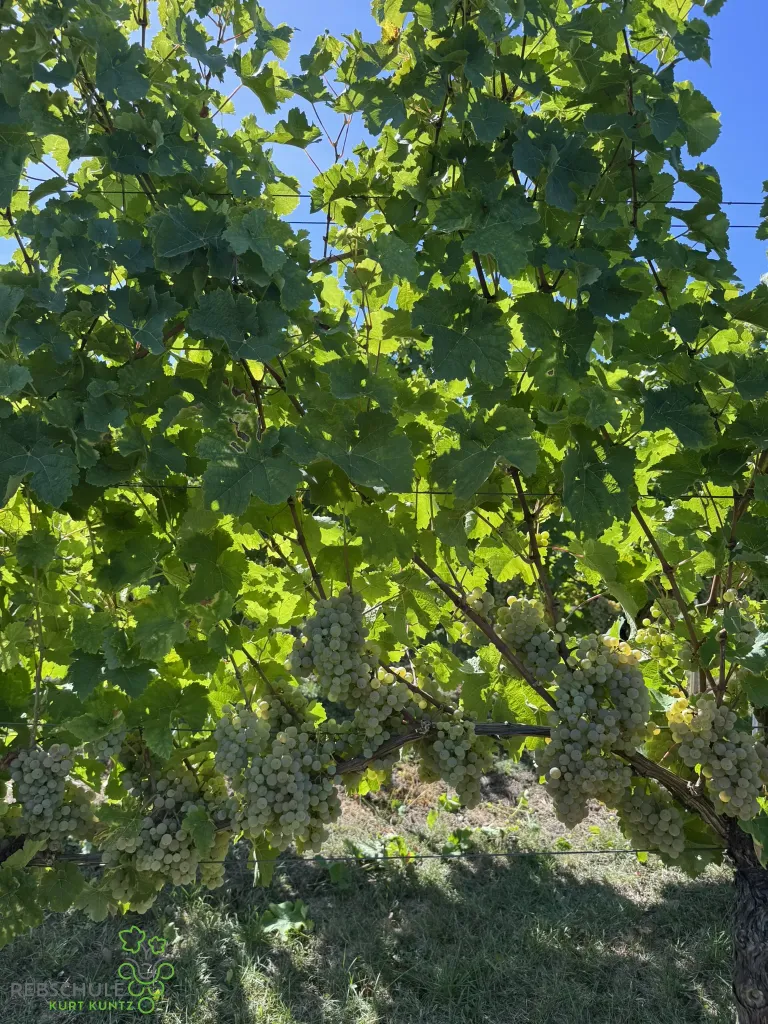
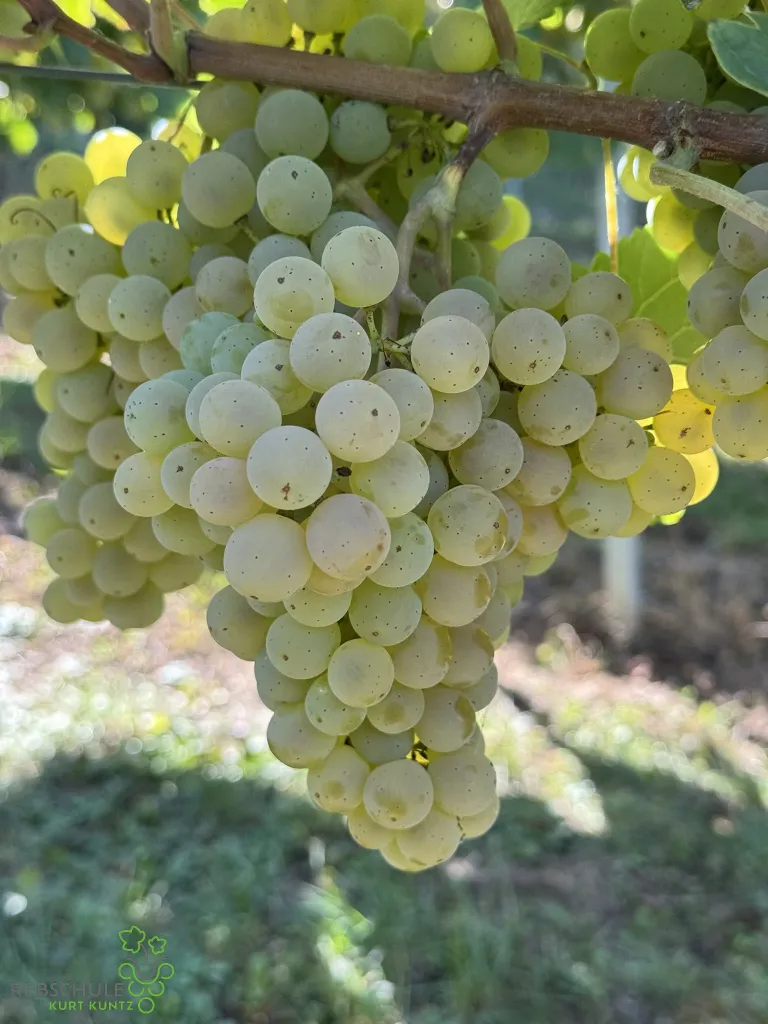
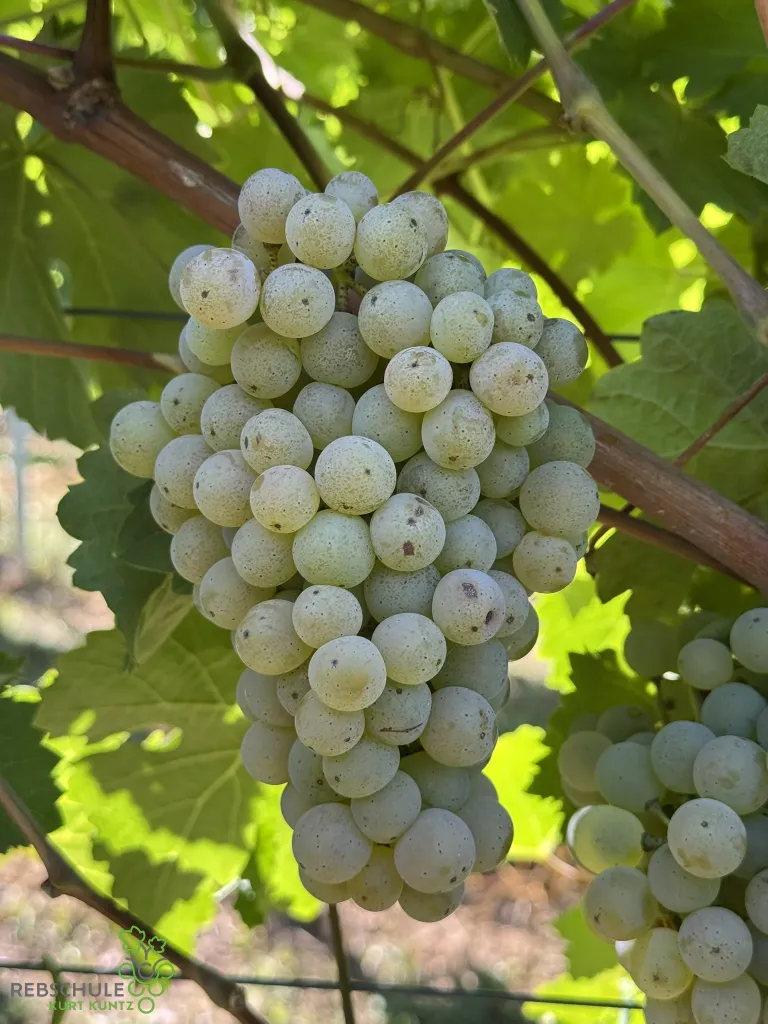
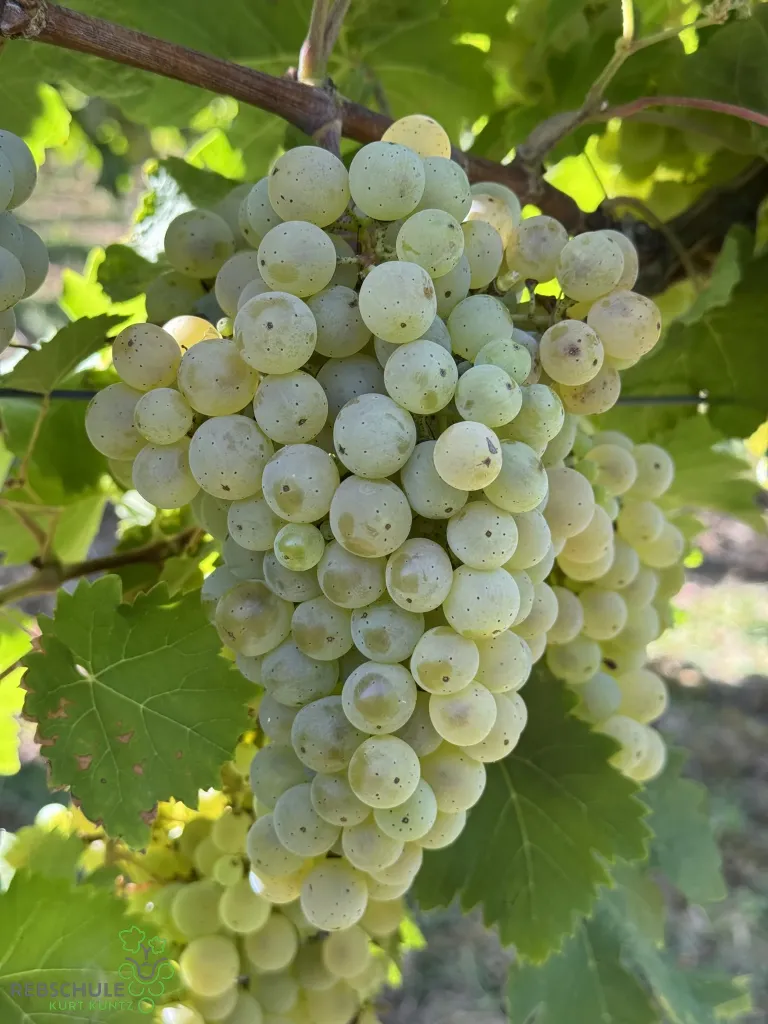
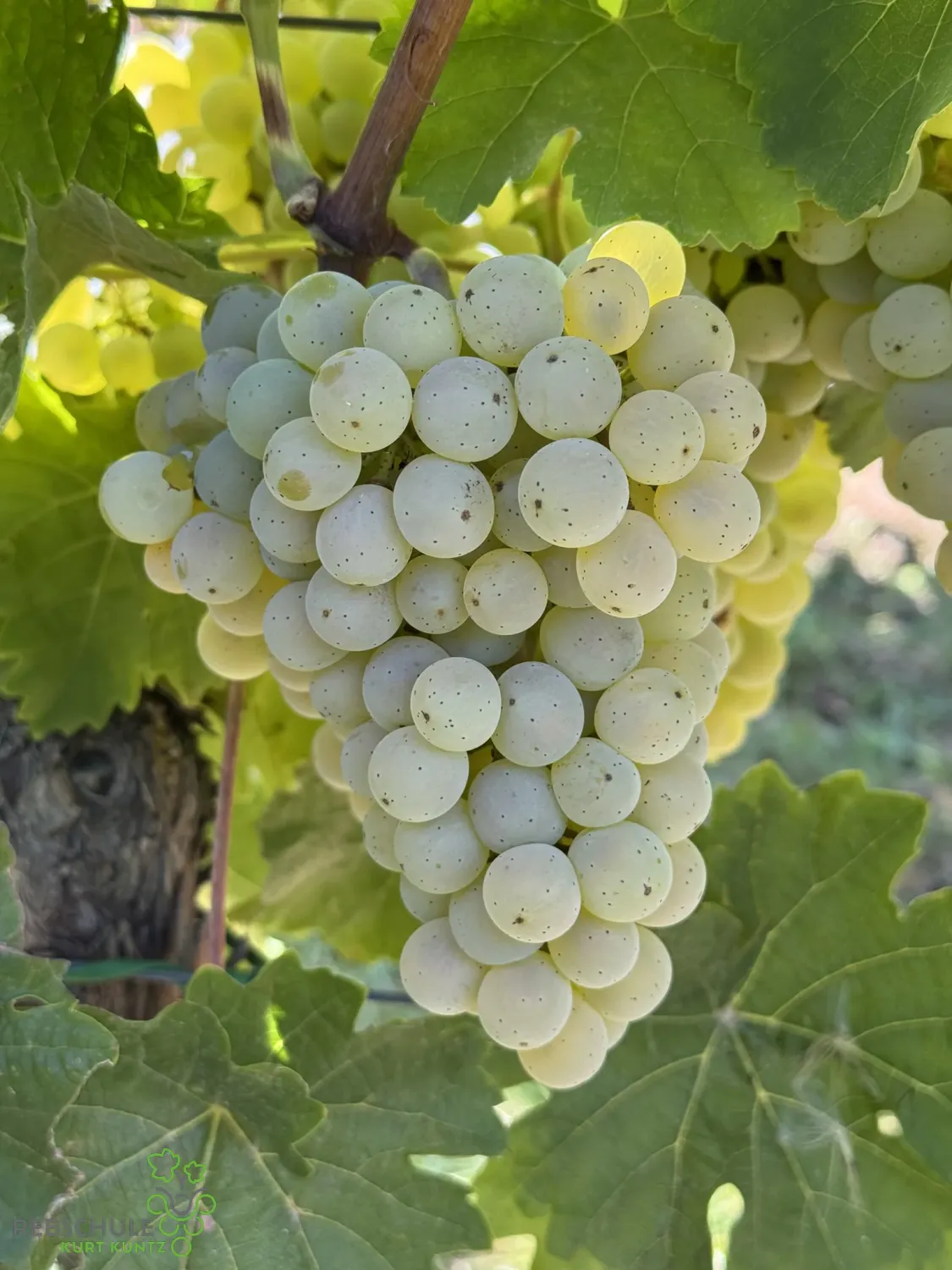
Kerner bunches are medium-sized, shouldered, and conical. The roundish berries are medium-sized to large and greenish-yellow in colour, occasionally turning yellow to brownish at full ripeness. The berries have a thick skin.
Kerner clones
Weinsberg

Kerner We 1
Yield higherBunches medium-compactBotrytis susceptibility medium