Muscaris PIWI

Crossing
Solaris x Yellow Muscat
Origin
Muscaris was bred in 1987 by Norbert Becker at the State Viticulture Institute Freiburg (WBI) (Staatliches Weinbauinstitut Freiburg). The fungus-resistant white grape variety originated from a cross between Solaris and Yellow Muscat and was initially recorded under the breeding number FR 493-87. The aim of the breeding programme was to combine the disease resistance and adaptability of Solaris with the pronounced muscat bouquet of Yellow Muscat. Through Solaris, Muscaris also carries genetic ancestry from the Asian wild vine Vitis amurensis, which contributed to its fungal resistance.
Characteristics
- early budburst
- early-to-mid ripening
- susceptible to spring frost
- high basal bud fertility
- vigorous, bushy growth habit
- vigorous water shoot growth
Site requirements
Muscaris places low to moderate demands on the vineyard site and grows well even on average sites. Harvest ripeness is reached around the same time as Müller-Thurgau, with high must weights possible. Due to its early budburst, the variety should not be planted on sites susceptible to spring frost.
Aromas
Muscaris produces intensely aromatic wines with a pronounced muscat bouquet. Typical are floral notes of elderflower, accompanied by fruity aromas such as lychee, citrus fruits, and tropical fruits. The wines are aromatic, full-bodied, and structured, with a lively, well-integrated acidity. It is suited to both dry and off-dry to sweet wines.
Bunch
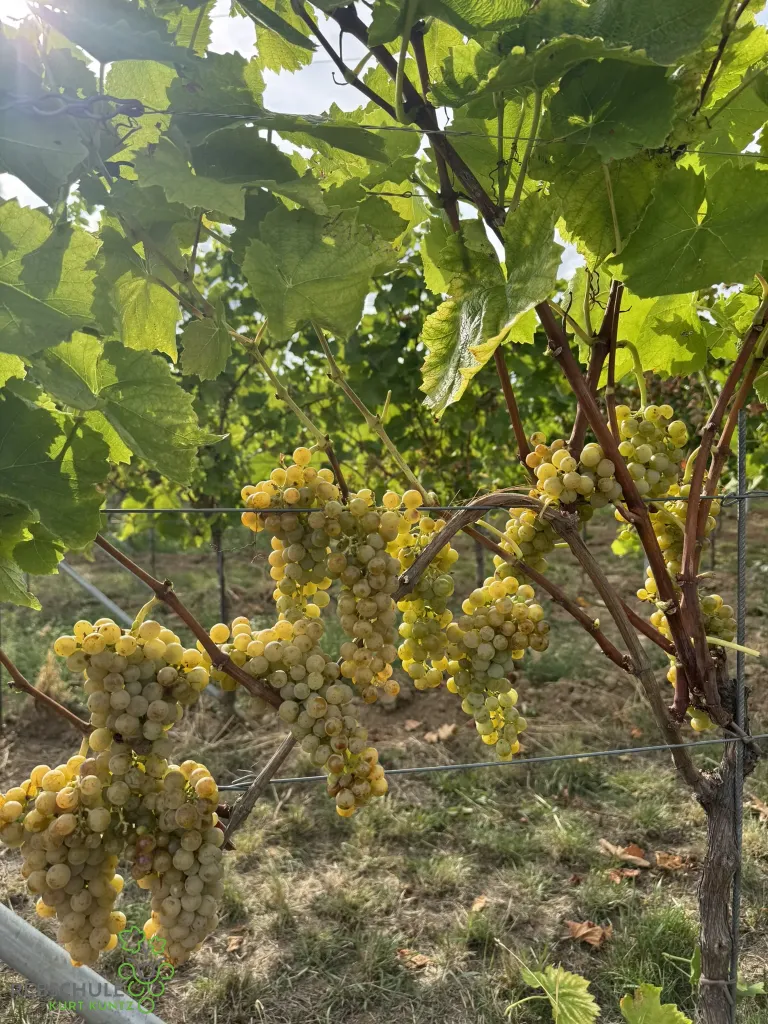
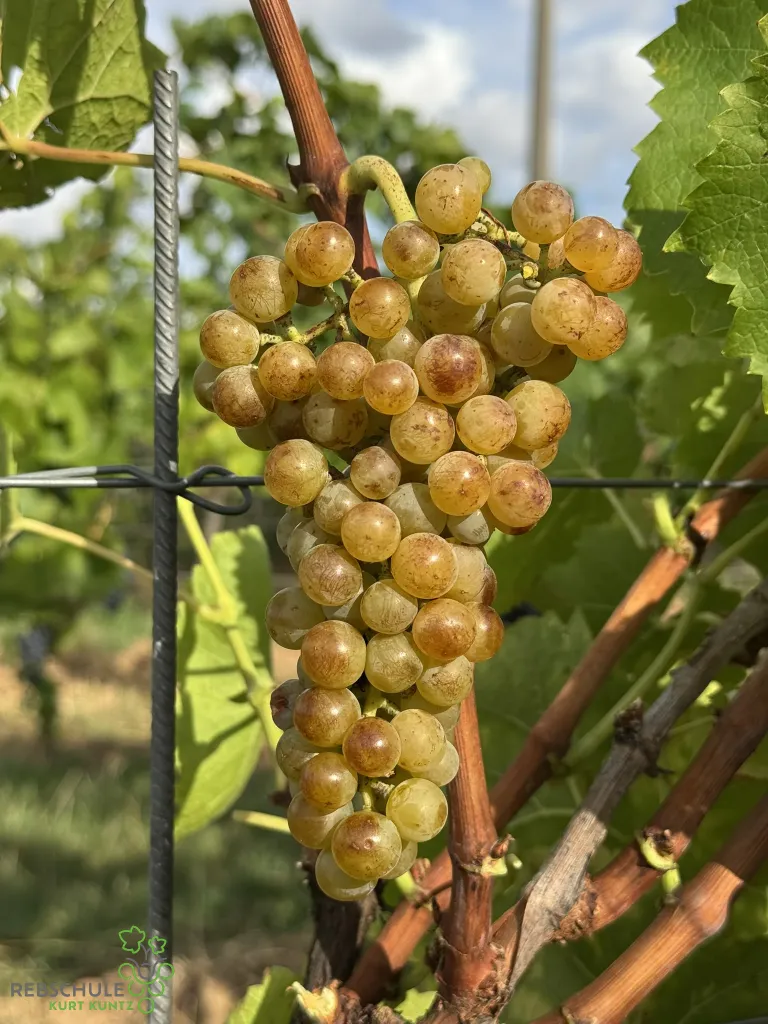
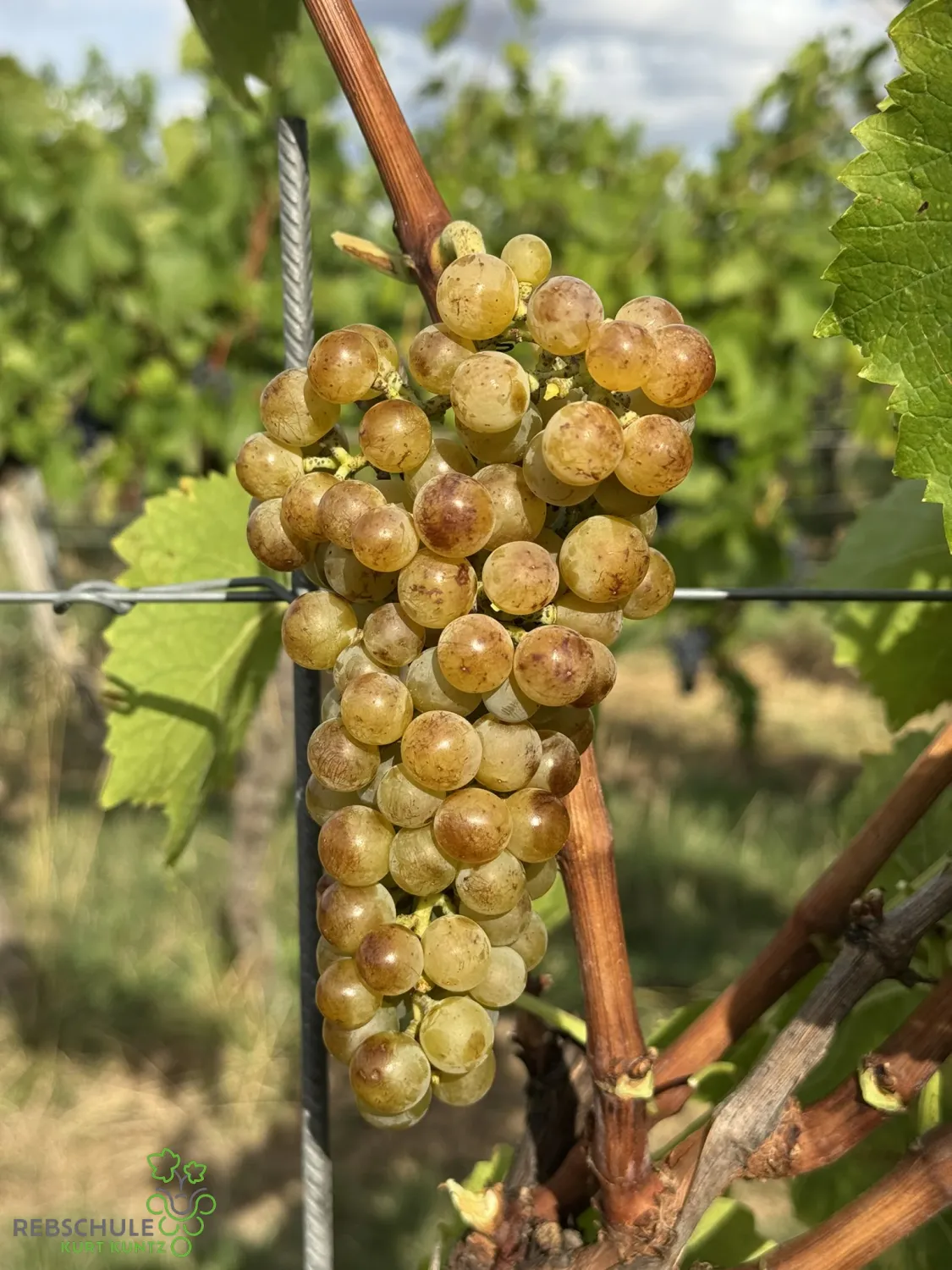
Muscaris bunches are medium-sized to large and, depending on the site, loose to compact in structure. The medium-sized berries are greenish-yellow in colour and have a thicker berry skin. Even at high must weights, the bunches largely retain their green colouration.
Disease resistance
- Downy mildew (Plasmopara viticola)3/4Resistance loci: Rpv10
- Powdery mildew (Oidium)2/4Resistance loci: Ren3, Ren9
- Botrytis3/4
- Black rot (Guignardia bidwellii)Resistance loci: Rgb1
To counteract the development of resistant fungal strains and safeguard the cultivar's resistance over the long term, three targeted plant protection treatments are recommended. Optimal treatment windows occur primarily around flowering, adjusted according to weather conditions and prevailing disease pressure.
Muscaris PIWI clones
Freiburg

Muscaris PIWI FR 400
Yield mediumBunches loose – compactBotrytis susceptibility low