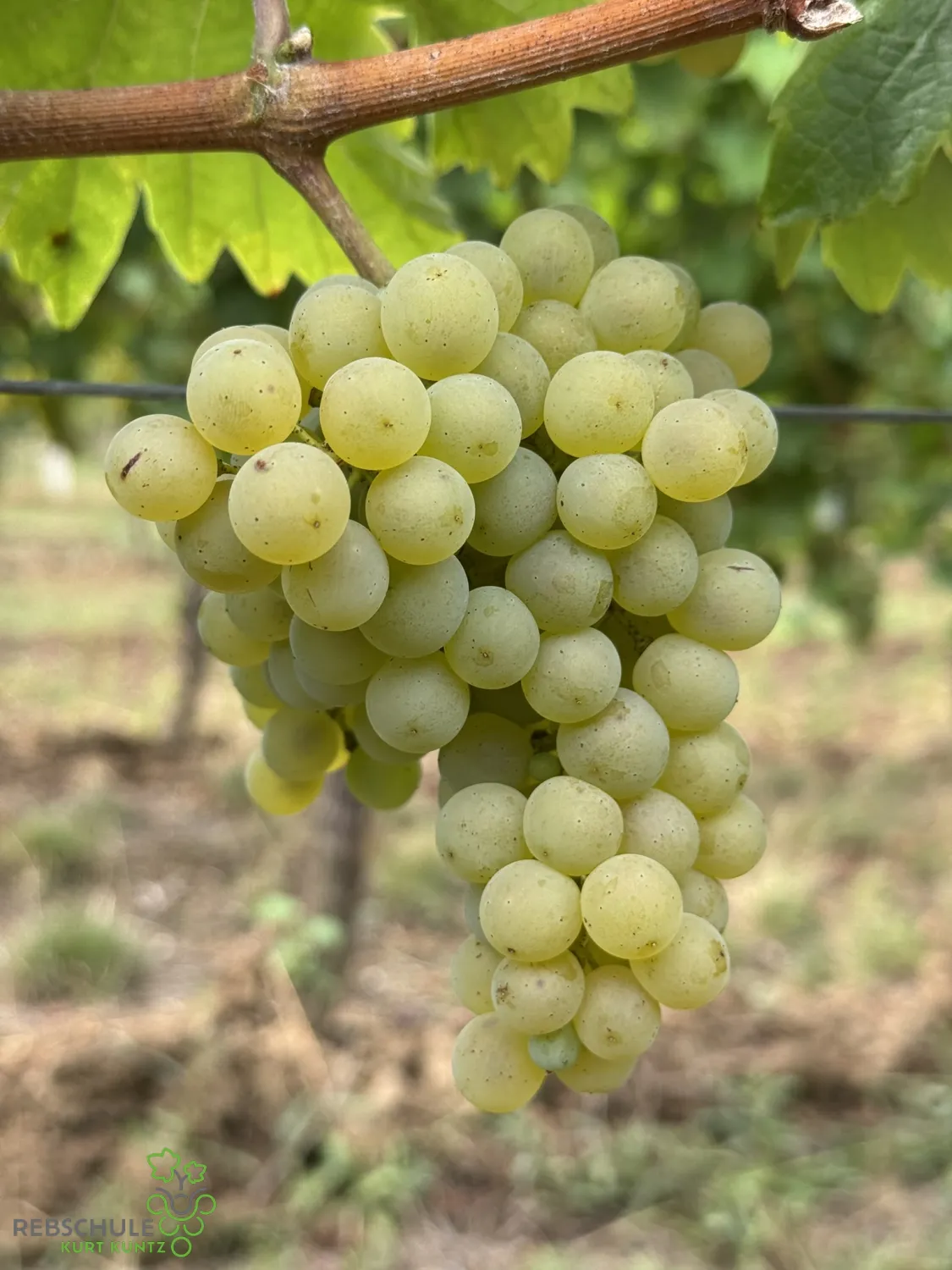
Sauvignon Blanc
Crossing
Savagnin Blanc x unknown grape variety
Origin
Sauvignon Blanc originates from France, with south-west France and the Loire Valley considered its historical regions of origin. While the variety gained worldwide fame as a stylistic benchmark in the Loire with appellations such as Sancerre and Pouilly-Fumé, it also looks back on a long tradition of cultivation in Bordeaux. There, it is frequently blended with Sémillon and plays an important role in both dry white wines and noble sweet wines, such as those from Sauternes.
The name Sauvignon is presumably derived from the French word sauvage (“wild”). It is frequently associated with the vigorous, at times unruly-looking growth habit of the vine.
Characteristics
- mid to late budburst
- mid-late ripening
- very high vigour
- increased lateral shoot growth
- dense canopy
- slight susceptibility to coulure
- thick-skinned, though often compact
- high susceptibility to Esca
Site requirements
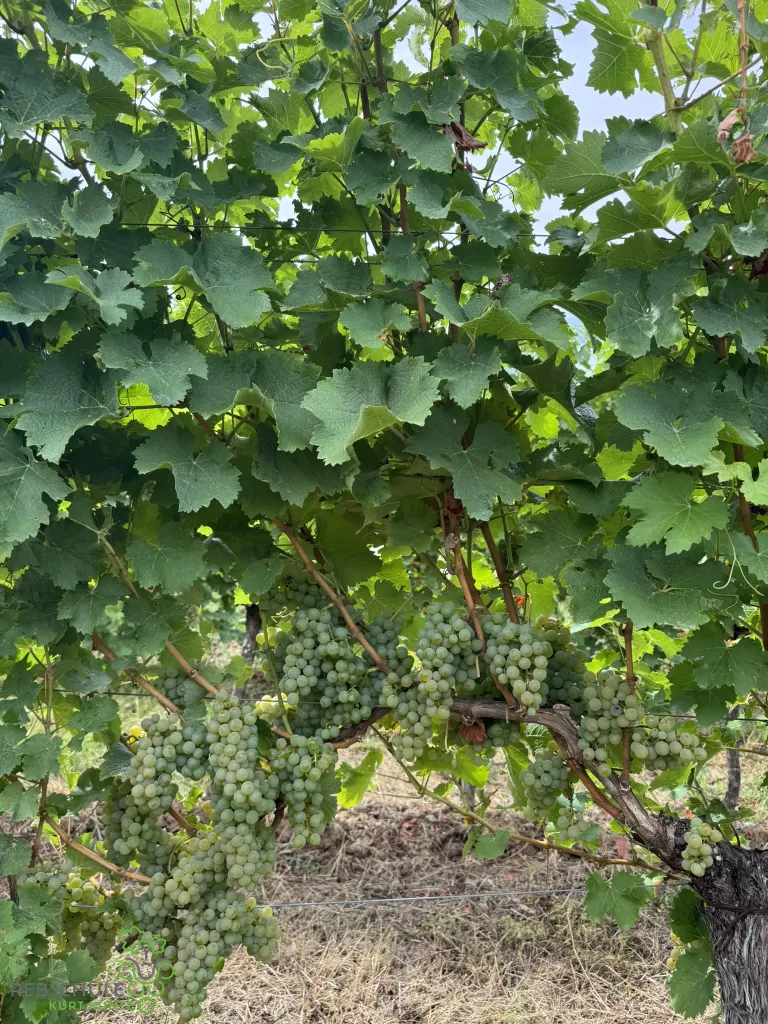
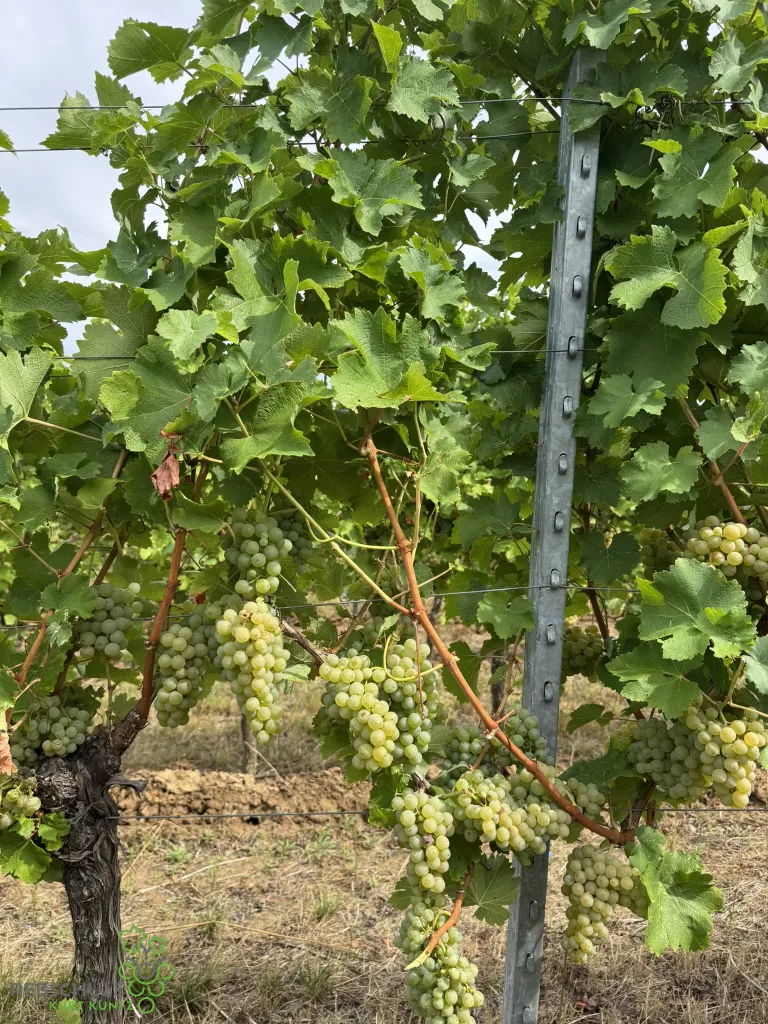
Sauvignon Blanc places high demands on the vineyard site and achieves full ripeness best in good sites with lean, rather dry, and stony soils. Wind-exposed sites that allow the canopy to dry off quickly are particularly suitable. Less suitable, by contrast, are deep, nutrient-rich, and moist soils as well as frost-prone sites. On such sites, the variety tends towards excessive vigour, increased susceptibility to botrytis, and reduced bunch health. Good canopy management with appropriate leaf-removal measures is a high priority.
Aromas
Sauvignon Blanc offers great aromatic diversity. A fundamental distinction is made between a green style and a tropical style. The green style is characterised by aromas of green bell pepper, grass, and citrus fruits, while the tropical style is defined by passion fruit, grapefruit, blackcurrant, and elderflower.
Methoxypyrazines are primarily responsible for the green aromatics. Because these compounds are very sensitive to light, their expression can be influenced through targeted leaf-removal measures. A later harvest also contributes to the breakdown of methoxypyrazines.
If a pronounced exotic aromatic profile is to be achieved, late plant-protection copper treatments should be avoided, as copper can reduce the thiol content and thus the intensity of tropical fruit aromas. Furthermore, skin contact should not exceed four to five hours, since only the aroma precursor 3MH—which is particularly responsible for passion fruit notes—is present in significant quantities in the berry skin; otherwise, increased amounts of methoxypyrazines are extracted. Yeast selection has a major influence on aroma formation in Sauvignon Blanc. Specific yeast strains promote the release of volatile thiols, which can be responsible for tropical-fruity notes such as passion fruit, grapefruit, and blackcurrant. Other fermentation aromas, particularly esters, can further enhance fruity and floral impressions. Green and herbaceous aromas, by contrast, are shaped primarily by compounds present in the grapes, such as the aforementioned methoxypyrazines, and depend heavily on ripeness level as well as viticultural practices. The interplay of these factors ultimately determines the aromatic profile of the wine.
Bunch
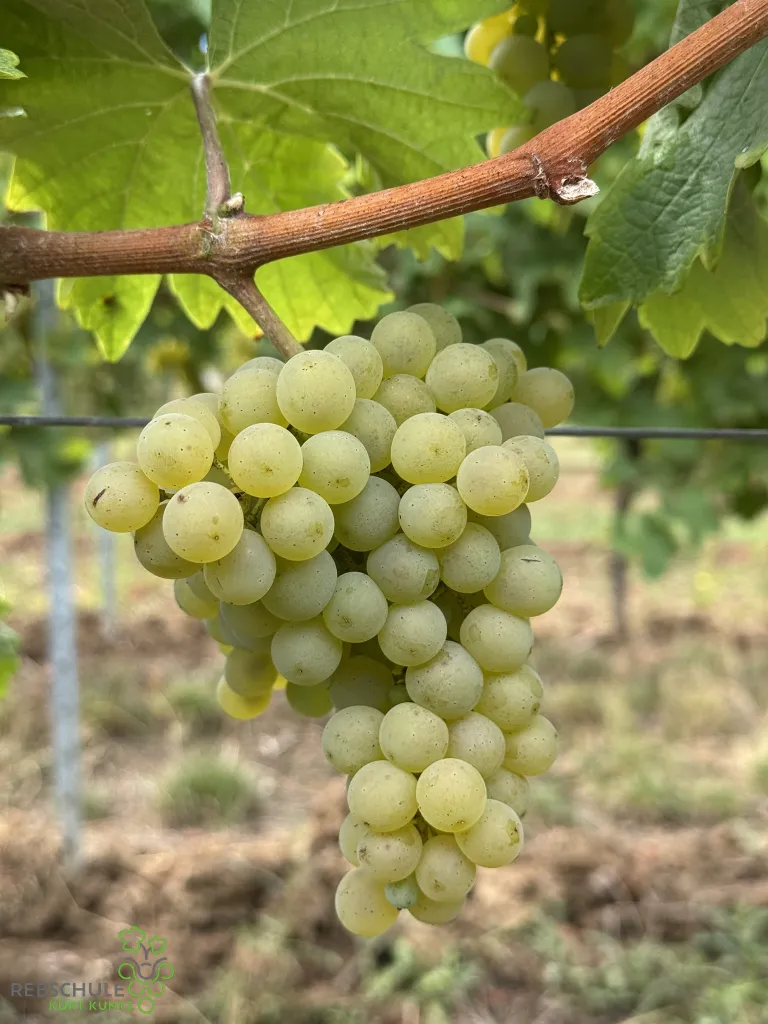
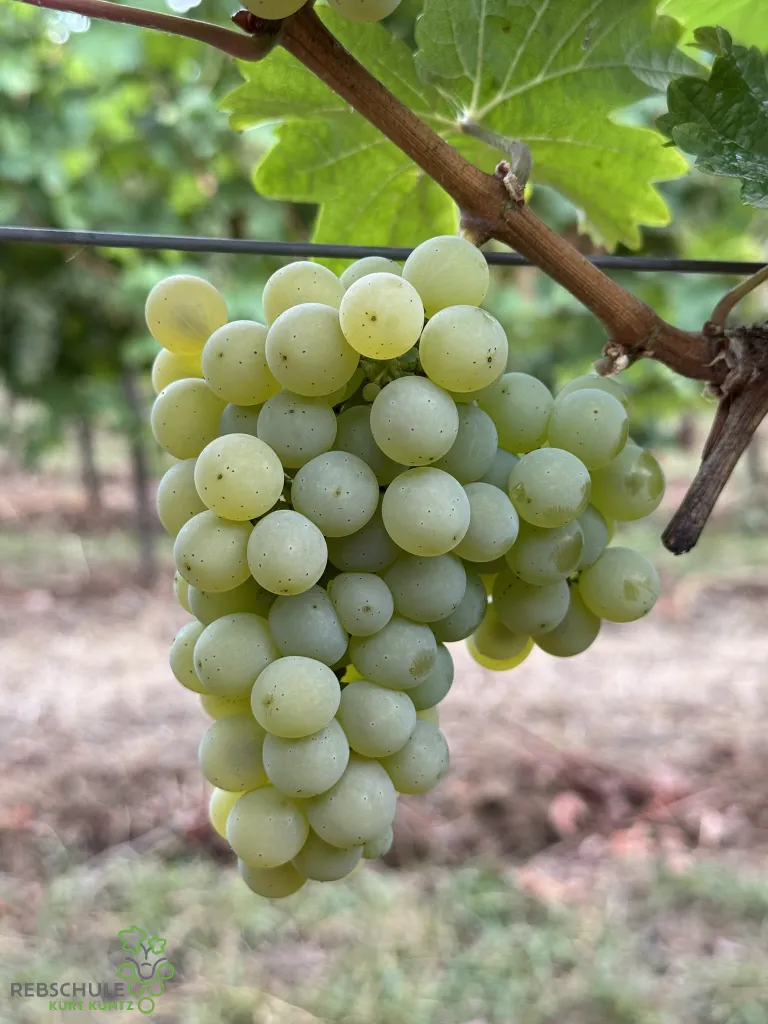
Sauvignon Blanc develops compact, small to medium-sized bunches with a cylindrical shape and occasional shouldering. The small green berries have a firm skin and attain a golden-yellow colouration at full ripeness.
Sauvignon Blanc clones
Laimburg, South Tyrol
Sauvignon Blanc LB 50
Yield mediumBunches less compactBotrytis susceptibility low
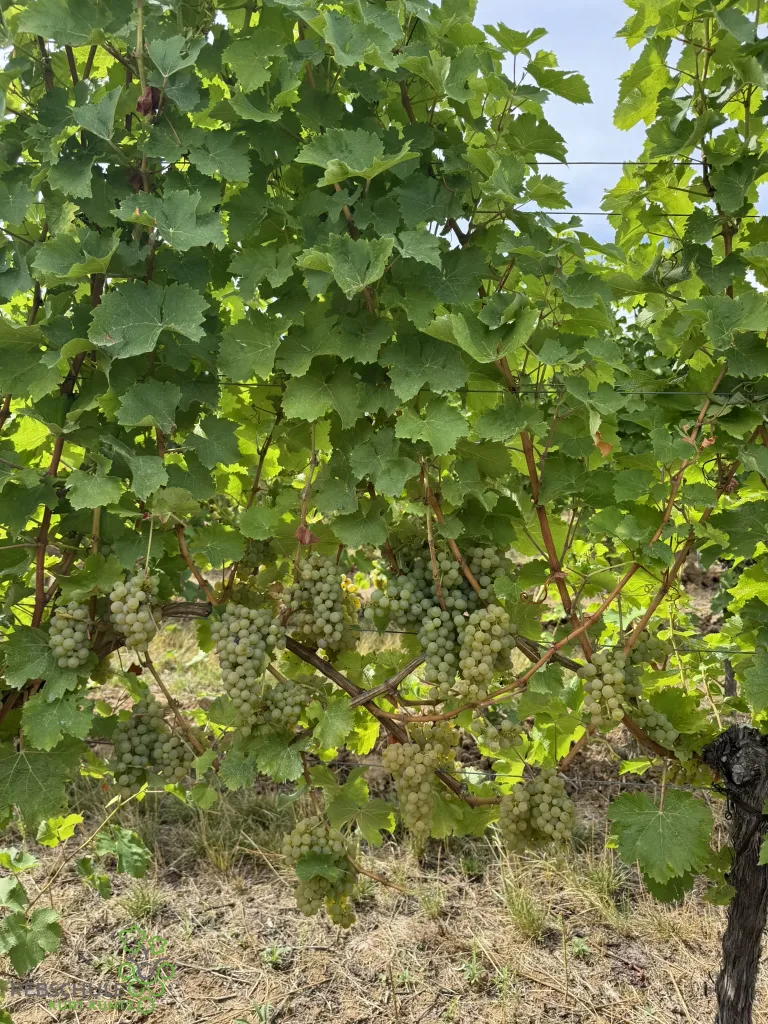
France
Sauvignon Blanc ENTAV-INRA 530
Yield low to mediumBunches tightly clusteredBotrytis susceptibility high
- tight-berried bunches
- between yellow fruits and green bell pepper, gooseberry
Sauvignon Blanc ENTAV-INRA 906
Yield low to mediumBunches compactBotrytis susceptibility medium
- compact bunches, lower susceptibility to botrytis than clone 530
- Aromatically adaptable
In Sauvignon Blanc, aromatic expression is decisively influenced not only by clone selection, but also by factors such as leaf removal, skin contact, and yeast selection. For details, see the "Aromatics" section above and the DLR Neustadt PDF on the vinification of Sauvignon Blanc.