Scheurebe

Crossing
Riesling x Bukettraube (Silvaner × Trollinger)
Synonyms: Sämling 88, Dr. Wagnerrebe
Origin
Scheurebe was bred in 1916 by Georg Scheu at the State Institute for Vine Breeding (Landesanstalt für Rebenzüchtung) in Alzey (Rheinhessen). For a long time, it was listed as a cross between Riesling and Silvaner. However, modern DNA analyses have shown that Scheurebe originated from a cross of Riesling and Bukettraube. Bukettraube itself is a cross between Silvaner and Trollinger, meaning Scheurebe is genetically 25% Silvaner and 25% Trollinger. The variety was initially listed as “S 88” or “Sämling 88” and was later named after its breeder, Georg Scheu. Today, Scheurebe is one of the best-known German new crossings and is cultivated primarily in Germany. In Austria, the variety holds minor importance and is known there under the name “Sämling 88”.
Characteristics
- medium-late budburst
- late ripening
- prolonged photosynthetic activity of the leaves
- good resistance to chlorosis
- thick berry skin
- high vigour
Site requirements
Scheurebe makes moderate to high demands on vineyard site quality. It also copes well with drier sites, though it prefers deep soils. Thanks to its very good resistance to chlorosis, it can be cultivated without difficulty on calcareous, clayey soils.
Aromas
Scheurebe ranks among the more aromatic grape varieties and, when well ripened, is characterised by pronounced, distinctive fruit and spice aromatics. The aromatic spectrum ranges from blackcurrant, grapefruit and citrus fruits to peach and apricot. At high levels of ripeness, the aromas become particularly intense and are accompanied by fresh, vibrant acidity. Depending on ripeness level and vinification, a range of wine styles can be produced. Scheurebe wines matured in stainless steel tanks present themselves as fresh, fruit-driven and aromatic with vibrant acidity. Extended lees ageing or maturation in oak casks can lend the wines additional body, creaminess and structure while preserving the typical varietal aromatics. Traditionally, Scheurebe is also used for noble sweet wines such as Auslese and Beerenauslese, in which its intense aromatics come to the fore particularly well.
Bunch
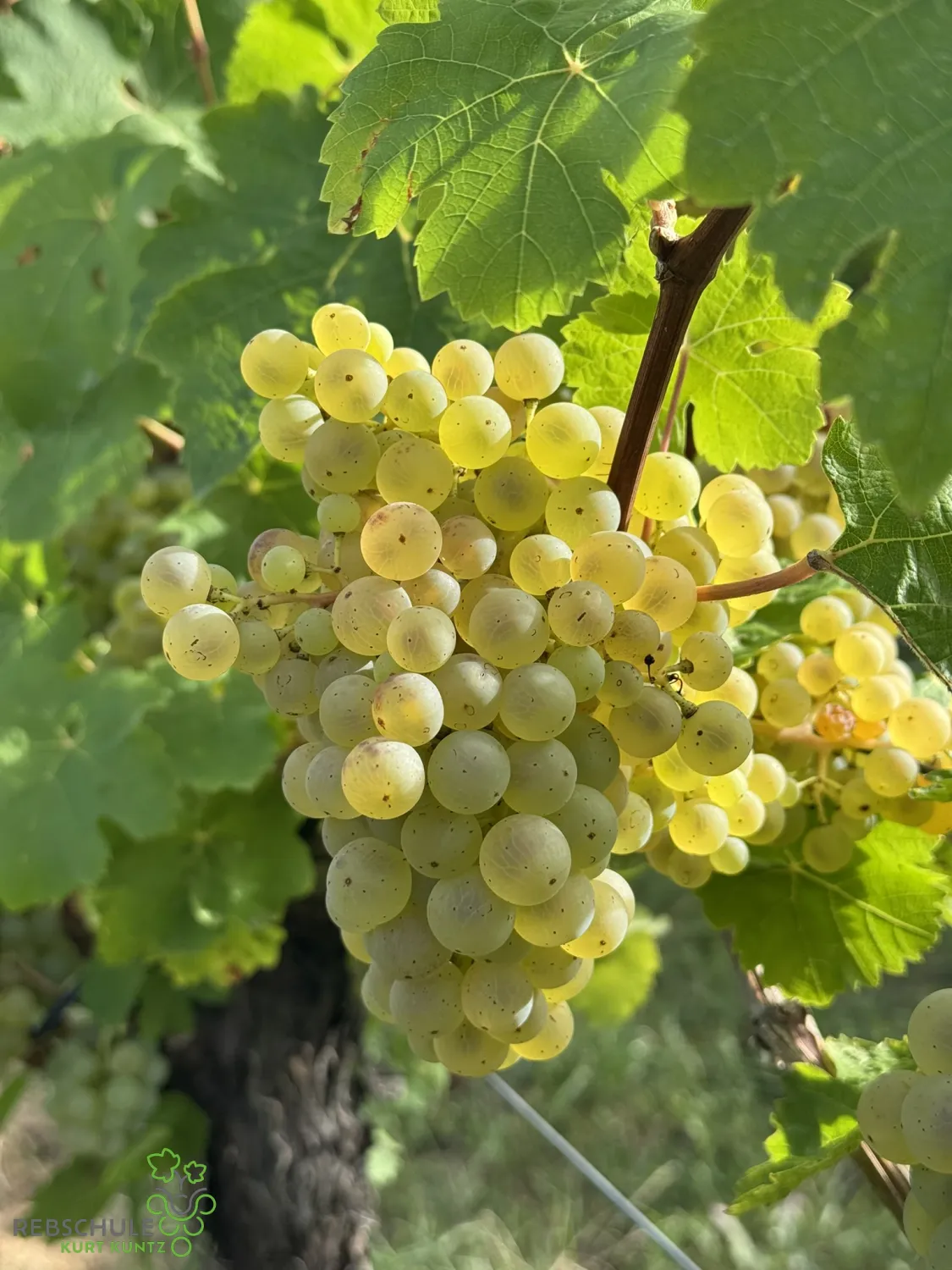
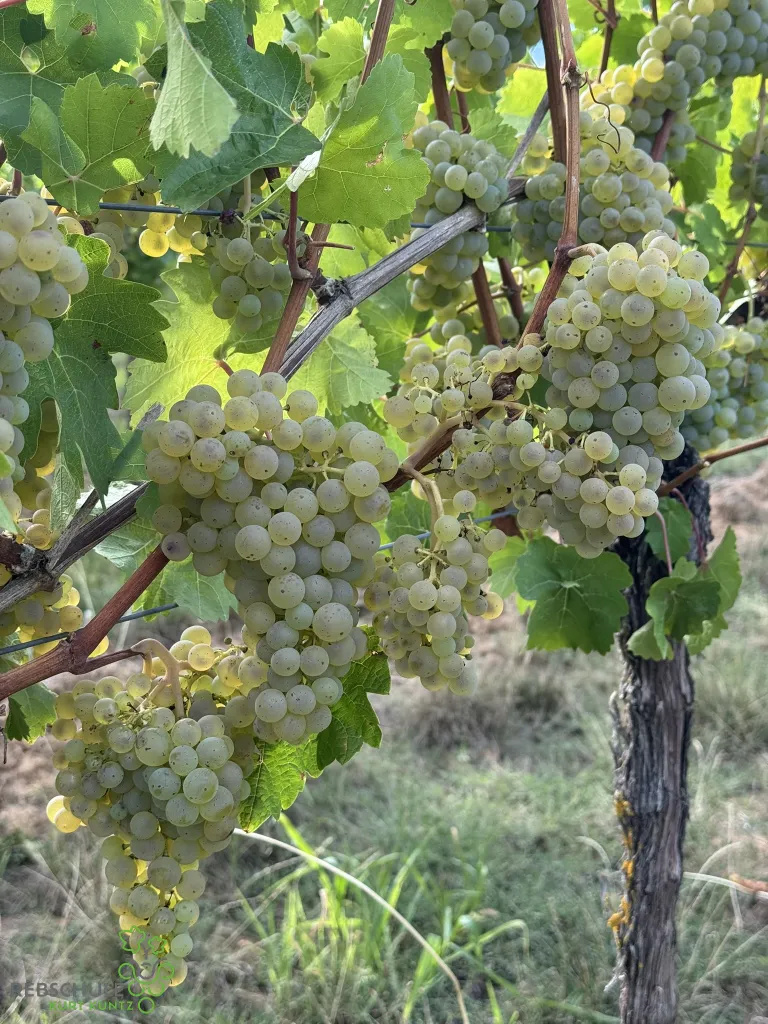
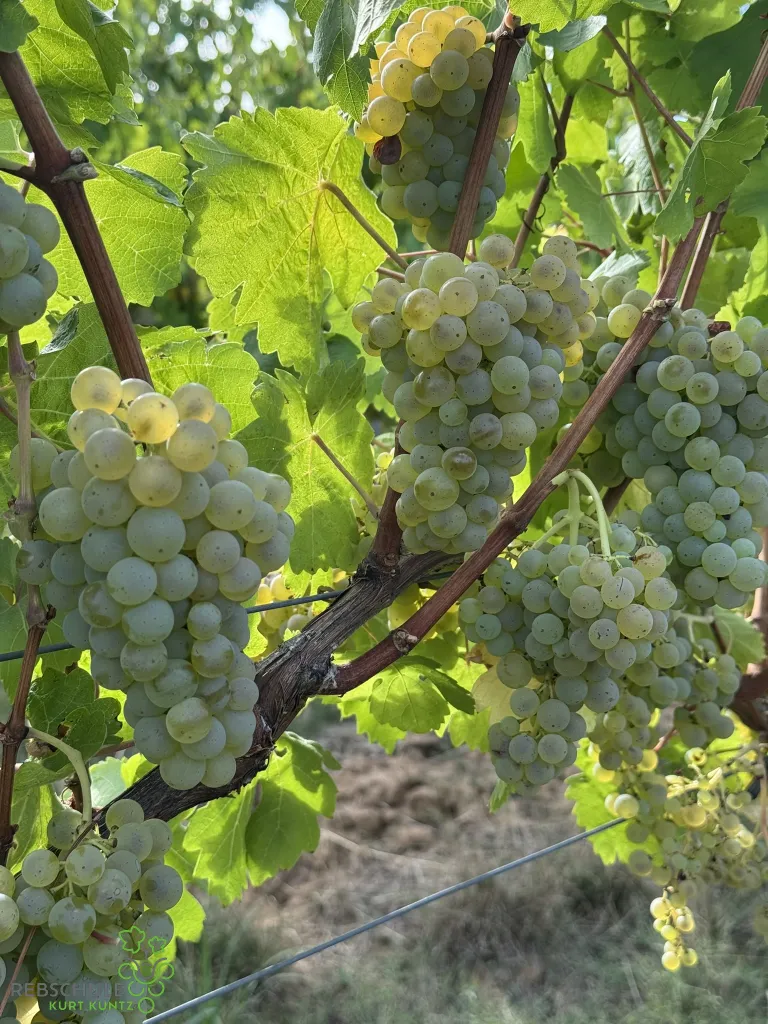
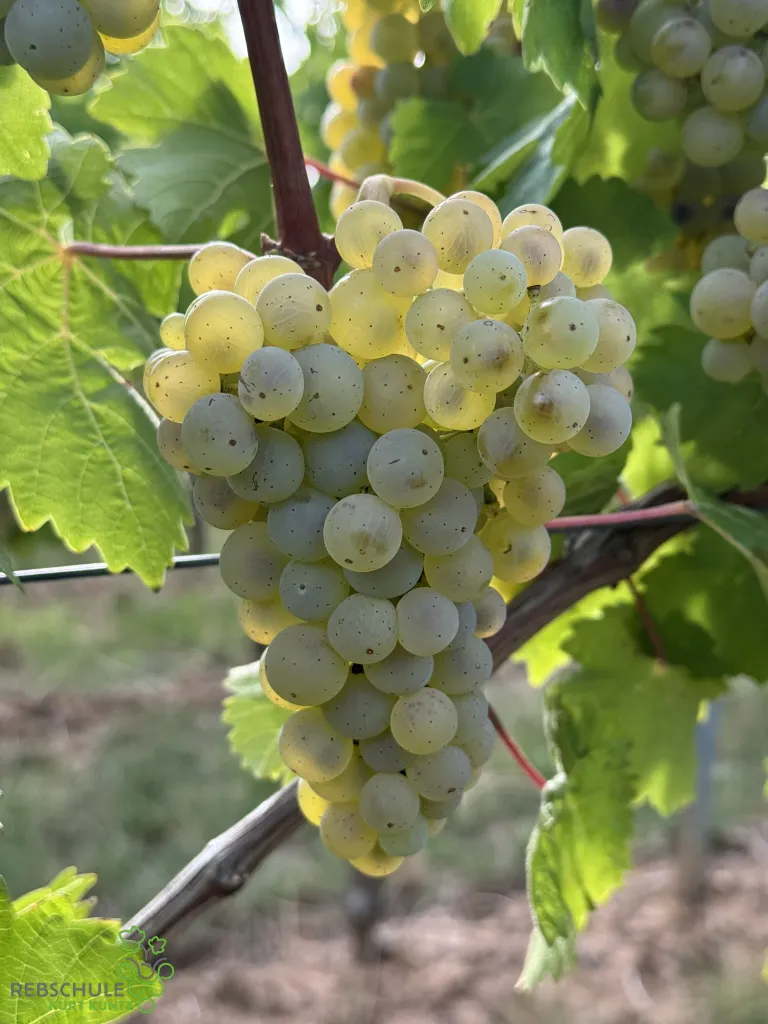
Scheurebe bunches are medium-sized, cylindrical and usually shouldered. They are compact and consist of roundish, yellow-green berries. The berries are juicy and exhibit a fruity and slightly muscat-like varietal aroma.
Scheurebe clones
Kurt Freund

Scheurebe Jf 55
Yield mediumBunches compactBotrytis susceptibility low to medium
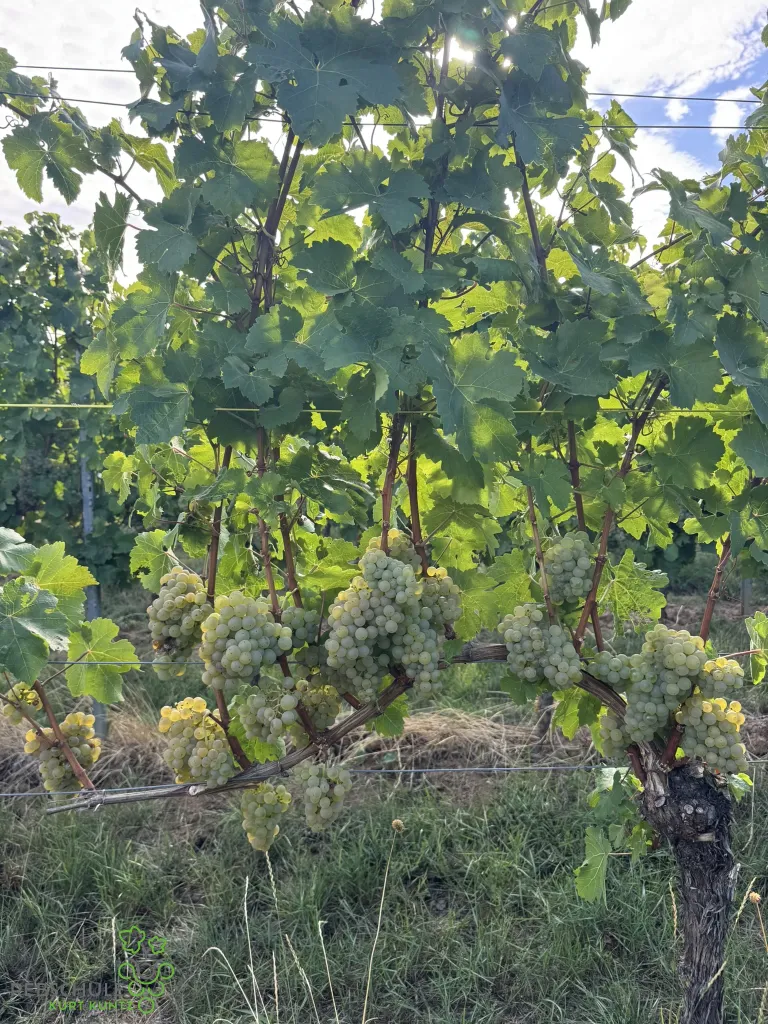
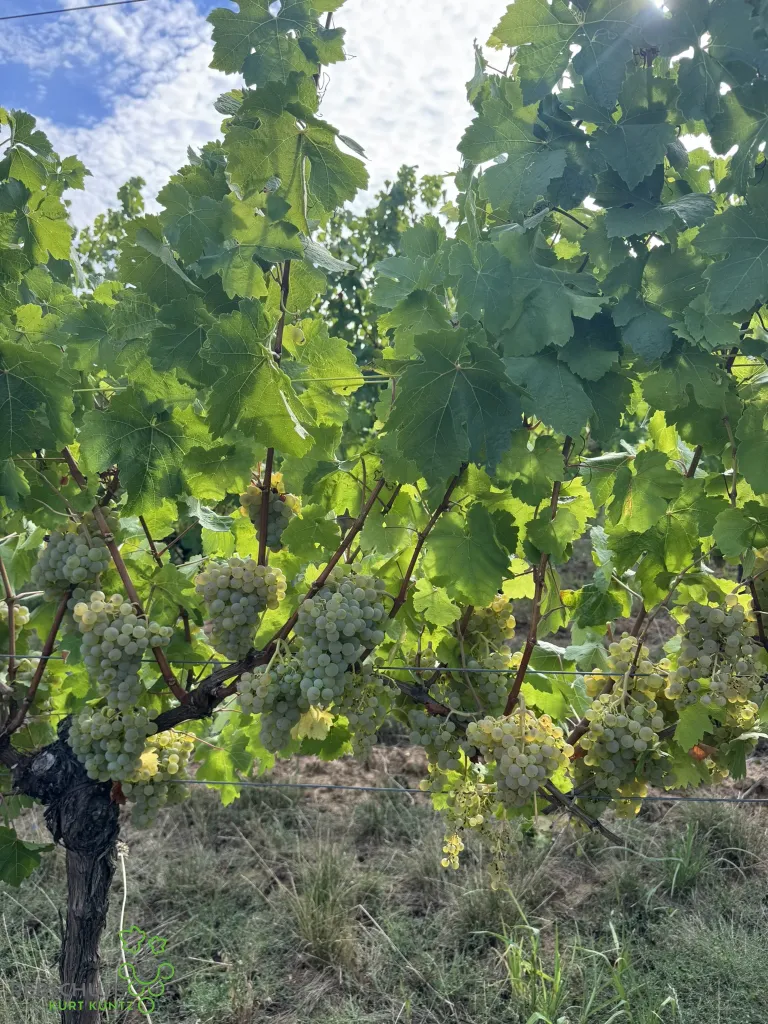
- Quality clone