Yellow Muscat

Crossing
Unconfirmed parentage
Synonyms: Muscat Blanc à Petits Grains, Moscato Bianco
Origin
Yellow Muscat belongs to the extensive Muscat family, one of the world’s oldest cultivated vine lineages with over 200 identified variants. The family exhibits wide morphological diversity in berry size and skin colour, ranging from yellowish-green to pink, red, and dark-skinned forms. Alongside Yellow Muscat, key members of this family include Red Muscat (Muscat Rouge à Petits Grains), Golden Muscat (Moscato Giallo), and Muscat d’Alexandrie.
Known in France as Muscat Blanc à Petits Grains and in Italy as Moscato Bianco, Yellow Muscat ranks among Europe’s oldest grapevine varieties. Its geographic origins are presumed to lie in Greece, from where it spread across the Mediterranean basin in antiquity. In Austria, the variety boasts a long-standing cultivation tradition, holding particular regional significance in Styria and Lower Austria.
Within the Muscat family, Yellow Muscat is regarded as one of the most aromatic and premium-quality variants. The variety also holds central genetic significance: DNA profiling confirms that it is a direct parent of Muscat d’Alexandrie.
Characteristics
- medium-late budburst
- late ripening
- susceptible to coulure
- sensitive to drought stress
Site requirements
Yellow Muscat demands warm, sunny, and wind-sheltered vineyard locations to mitigate its susceptibility to coulure during flowering and to ensure sufficient heat accumulation for full maturation. Heavy or excessively calcareous soils are less suitable; sandy soils are viable provided water supply remains reliable, as the variety is prone to drought stress in dry years. Well-aerated canopy management systems support cluster maturation and help suppress rot development. In years with high fruit set, proactive yield regulation—such as cluster thinning or berry cutting—is strongly recommended.
Aromas
Yellow Muscat ranks among the classic aromatic cultivars, producing distinctive, highly fragrant wines. The sensory profile is defined by a pronounced Muscat bouquet featuring elderflower, nutmeg, and citrus notes, complemented by peach, apricot, and exotic fruit nuances as ripeness increases. Structurally fresh and fruit-forward with vibrant acidity, controlled yields yield notable varietal concentration and subtle spice. The vinification spectrum spans crisp dry styles and off-dry expressions to botrytised noble sweet wines, with aged examples gaining power, rich fruit, and aromatic depth.
Bunch
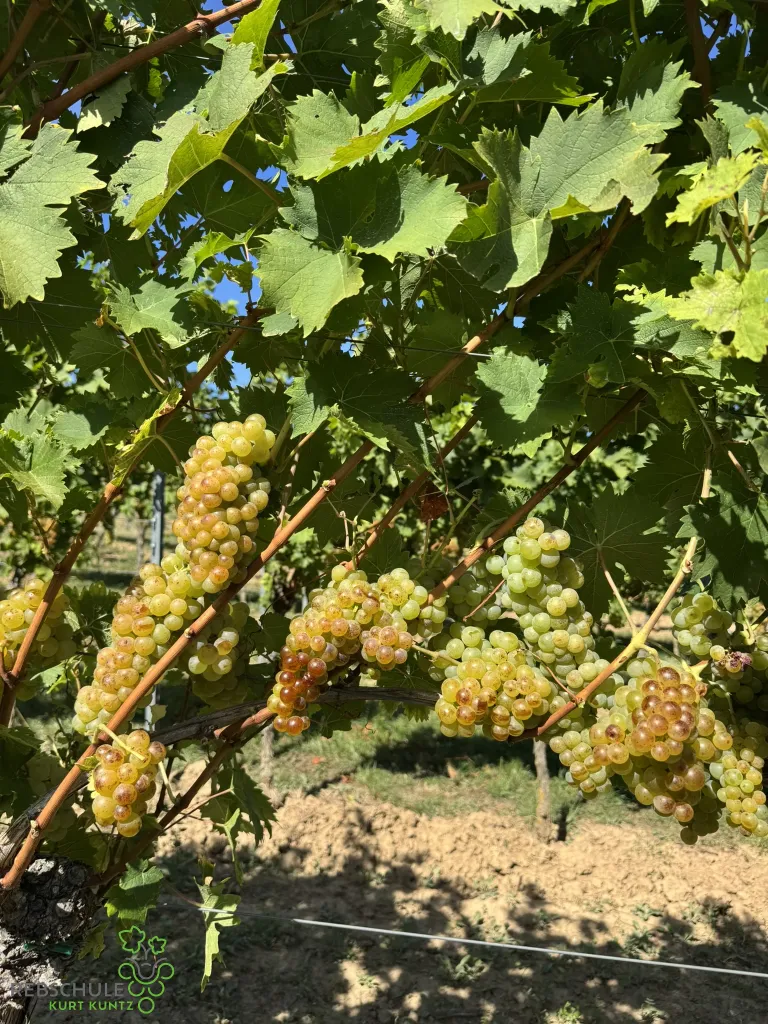
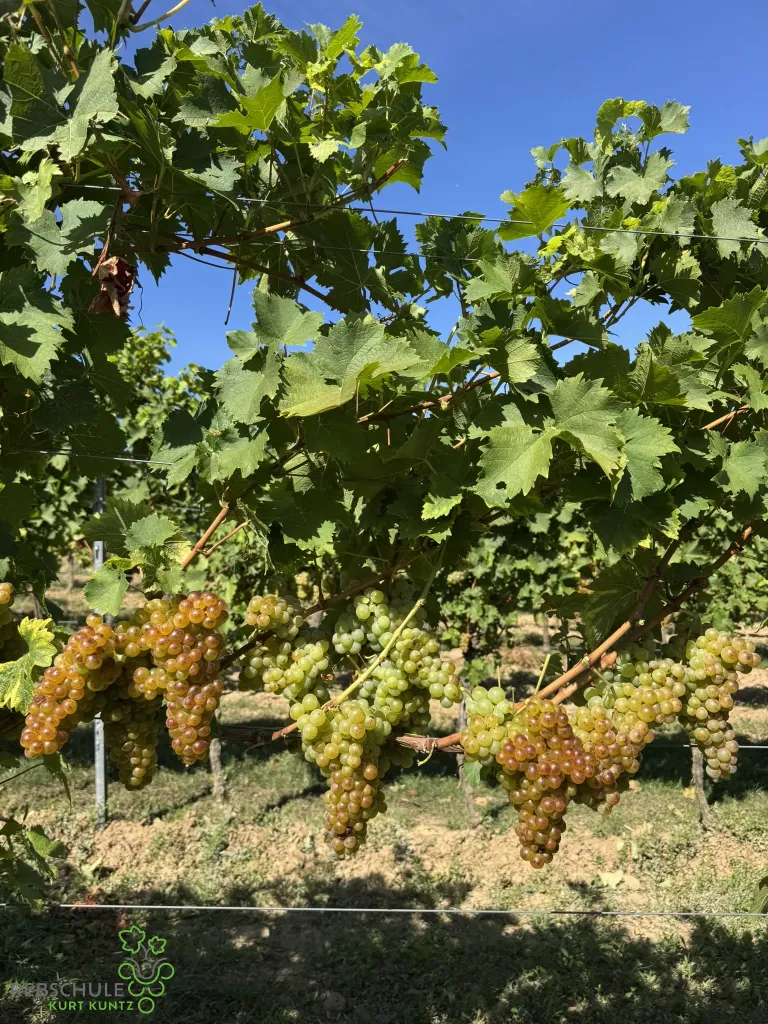
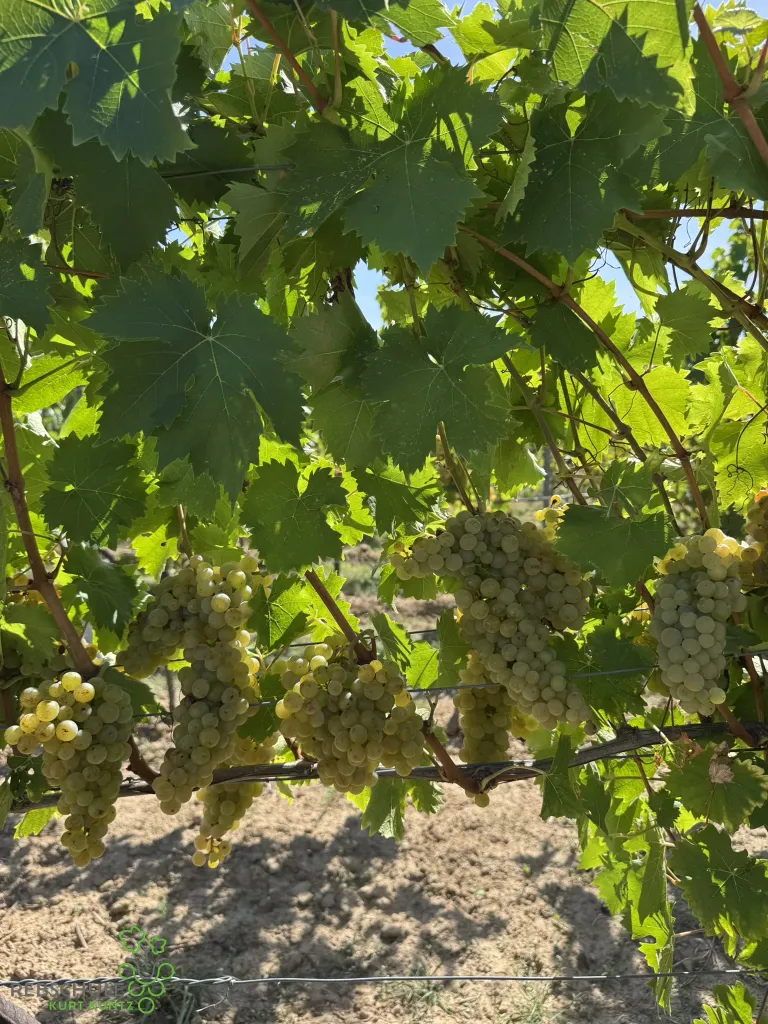
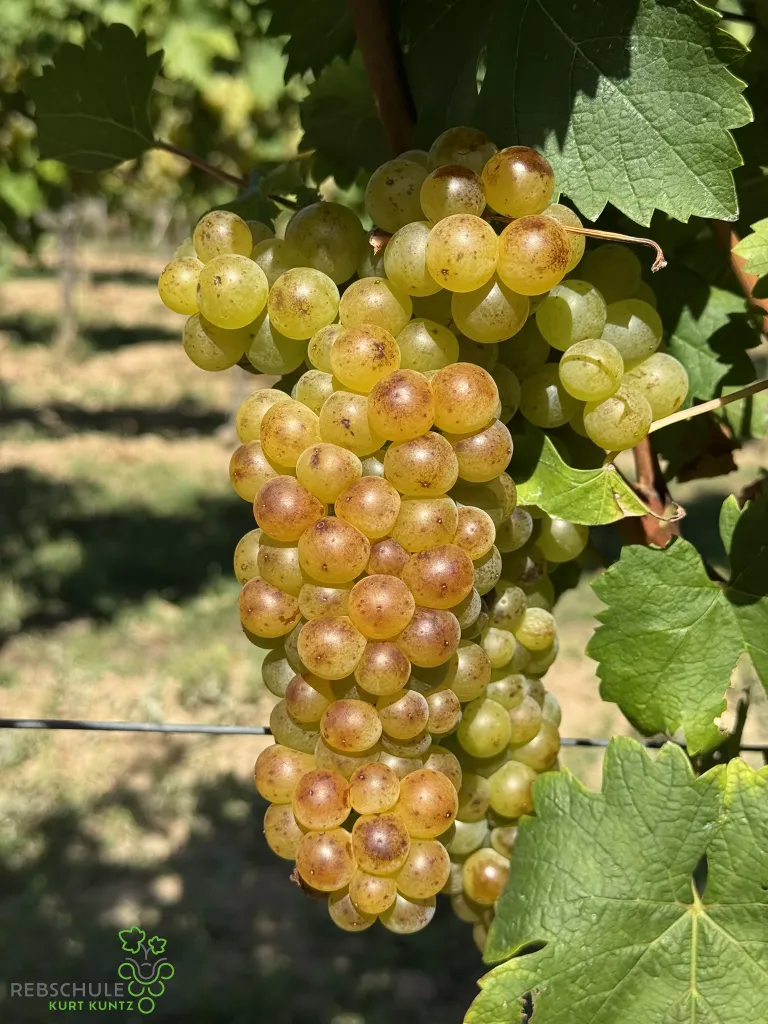
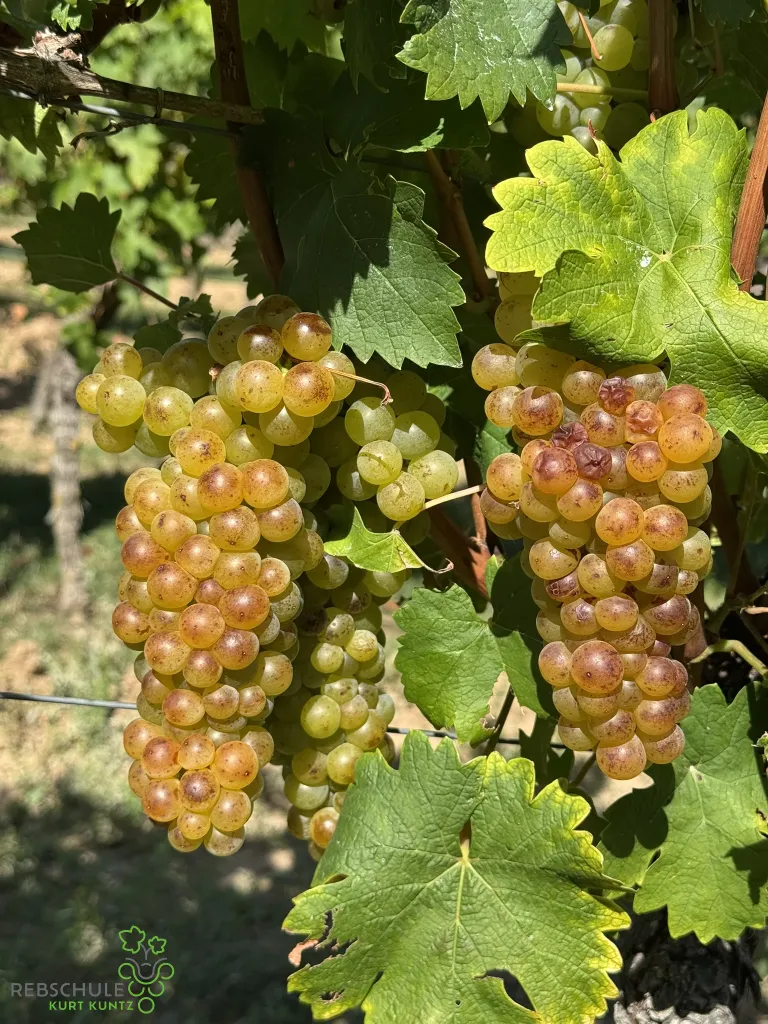
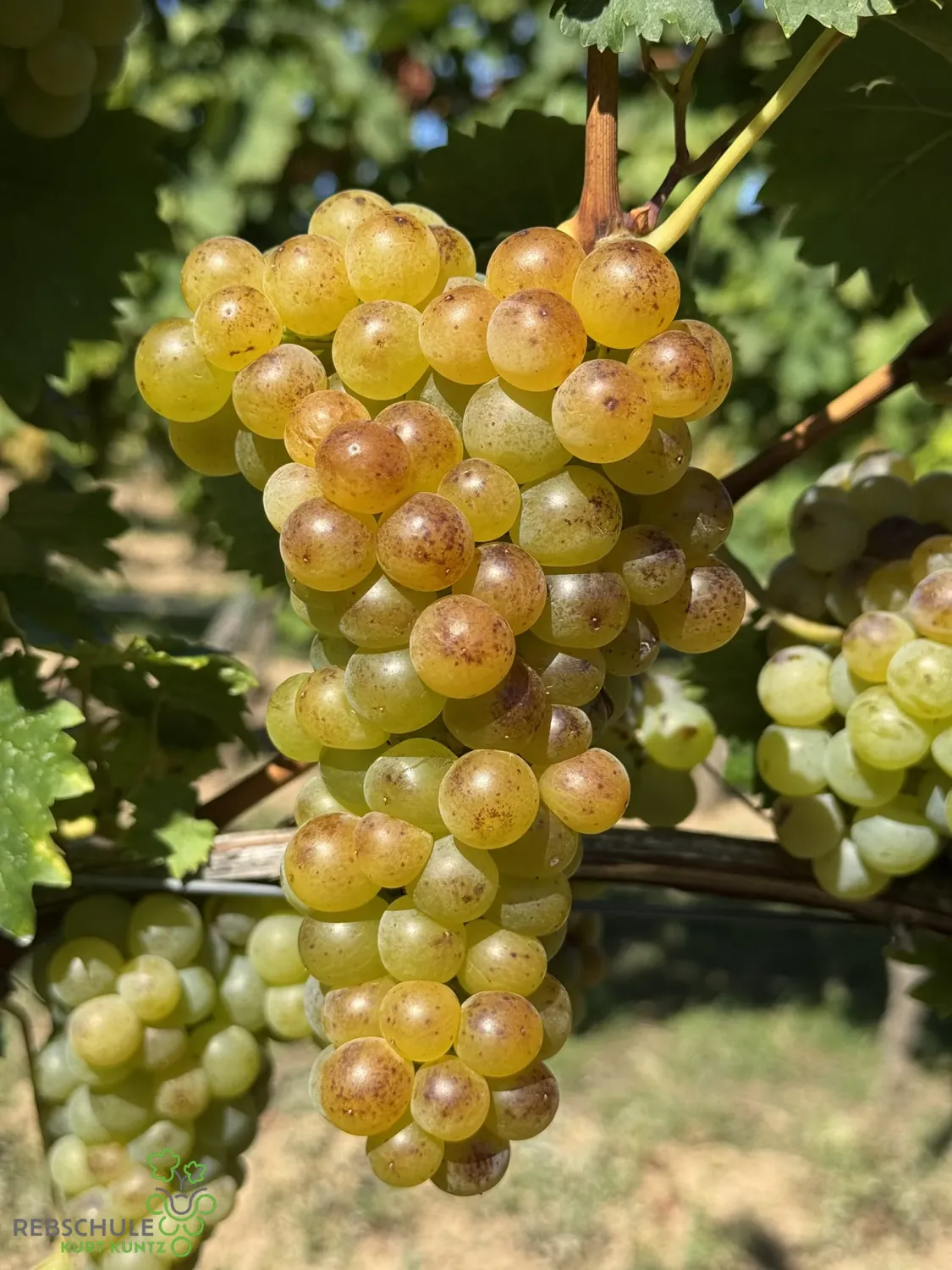
The clusters of Yellow Muscat are large, elongated, and cylindrical, showing little to no shoulder structure and a predominantly compact berry arrangement. The spherical berries transition from greenish-yellow to golden-yellow upon ripening, often developing brownish tones on sun-exposed surfaces. They possess a thin berry skin and deliver a highly pronounced, characteristic Muscat bouquet.
Links/Downloads
Yellow Muscat clones
Weinsberg

Yellow Muscat We H 1
Yield mediumBunches compactBotrytis susceptibility medium