Merlot

Crossing
Cabernet Franc x Magdeleine Noire des Charentes
Origin
Merlot originates from south-west France, most likely from Bordeaux. In older sources, the variety appears under various names, including ‘Crabatut noir’ and ‘Crabutet noir’, with a first mention under this name dated in specialist literature to the 14th century. Under the names ‘Merlau’ and ‘Merlot’, the grape variety is documented in the Libourne area from 1784 at the latest, although the exact evolution of its varietal names cannot be traced without gaps.
For a long time, the genetic origin of Merlot remained unknown. It was not until 2009 that French and international researchers demonstrated through DNA profiling that the variety resulted from a natural cross between Cabernet Franc and Magdeleine Noire des Charentes. This long-forgotten grape variety was rediscovered among old vines in Brittany and the Charente. While the genetic findings confirm Merlot’s parentage, they do not allow the exact location where the cross originally occurred to be conclusively determined; the Bordeaux area continues to be regarded as Merlot’s historic region of origin.
In the 18th and 19th centuries, Merlot gained increasing importance across Bordeaux. Particularly on the Right Bank of the Dordogne, in appellations such as Saint-Émilion and Pomerol, the variety developed into a key foundation for fine red wines. It also became significant in the Médoc, establishing itself alongside Cabernet Sauvignon and Cabernet Franc as one of the region’s defining grape varieties.
In the 19th century, Merlot also reached other European wine-growing regions. In Veneto, the variety is documented in 1855 under the name ‘Bordò’, and it later spread to countries including Switzerland, where initial cultivation trials took place in Ticino between 1905 and 1910. In the 20th century, Merlot also gained increasing prominence outside Europe, particularly in California, Chile, Argentina and Australia.
A notable chapter in its international history is its confusion with Carménère in Chile. Because both varieties look very similar in the vineyard, Carménère vines were long mistaken for Merlot. It was not until 1994 that the French ampelographer Jean-Michel Boursiquot identified the mix-up during an inspection of Chilean vineyards based on ampelographic traits, with subsequent DNA profiling confirming the variety’s identity. Today, Merlot ranks among the world’s most important red wine varieties.
Characteristics
- early budburst
- mid-season to late ripening
- susceptible to late spring frost
- medium vigour
- drooping growth habit
- weather-dependent susceptibility to coulure
- increased yield level
Site requirements
Merlot prefers warm, sunny sites as well as deep, easily rootable soils with a good water supply. It exhibits moderate to strong vigour and can develop a dense canopy where water and nutrient availability are high. Tailored shoot thinning and canopy management are essential to ensure good aeration of the bunch zone and limit the risk of rot. Sites prone to late spring frost should be avoided, and during flowering, Merlot can be susceptible to coulure under unfavourable weather conditions. Severe drought and waterlogged soils should likewise be avoided. On warm, early-ripening sites, the variety can achieve high must weights, though acidity decreases comparatively rapidly as ripeness progresses.
Aromas
Merlot wines are characterised by a fruit-driven, full-bodied character and a predominantly soft tannin structure. Typical are aromas of plum, blackberry, black cherry and blackcurrant. Compared with Cabernet Sauvignon, Merlot wines often come across as more supple and approachable at an earlier stage. Merlot is vinified both as a single-varietal wine and used as a classic blending partner. Maturation in oak barrels enhances its structure and brings forth additional toasted and spicy notes. Depending on winemaking style and quality, the spectrum ranges from early-drinking wines through to age-worthy, complex reds. Increasingly, Merlot is also vinified as a rosé.
Bunch
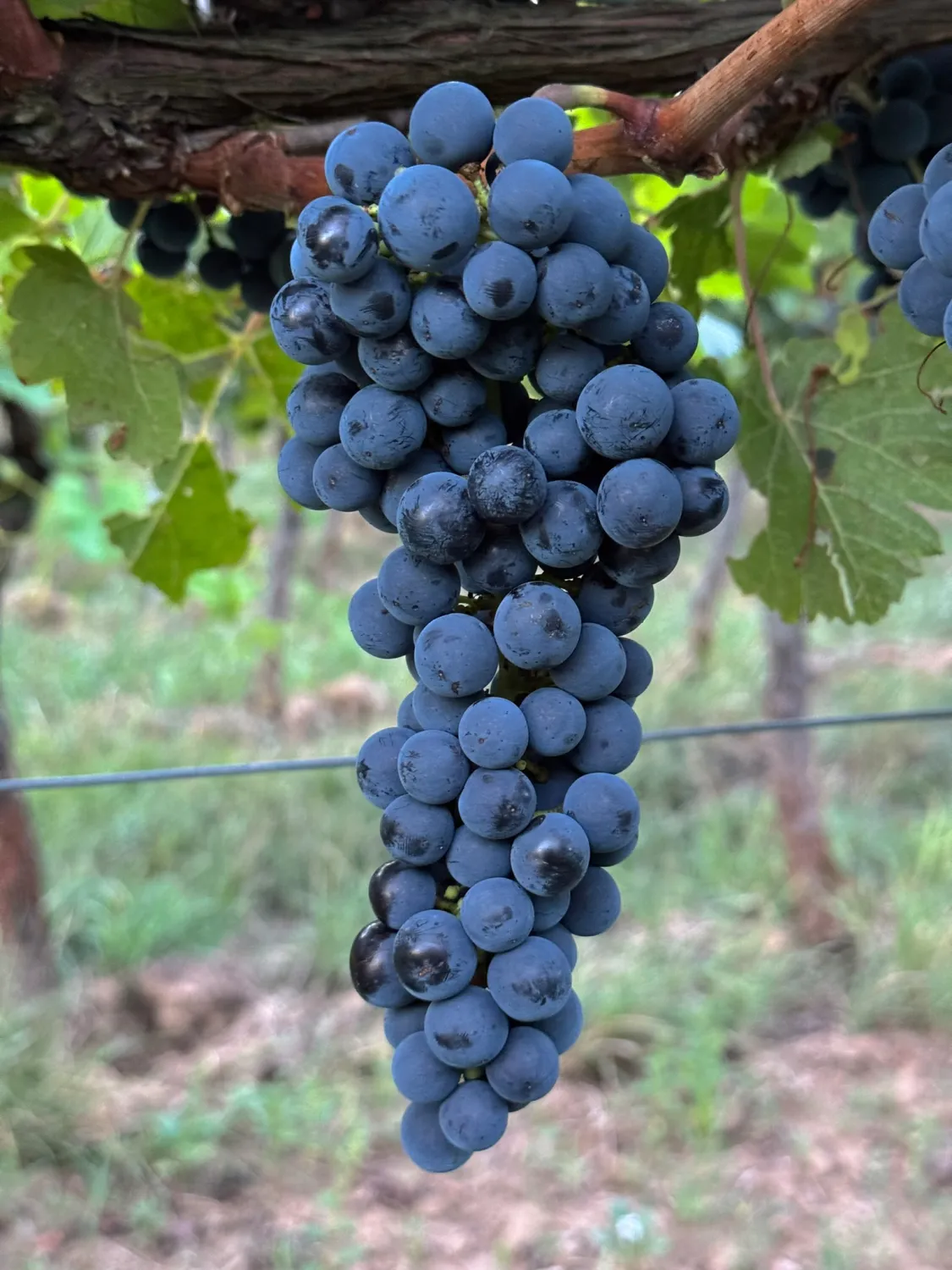
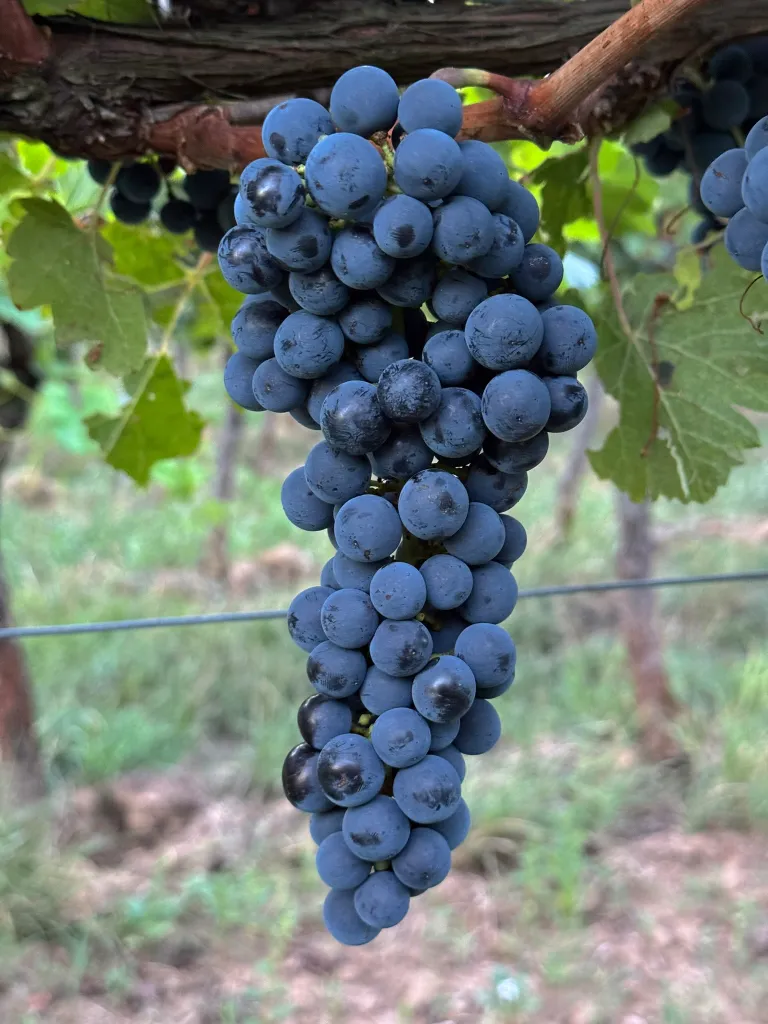
The bunches are medium-sized, cylindrical and occasionally winged, with a loose structure. The roundish, small to medium-sized berries are bluish-black in colour.
Links/Downloads
Merlot clones
France

Merlot ENTAV-INRA 181
Yield low to mediumBunches loose-clusteredBotrytis susceptibility low
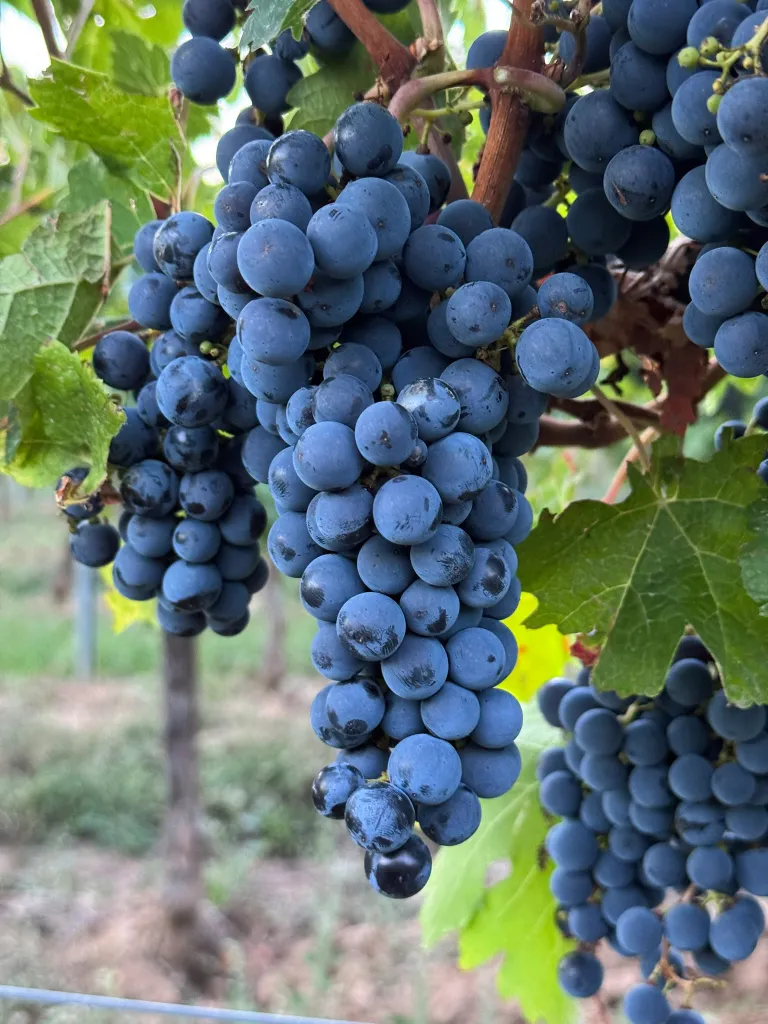
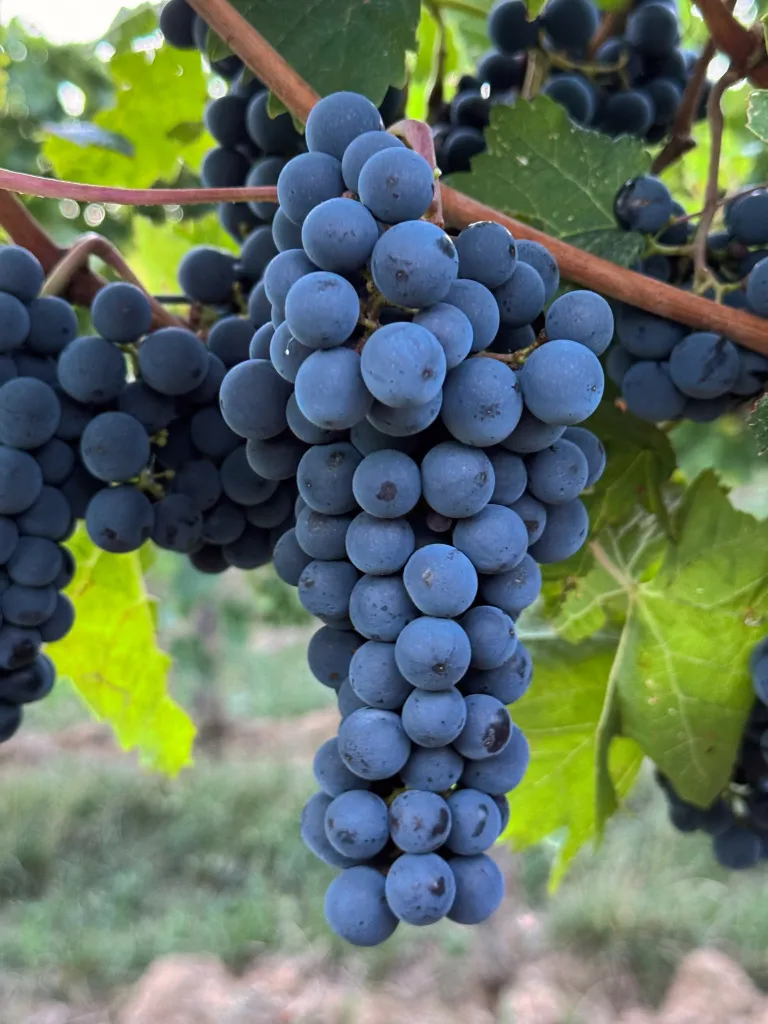
- quality clone
- bunch size: rather small bunches compared to other Merlot clones
Yield: Low to moderate yield potential, but notably consistent yields in multi-year comparative trials.