Saint Laurent

Crossing
Pinot Noir x ?
Synonyms: St. Laurent, Sankt Laurent
Origin
The exact origin of Saint Laurent has still not been conclusively established, though the variety is frequently associated with Alsace in France. The German viticultural pioneer Johann Philipp Bronner from Wiesloch is said to have brought Saint Laurent from Alsace to Germany in the mid-19th century. Through his extensive nursery work, he played a key role in collecting, trialling and propagating a wide range of grape varieties, work later continued by his son Carl, who further promoted the spread of Saint Laurent. DNA profiling has confirmed Pinot Noir as one parent of the variety, while the second parent remains unknown.
Characteristics
- early budburst
- medium-late ripening
- susceptible to late spring frost
- prone to coulure
- susceptible to chlorosis on waterlogged soils
- susceptible to bunch rot due to compact bunches
Site requirements
Saint Laurent prefers deep, not overly fertile soils with a reliable water supply and performs best on mid-tier to good vineyard sites. Due to its early budburst, there is an increased risk of late spring frost. Heavy, cold and waterlogged soils are unfavourable, as they can promote coulure, chlorosis and ripening issues. Because the berries are prone to splitting during heavy rainfall in the ripening phase, well-ventilated sites with predominantly dry autumn weather are advantageous.
Aromas
Saint Laurent wines are characterised by an intense dark red colour and a pronounced fruity aromatic profile. Typical notes include cherries – particularly sour cherry – alongside red berry fruits. The wines generally display crisp acidity and a well-integrated tannin structure. Given high grape quality and careful vinification, they can also develop good ageing potential.
Bunch
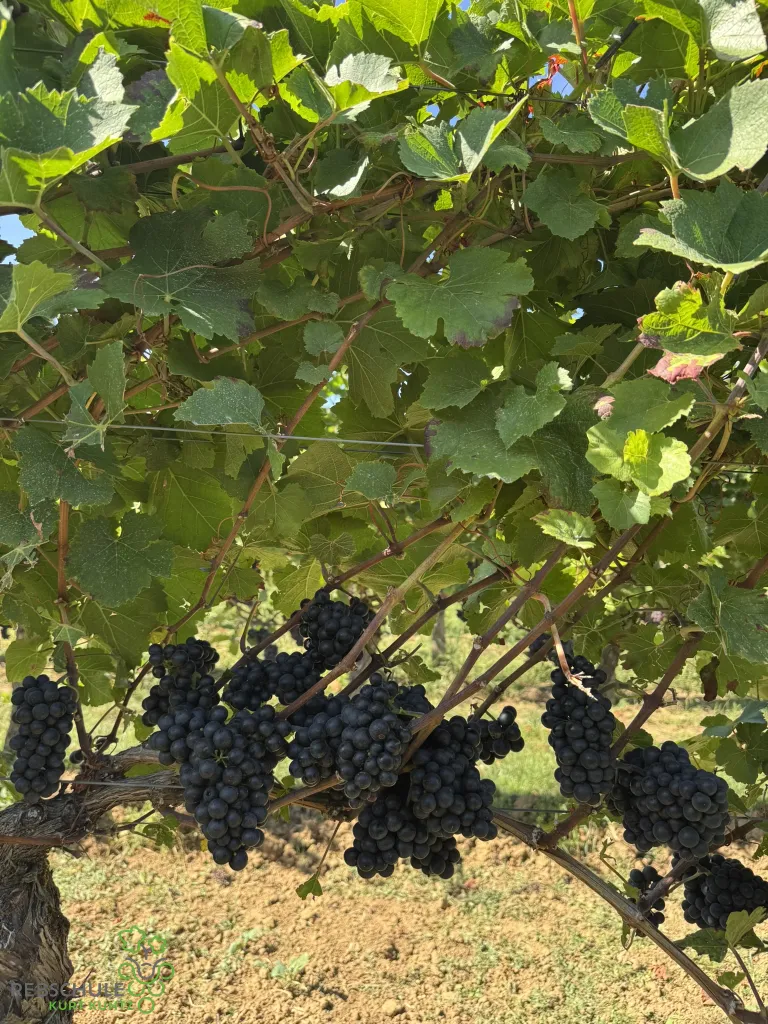
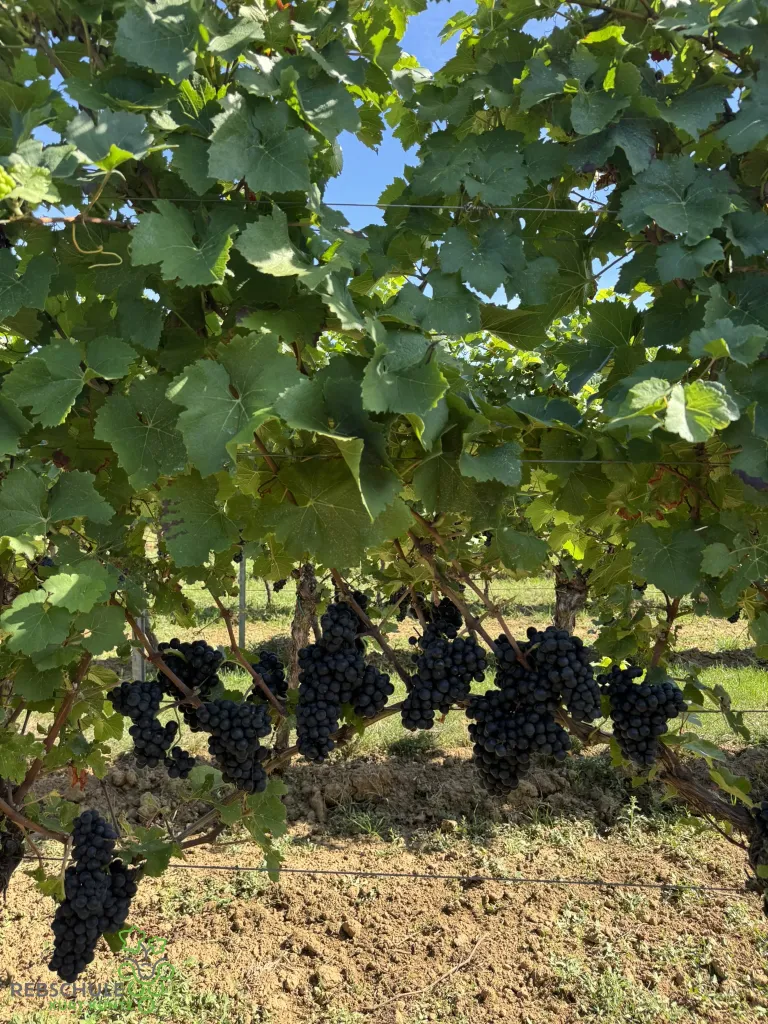
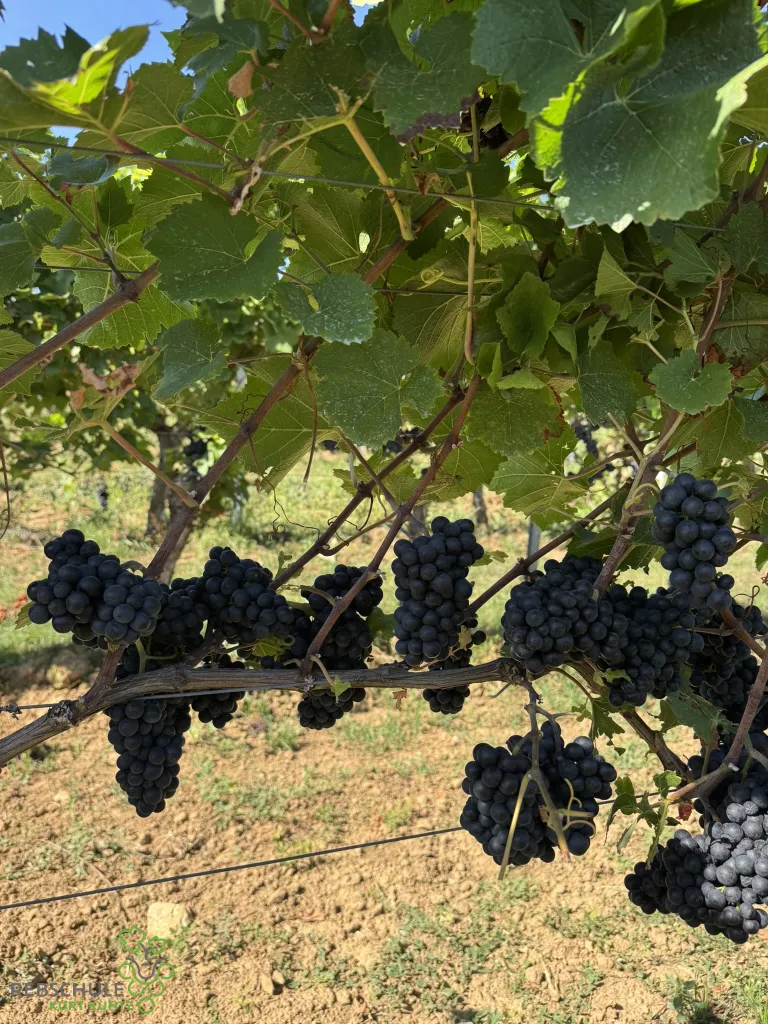
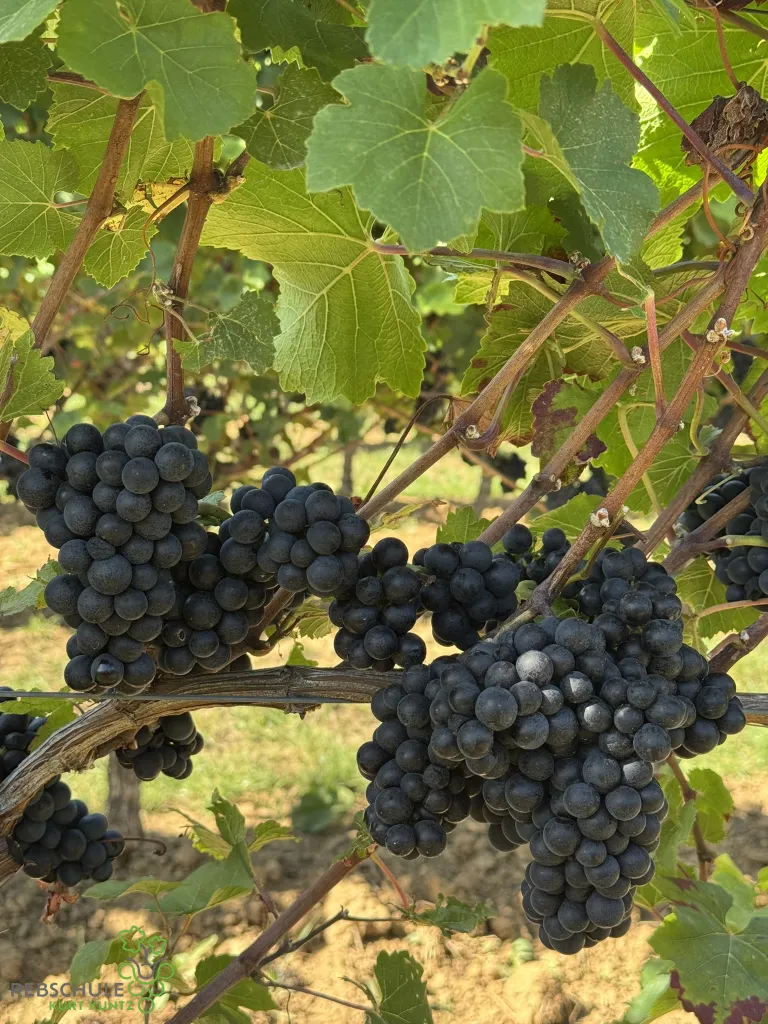
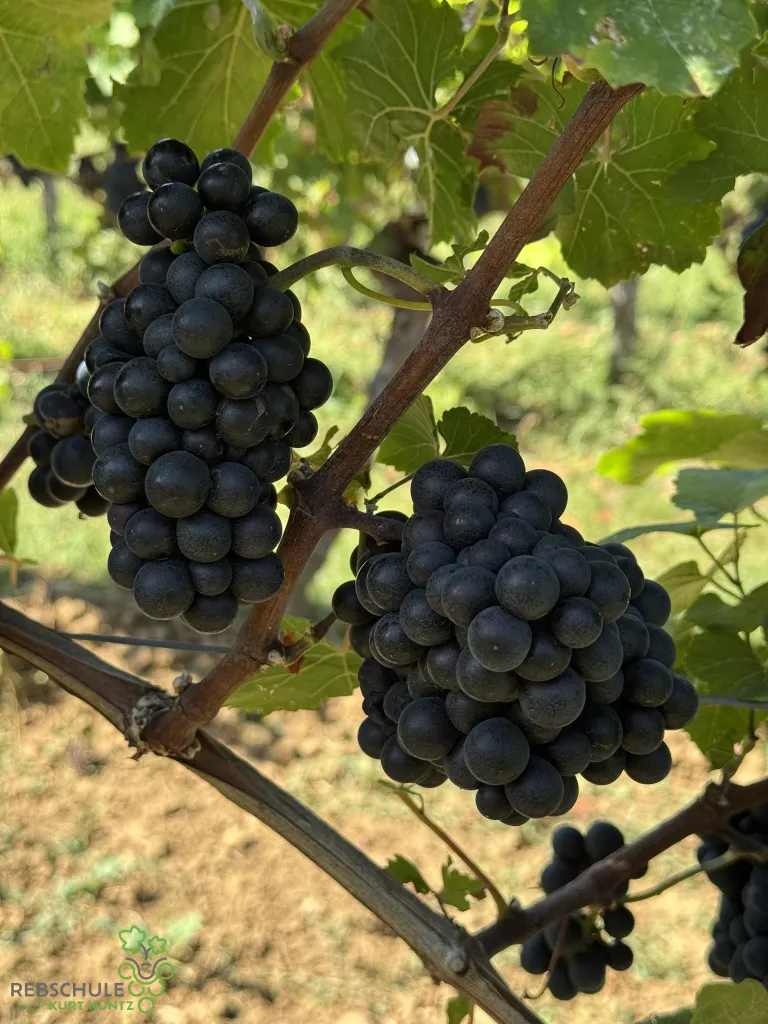
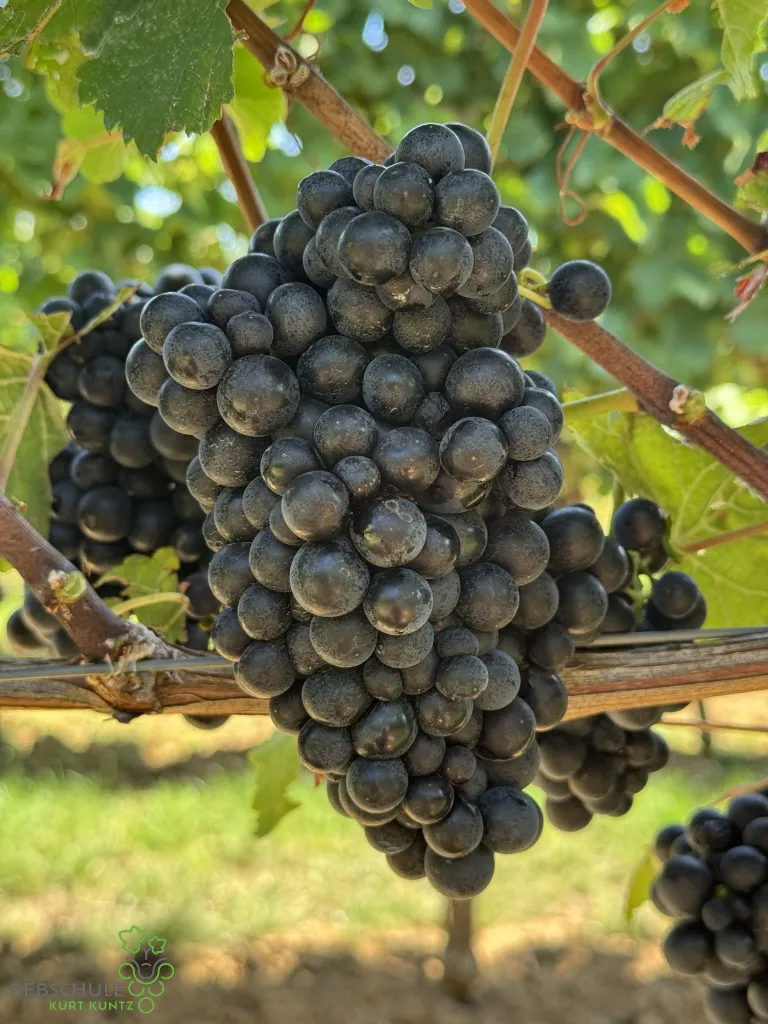
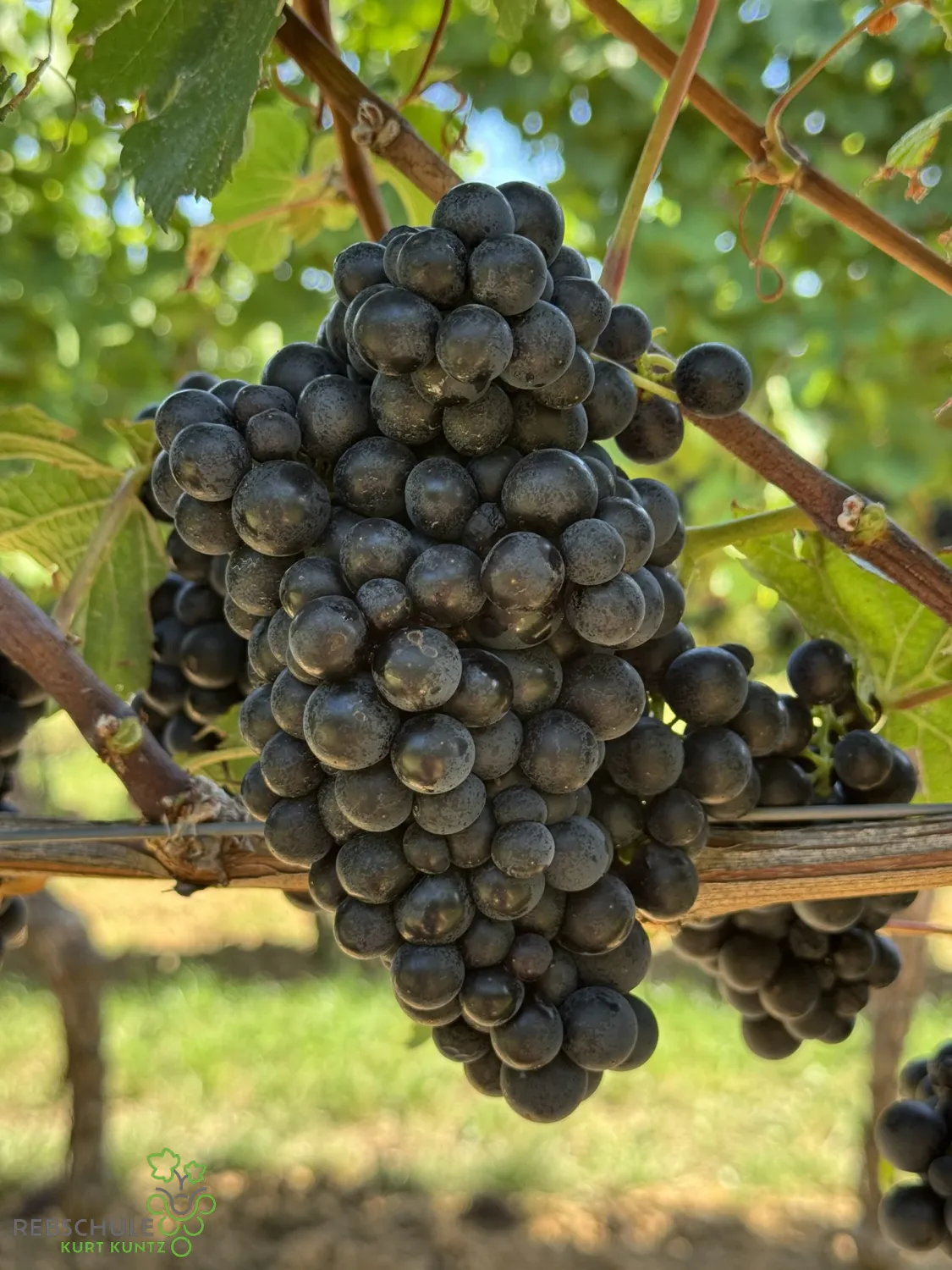
The bunches are medium to large, cylindrical and often broadly winged to divided, with a compact structure. The berries are roundish to oval, blue-black in colour and covered with a blue-grey waxy bloom, with a thick skin.
Links/Downloads
Saint Laurent clones
Kleinmann

Saint Laurent K2
Yield mediumBunches compactBotrytis susceptibility medium