Syrah / Shiraz

Crossing
Dureza x Mondeuse Blanche
Synonyms: Shiraz, Hermitage, Serine
Origin
Syrah, also known internationally as Shiraz, originates from France’s Rhône Valley. The variety has been rooted there for centuries, notably shaping the wines of Hermitage, Côte-Rôtie and Cornas. For a long time, it was speculated to have originated in the Persian city of Shiraz; however, DNA profiling in 1998 proved that Syrah resulted from a natural cross between the French grape varieties Dureza and Mondeuse Blanche.
In the 19th century, Syrah was brought to Australia by the Scottish-born viticultural pioneer James Busby, where it developed under the name Shiraz into one of the country’s most important red wine varieties. Historic vineyards in the Barossa Valley still contain vines dating back to the 1840s. Through wines such as Penfolds Grange, Australian Shiraz achieved international acclaim from the mid-20th century onwards.
In South Africa, too, the variety has a distinct history. There, the grape variety Cinsault was long known under the name ‘Hermitage’ and mistakenly equated with Syrah. According to modern historical reconstructions, true Syrah planting material was only deliberately introduced from Australia at the beginning of the 20th century. Today, Syrah is vinified in distinct regional styles across France, Australia and South Africa.
Characteristics
- medium to late budburst
- medium-late to late ripening, depending on site and weather
- high vigour
- upright growth habit
- susceptible to shoot breakage in wind
- low basal bud fertility
Site requirements
Syrah makes high demands on the vineyard site and prefers warm, sunny locations with a long growing season. In cooler wine-growing regions, particularly warm-favoured sites are required to achieve full grape ripeness. Due to its vigorous growth, overly fertile soils should be avoided. A balanced water supply is essential, as both drought stress and excessive vegetative growth can impair ripening and quality.
Aromas
Syrah produces deeply coloured, structured wines with pronounced aromatics, firm tannins and high ageing potential. Its aromatic spectrum varies considerably depending on the vineyard site and microclimate:
In cooler sites, the wines display a fresh fruit profile of blackcurrant (cassis) and blackberry, accompanied by floral violet notes and a pronounced peppery spice. This peppery character is caused by the aroma compound rotundone; cool conditions during ripening promote higher rotundone levels, whereas excessive warming of the berries reduces them.
In warmer sites or at very high levels of ripeness, ripe plum and black cherry come to the fore, gaining hints of chocolate, tobacco and leather through oak barrel maturation. Syrah is vinified both as a single-varietal wine and valued as a structural blending partner.
Bunch
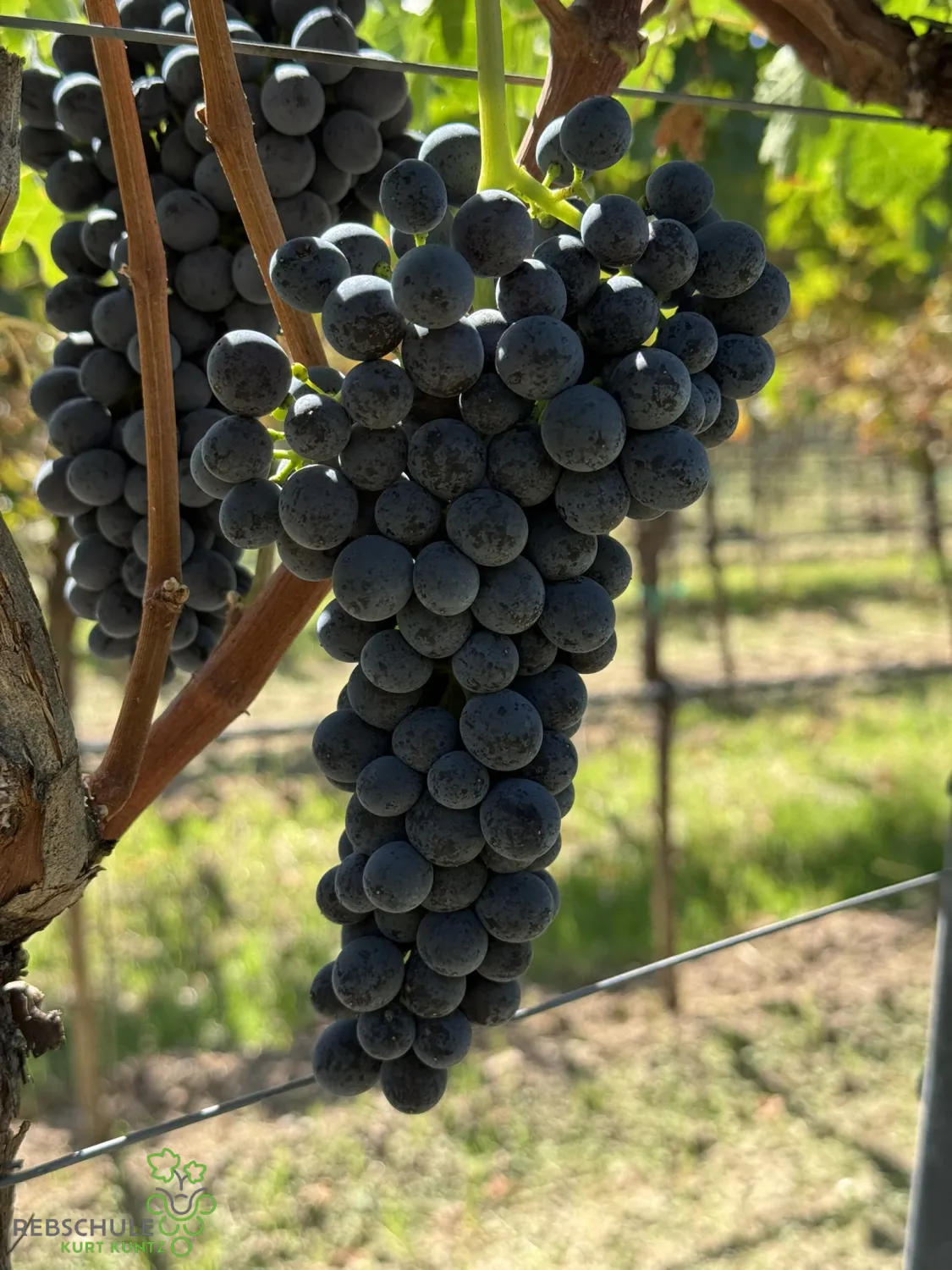
The bunches are medium-sized, cylindrical and partly winged, with a moderately dense to compact structure. The berries are small to medium-sized, elongated and bluish-black in colour. The skin is thin yet comparatively firm and carries a pronounced waxy bloom, while the pulp is firm to soft, juicy and sweet.
Links/Downloads
Syrah / Shiraz clones
France

Syrah / Shiraz ENTAV-INRA 470
Yield lowBunches low compactnessBotrytis susceptibility low
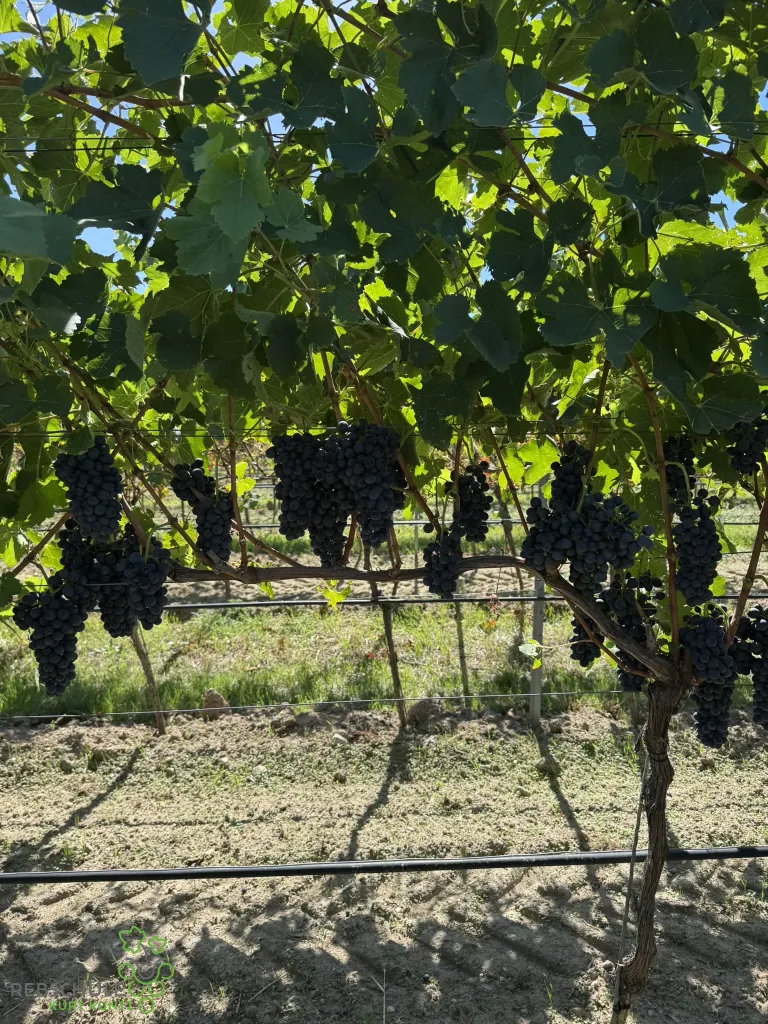
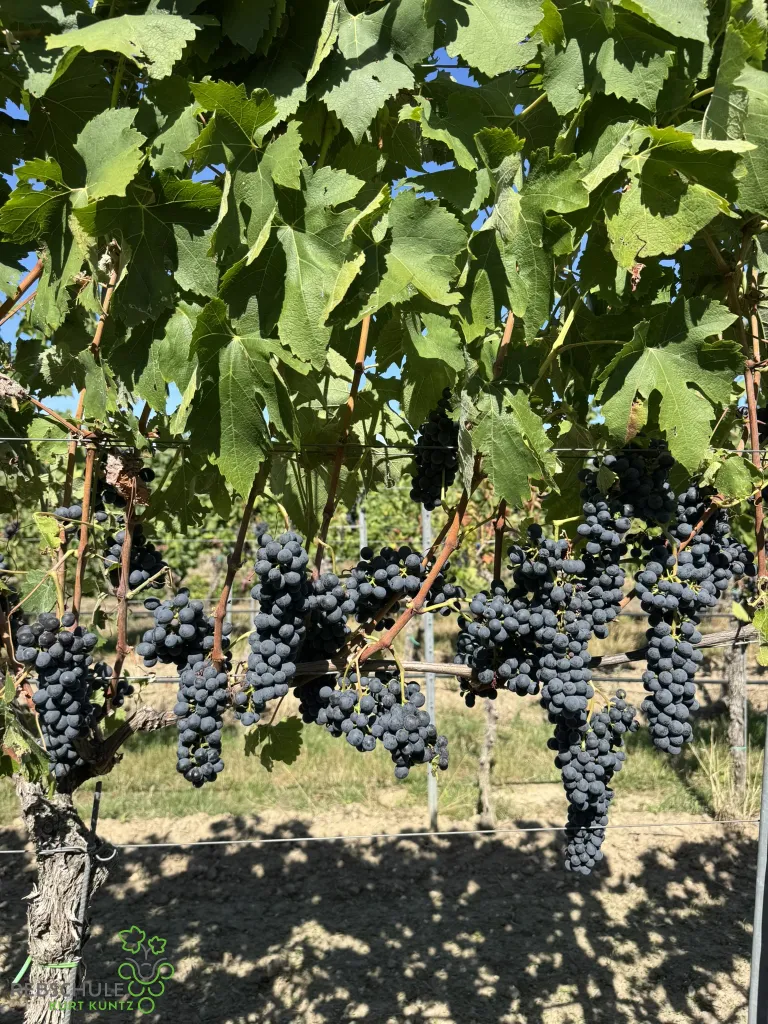
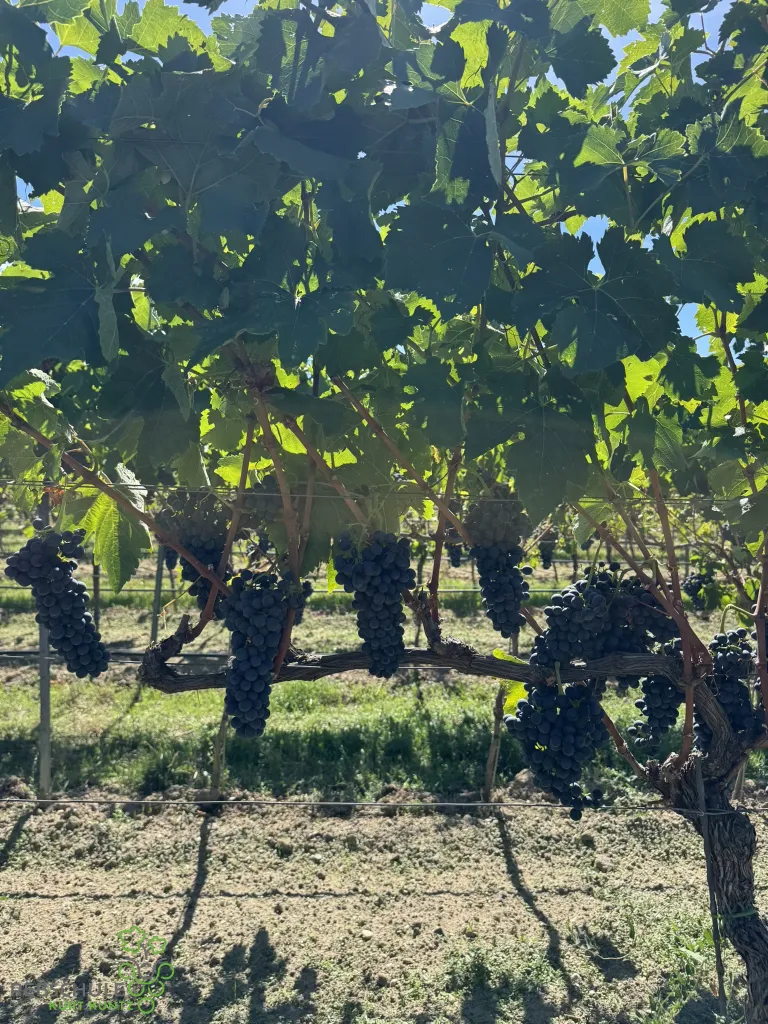
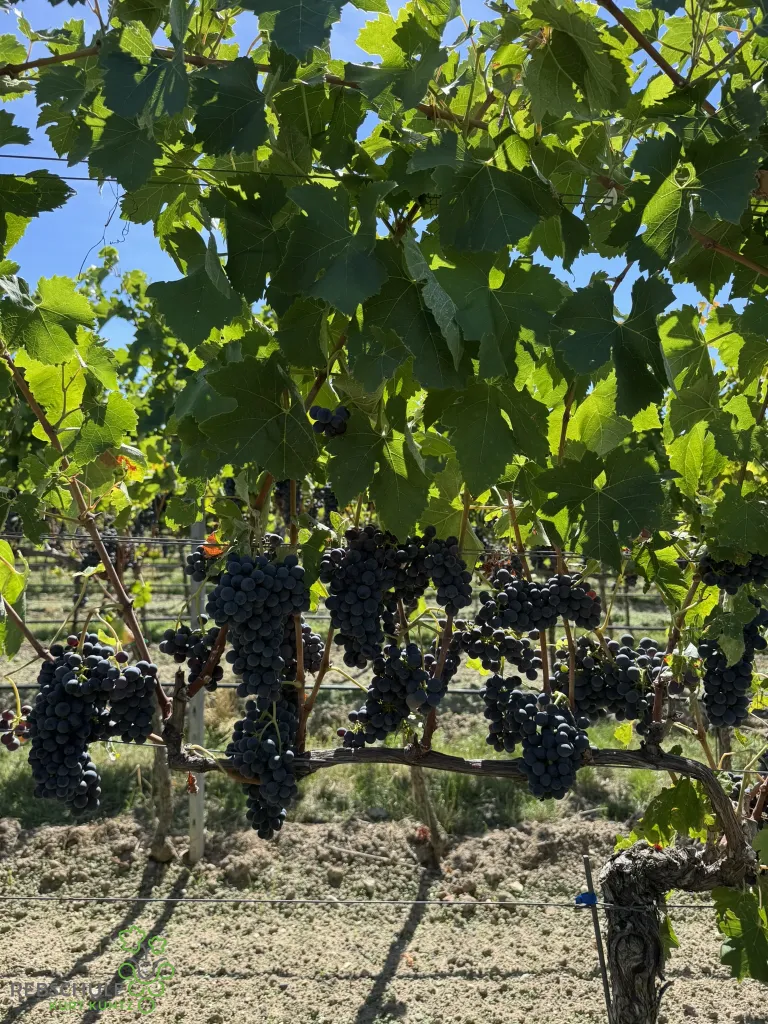
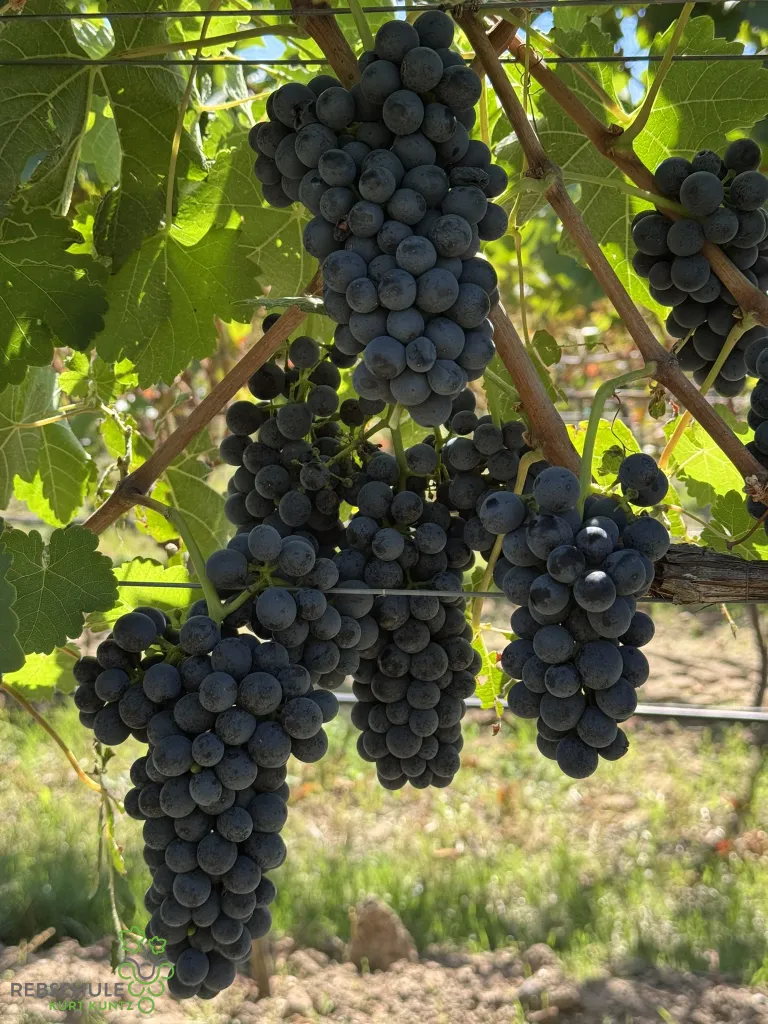
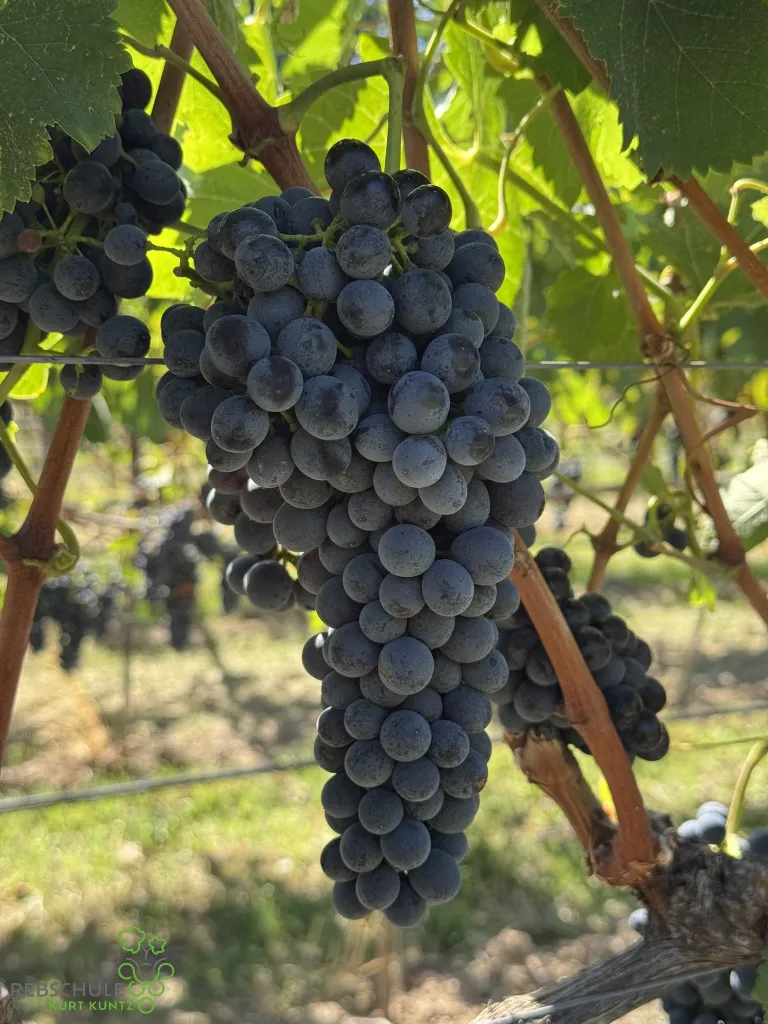
- quality clone
- in official French clonal comparisons, clone 470 ranks at the lower end of all certified Syrah clones in terms of yield potential, while also exhibiting the lowest susceptibility to botrytis