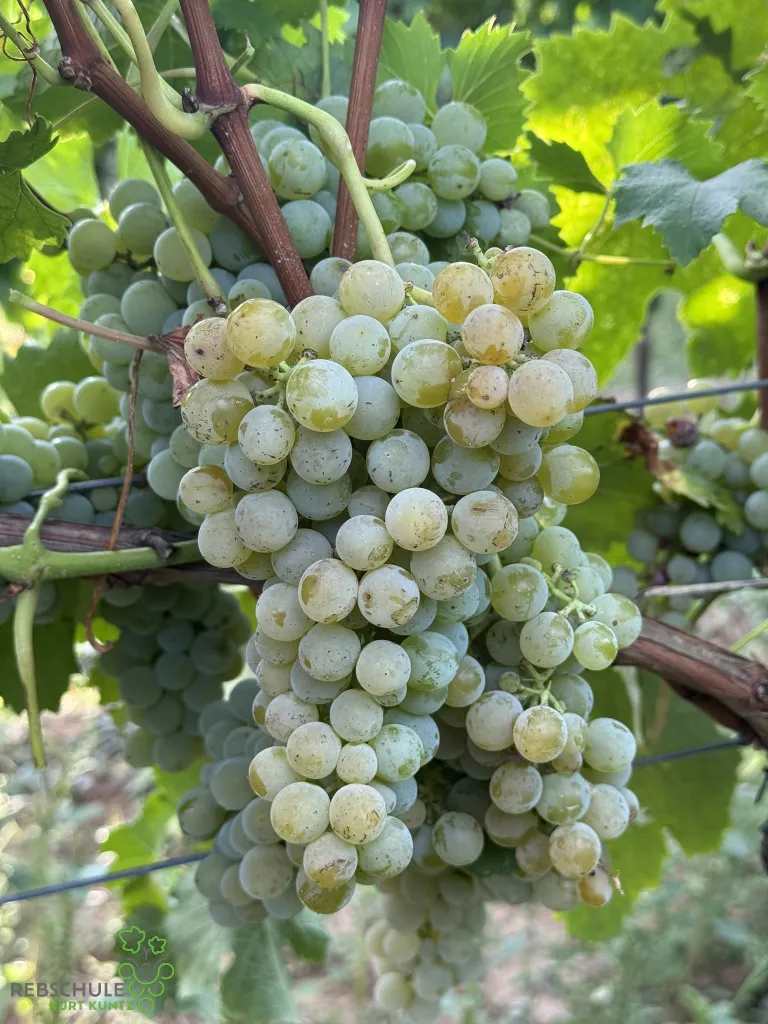
Blütenmuskateller PIWI

Crossing
Severny x (Muscat Lunel × Muscat d’Alexandrie)
Severny = [Seyanets Malengra x Vitis amurensis]
Origin
Blütenmuskateller originated in Russia, bred in 1947 at the former All-Russian Research Institute for Viticulture and Winemaking in Novocherkassk. The cultivar is a naturalised cross of Severny × (Muscat Lunel × Muscat d’Alexandrie) and was initially registered under the Russian name ‘Tsvetochny’ (Цветочный), translating literally to ‘flowery’ or ‘floral’.
A key component of its parentage is the cultivar Severny, derived from Seyanets Malengra × Vitis amurensis. The East Asian wild vine Vitis amurensis introduced essential traits such as frost hardiness and enhanced resistance to fungal diseases. Conversely, the two Muscat parent varieties, Muscat Lunel and Muscat d’Alexandrie, contribute significantly to the cultivar’s pronounced aromatic and floral profile.
Today, Blütenmuskateller is primarily cultivated in Austria and is gaining increasing importance in Germany. The cultivar is also known in its country of origin, Russia. Due to its early ripening, fungus resistance, and pronounced muscat bouquet, it is particularly attractive for viticultural regions with shorter vegetation periods.
Characteristics
- medium budburst
- mid-to-late ripening
- Highly winter-hardy (due to Vitis amurensis genetics)
- high yield potential
- Upright shoot growth
Site requirements
Due to its medium-late ripening, Blütenmuskateller prefers superior vineyard sites. The cultivar also makes specific demands on soil quality, requiring at least medium-deep soils with adequate water-holding capacity. Lean, poor, and dry sites are less suitable, as shoot growth may decline and sufficient water availability is particularly essential during the ripening period.
Aromas
Blütenmuskateller produces intensely aromatic wines that evoke traditional Muscat varieties, though typically presenting greater fullness, higher extract levels, and enhanced aromatic intensity. Characteristic is a pronounced Muscat profile with distinct floral notes reminiscent of elderflower and linden blossom. Responsible for this intense aromatics are terpenes such as linalool, which occur in particularly high concentrations in Blütenmuskateller. The wines possess a vibrant and persistent acidity similar to Gelber Muskateller (Muscat Blanc à Petits Grains) and present a full-bodied mouthfeel. Due to its intense aromatic profile and high extract values, Blütenmuskateller is equally suited to dry and off-dry styles, as well as dessert wine production.
Bunch
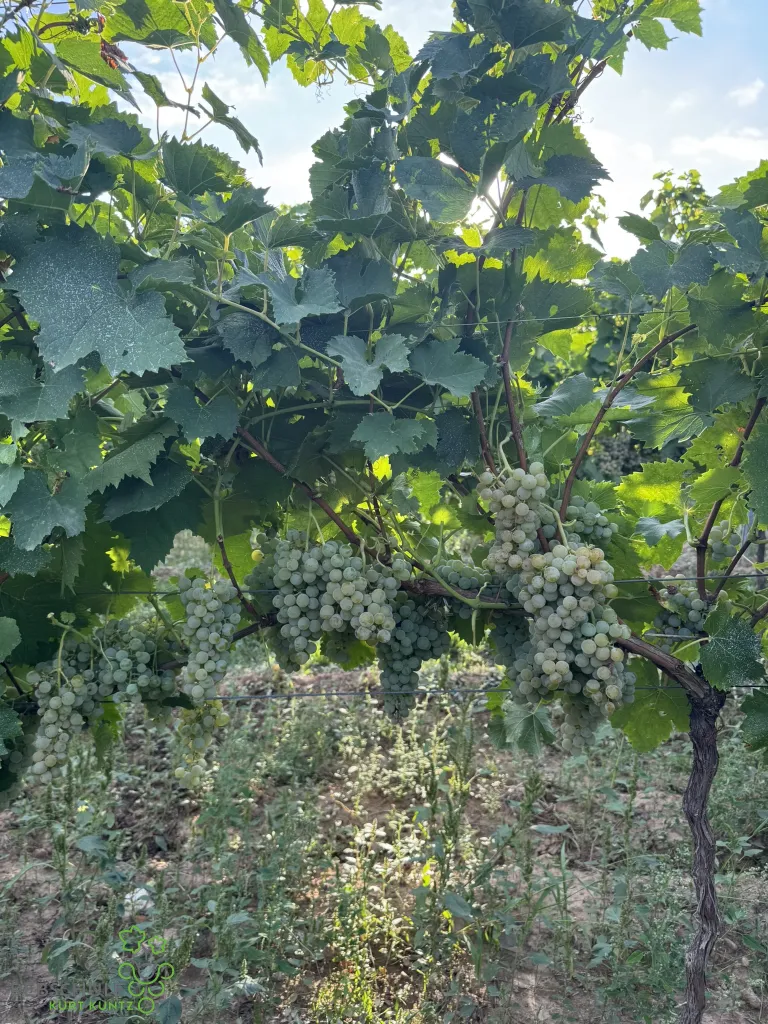
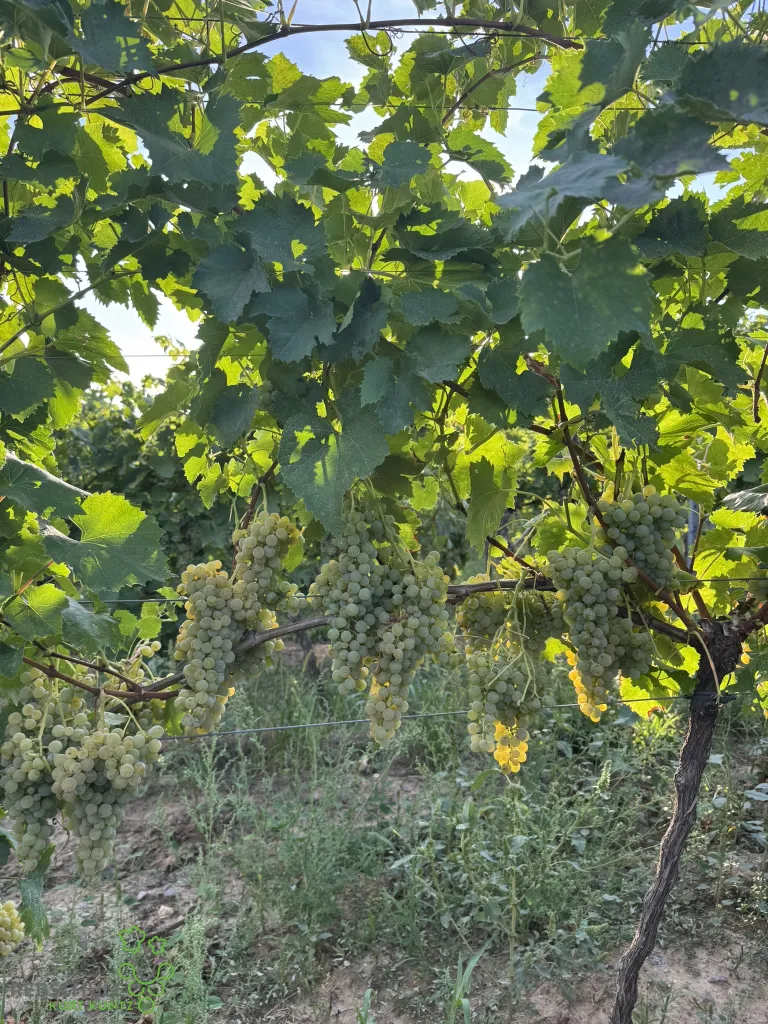
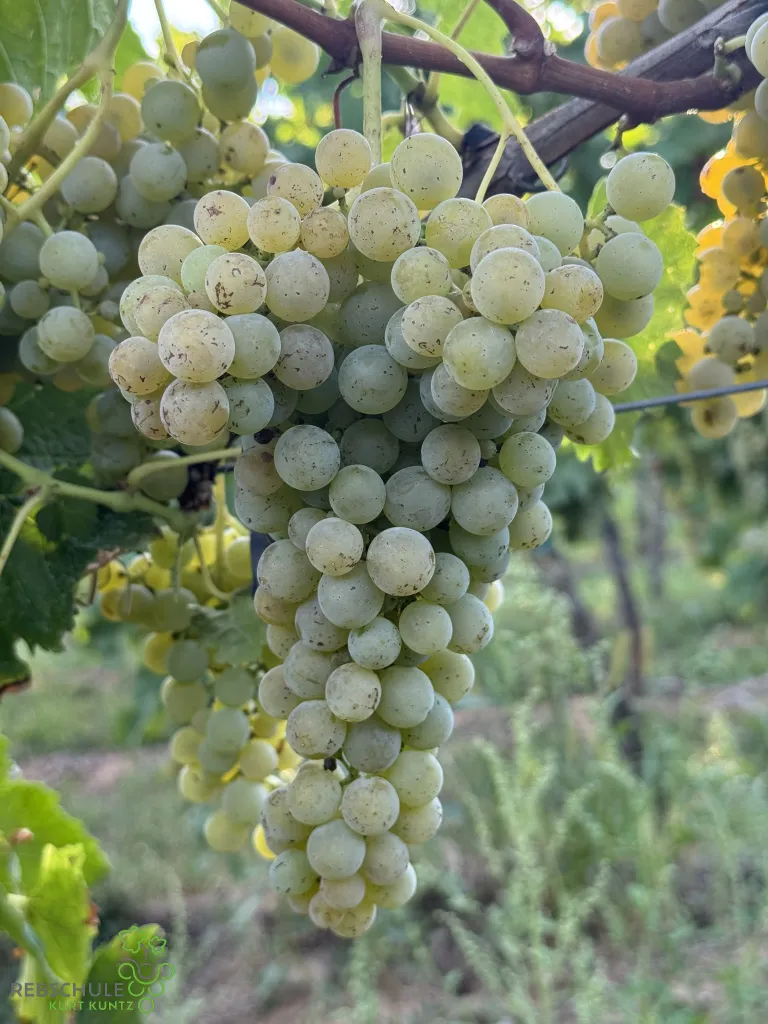
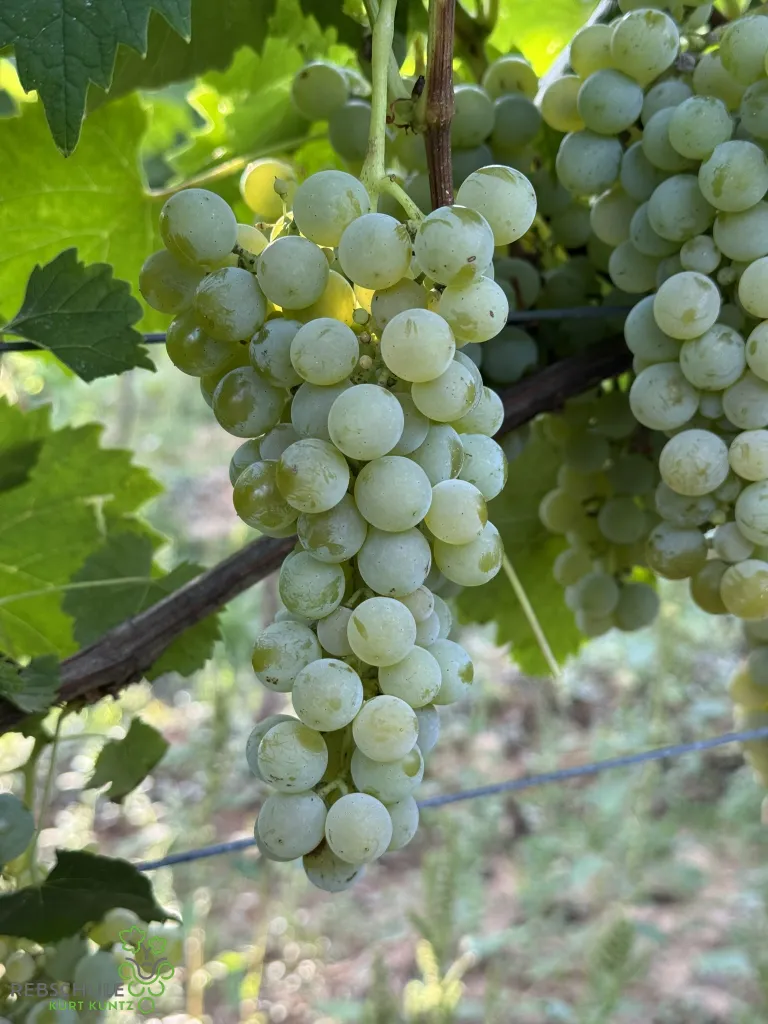
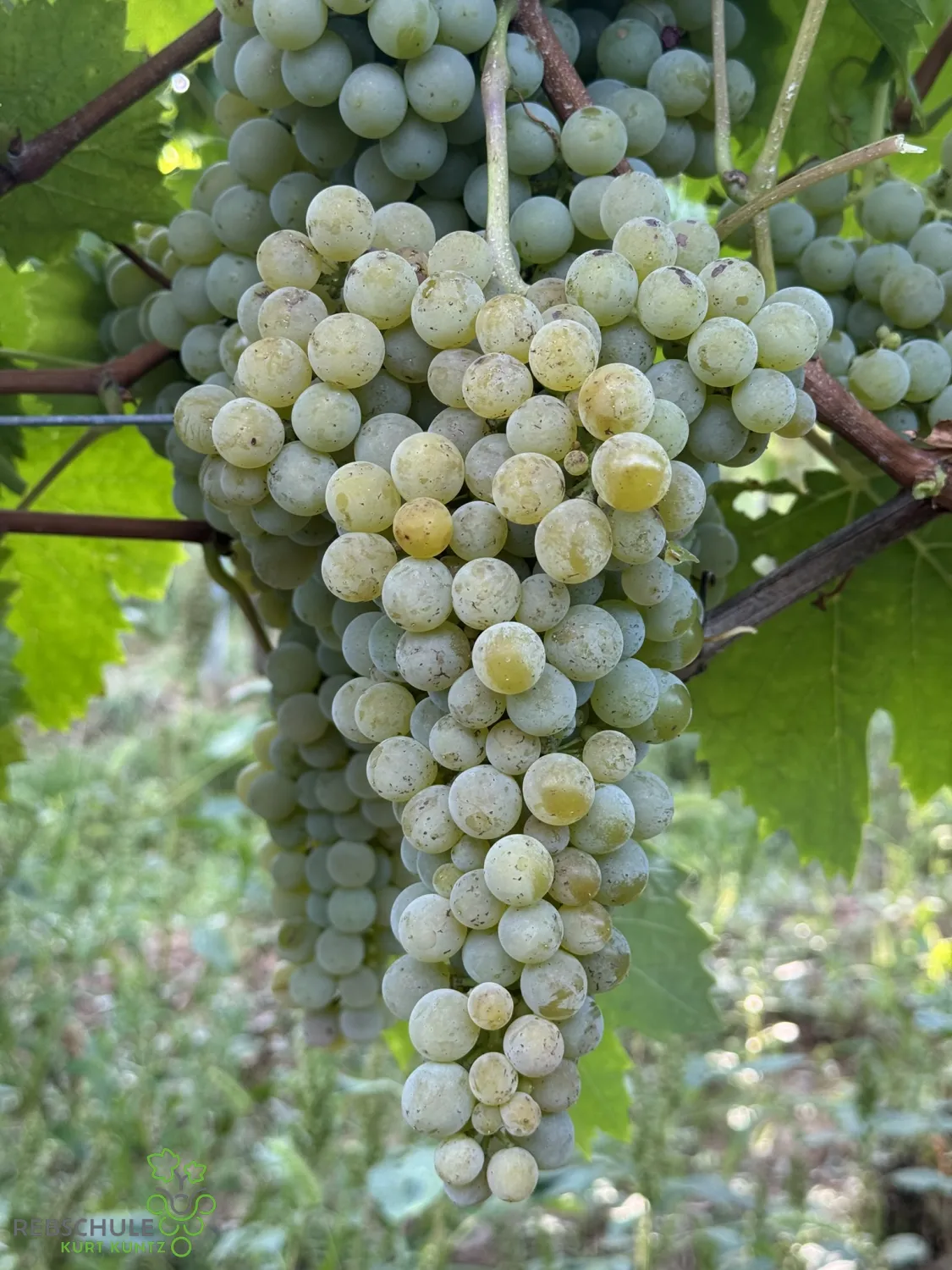
Blütenmuskateller clusters are long, conical, and loose-clustered. The small, round berries are green-yellow in colour. Even at the berry stage, they exhibit an intense Muscat aromatics.
Disease resistance
- Downy mildew (Plasmopara viticola)3/4
- Powdery mildew (Oidium)2/4
- Botrytis3/4
To counteract the development of resistant fungal strains and safeguard the cultivar's resistance over the long term, three targeted plant protection treatments are recommended. Optimal treatment windows occur primarily around flowering, adjusted according to weather conditions and prevailing disease pressure.
Blütenmuskateller PIWI clones
Klosterneuburg, Österreich

Blütenmuskateller PIWI Klbg A 205
Yield above averageBunches loose-clusteredBotrytis susceptibility low