Cabernet Blanc PIWI

Crossing
Cabernet Sauvignon x Regent
Origin
Cabernet Blanc is a fungus-resistant (PIWI) white wine cultivar bred in 1991 by Swiss vine breeder Valentin Blattner. The cross was developed under the breeding code VB 91-26-1 from Cabernet Sauvignon and Regent. The cultivar combines the genetic traits of internationally renowned varieties with disease resistance inherited through its Regent parentage. Remarkably, despite descending from two black-berried parent varieties, Cabernet Blanc produces white grapes.
Characteristics
- mid-early budburst
- medium ripening
- susceptible to coulure
- naturally open canopy structure
- strong vigour
- upright shoot growth
Site requirements
Avoid high-vigour rootstocks in order to mitigate susceptibility to coulure. Sites should be strictly restricted to those with reliable, sheltered flowering conditions.
Aromas
Cabernet Blanc produces distinctively aromatic wines. Typical descriptors include gooseberry, blackcurrant, and green bell pepper, developing exotic aromas of passion fruit and lychee at full maturity. While the aromatic profile evokes Sauvignon Blanc, it exhibits a distinct character of its own.
Bunch
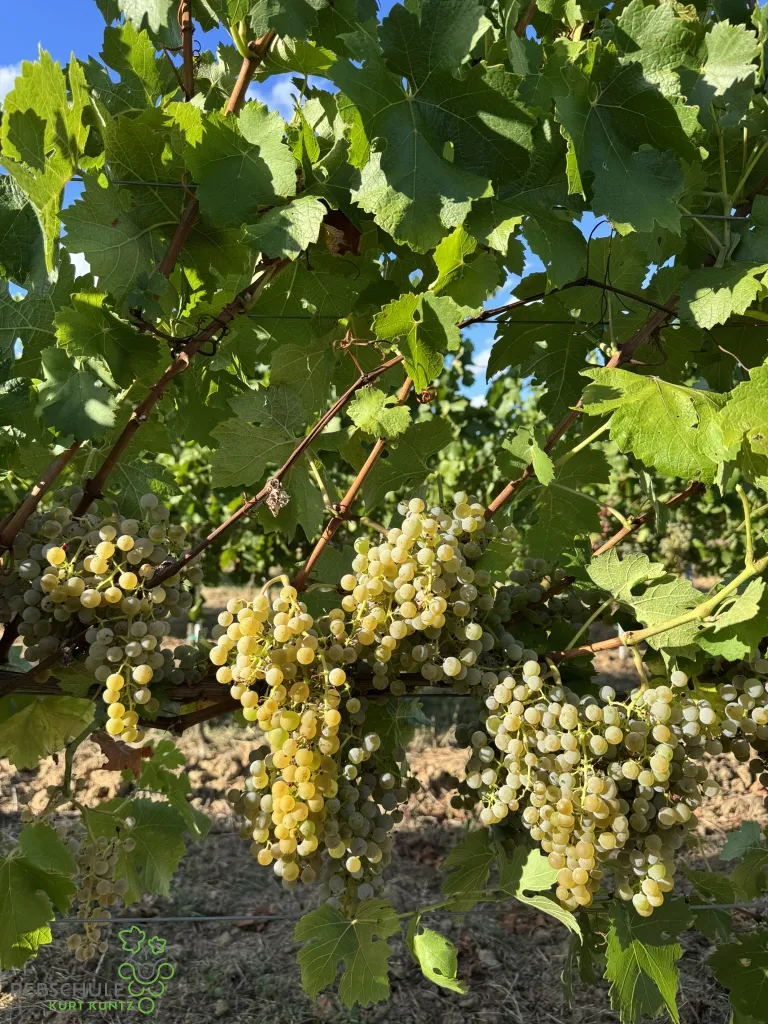
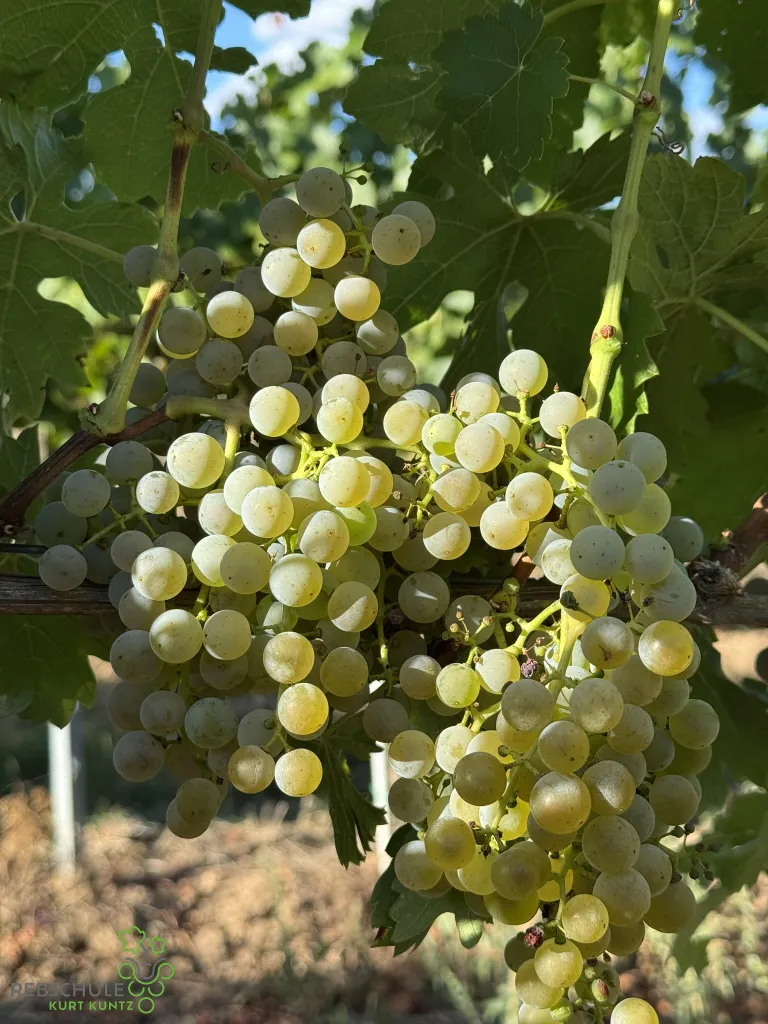
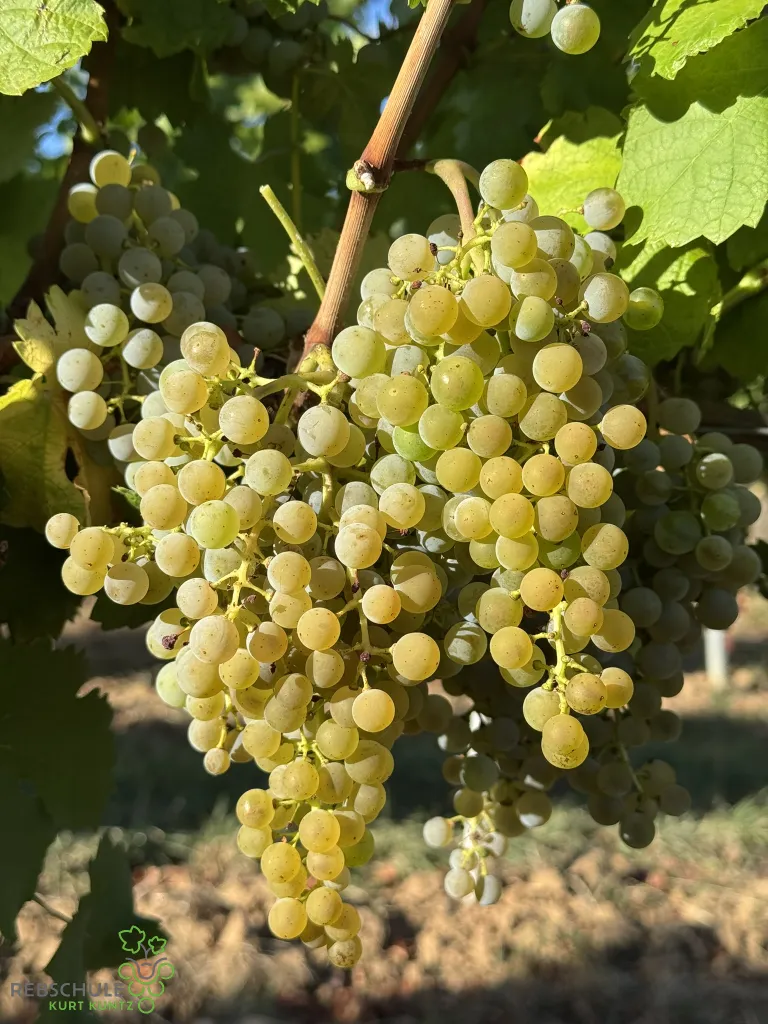
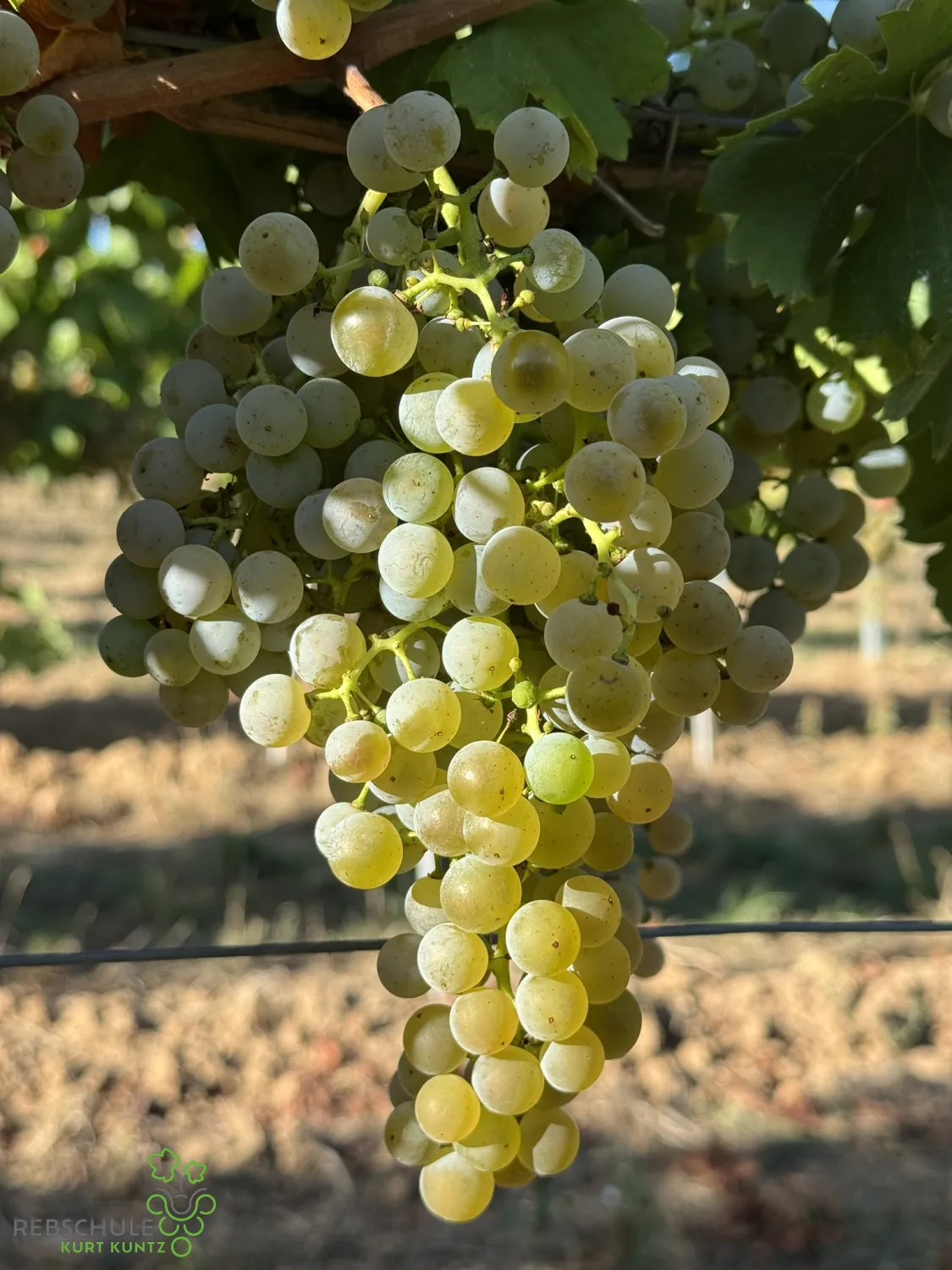
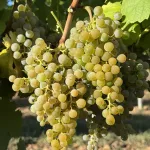
Cabernet Blanc produces large, heavily shouldered, and loose-structured clusters with small, spherical berries. The berries retain a dark green colour for an extended period, shifting to yellow-green or golden-yellow only at full maturity. The loose cluster structure combined with a naturally open canopy ensures excellent aeration, contributing to a reduced susceptibility to Botrytis rot.
Disease resistance
- Downy mildew (Plasmopara viticola)3/4Resistance loci: Rpv3.1
- Powdery mildew (Oidium)2/4Resistance loci: Ren3, Ren9
- Botrytis3/4
To counteract the development of resistant fungal strains and safeguard the cultivar's resistance over the long term, three targeted plant protection treatments are recommended. Optimal treatment windows occur primarily around flowering, adjusted according to weather conditions and prevailing disease pressure.
Links/Downloads
Cabernet Blanc PIWI clones

Cabernet Blanc PIWI VFN 1
Yield mediumBunches mixed berry sizeBotrytis susceptibility low